
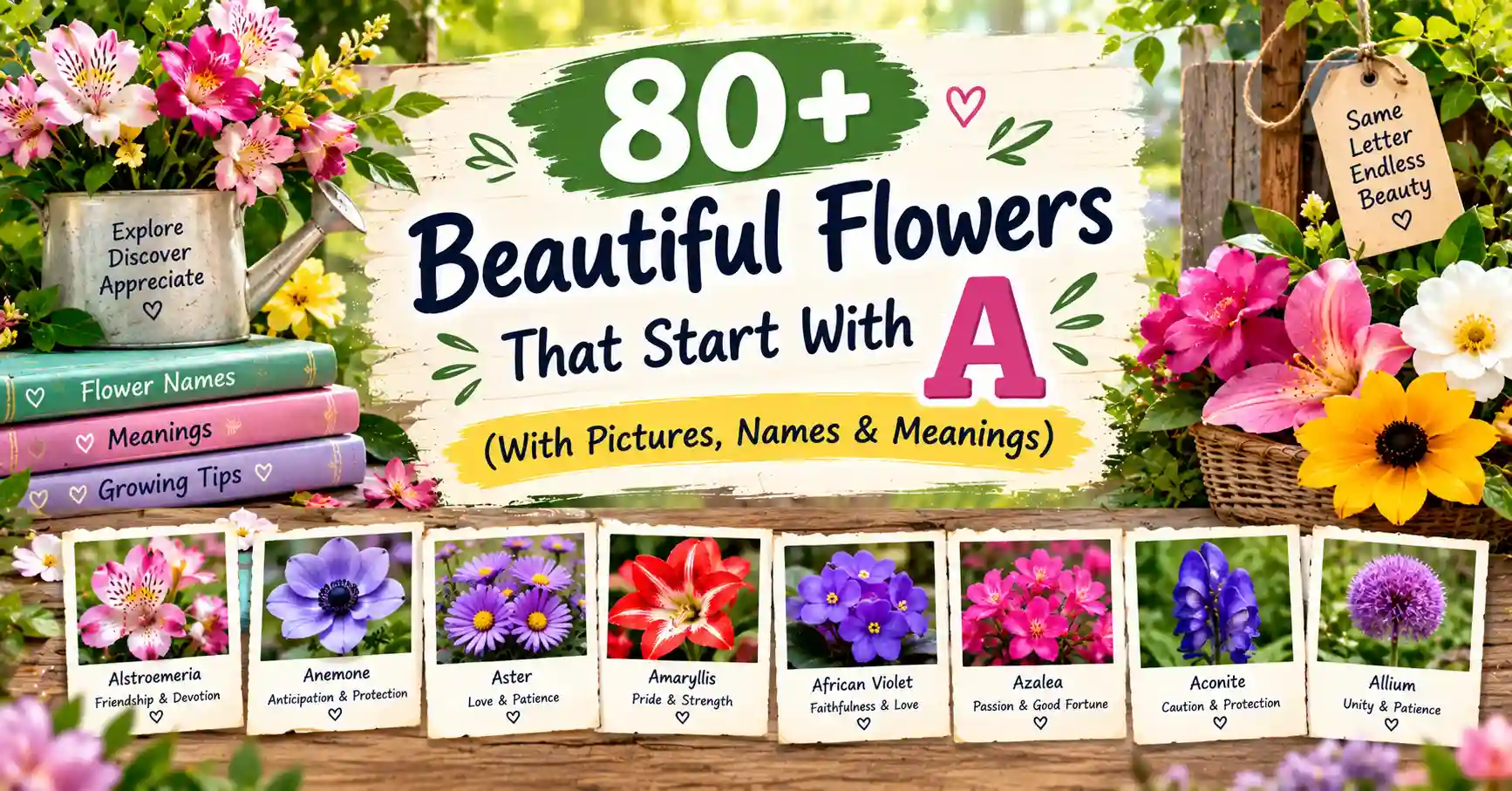
Flowers that start with A cover more ground than any other letter. The list runs from tiny rock garden plants to tall hollyhocks. It includes houseplants, cut flowers, and flowering shrubs. It even includes a few deadly plants that deserve respect. This guide brings more than 80 of them together in one place.
Each entry here is a real flowering plant. The flower is the main reason people grow it. Botanical names, native regions, bloom seasons, and toxicity notes were checked against more than one source. Safety facts got extra care, since a wrong guess can hurt a pet or a child.
The guide moves from quick answers to deeper tools. A short list of top picks comes first. A full alphabetical list and a comparison table follow. Then come sections on garden favorites, indoor plants, florist picks, rare finds, and toxic plants. Color groups, life cycles, botanical names, and meanings round things out. A simple decision table closes the guide.
Why does this matter? People search for these plants for many reasons. Some want color for a shady bed. Some need a safe houseplant. Others are planning a wedding, naming a baby, or finishing a school project. A clear, organized guide saves time and prevents costly mistakes.
Quick Answer: Top Flowers That Start With A
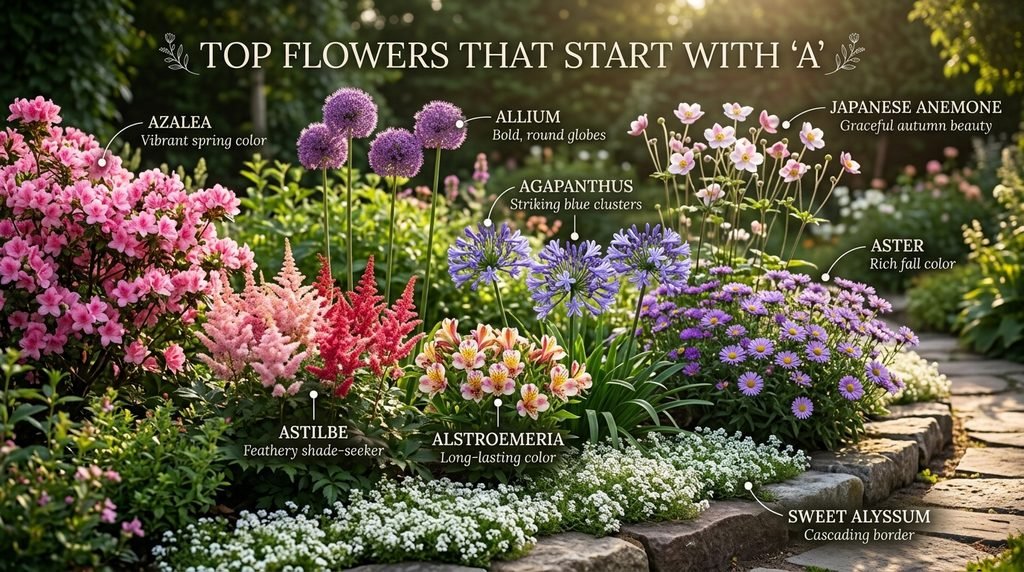
Allium, Agapanthus, Astilbe, Aster, and Japanese Anemone give gardeners the best mix of color and reliability. Allium and Agapanthus bring bold, round blooms to sunny beds. Astilbe lights up shade, while Aster and Anemone carry color into fall. Alstroemeria lasts for weeks in a vase, African Violet blooms indoors with little fuss, and Azalea gives a huge burst of spring color on acidic soil. Columbine draws hummingbirds, and Sweet Alyssum fills edges all season, which shows how many needs flowers that start with A can meet.
Master List of Flowers That Start With A
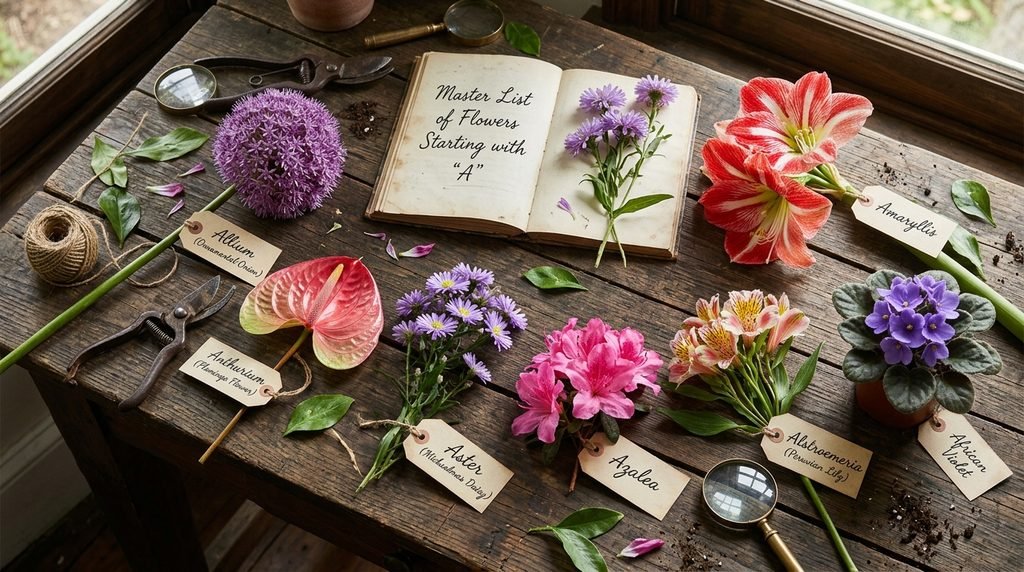
The list below includes both common names and botanical names. Where people usually search by common name, that name comes first, such as African Violet or Autumn Crocus. Where the botanical name is better known, it leads instead, such as Allium or Anthurium.
- Abelia
- Abeliophyllum (White Forsythia)
- Abronia (Sand Verbena)
- Abutilon (Flowering Maple)
- Acacia (Wattle)
- Acanthus (Bear’s Breeches)
- Achillea (Yarrow)
- Acidanthera (Peacock Orchid)
- Aconitum (Monkshood)
- Actaea (Bugbane)
- Adenium (Desert Rose)
- Adonis (Pheasant’s Eye)
- Aeschynanthus (Lipstick Plant)
- Aethionema (Stonecress)
- African Daisy (Osteospermum)
- African Marigold
- African Violet
- Agapanthus (Lily of the Nile)
- Agastache (Anise Hyssop)
- Ageratum (Floss Flower)
- Agrostemma (Corncockle)
- Alcea (Hollyhock)
- Alchemilla (Lady’s Mantle)
- Allamanda (Golden Trumpet)
- Allium (Ornamental Onion)
- Alocasia (Mask Flower)
- Alpine Aster
- Alpinia (Shell Ginger)
- Alstroemeria (Peruvian Lily)
- Alyogyne (Blue Hibiscus)
- Alyssum (Sweet Alyssum)
- Amaranthus (Love-Lies-Bleeding)
- Amaryllis
- Amazon Lily (Eucharis)
- Ammi (Bishop’s Flower)
- Amorpha (False Indigo)
- Amsonia (Bluestar)
- Anacyclus (Mount Atlas Daisy)
- Anagallis (Pimpernel)
- Anaphalis (Pearly Everlasting)
- Anchusa (Alkanet)
- Androsace (Rock Jasmine)
- Anemone (Windflower)
- Anemone blanda (Grecian Windflower)
- Anemonopsis (False Anemone)
- Angelonia (Summer Snapdragon)
- Angel’s Fishing Rod (Dierama)
- Angel’s Trumpet (Brugmansia)
- Angraecum (Comet Orchid)
- Anigozanthos (Kangaroo Paw)
- Anisodontea (Cape Mallow)
- Ansellia (Leopard Orchid)
- Anthemis (Golden Marguerite)
- Anthericum (St Bernard’s Lily)
- Anthurium (Flamingo Flower)
- Antirrhinum (Snapdragon)
- Aponogeton (Water Hawthorn)
- Apple Blossom
- Apricot Blossom
- Aquilegia (Columbine)
- Arabis (Rock Cress)
- Arctotis (African Daisy)
- Argemone (Prickly Poppy)
- Argyranthemum (Marguerite Daisy)
- Arisaema (Jack-in-the-Pulpit)
- Aristolochia (Dutchman’s Pipe)
- Armeria (Thrift)
- Arnebia (Prophet Flower)
- Arnica
- Arrowhead (Sagittaria)
- Arum Lily (Calla Lily)
- Aruncus (Goat’s Beard)
- Asarina (Climbing Snapdragon)
- Asclepias (Milkweed)
- Asian Lily
- Asphodel
- Aster (Michaelmas Daisy)
- Astilbe (False Goat’s Beard)
- Astrantia (Masterwort)
- Atamasco Lily
- Aubrieta
- Aurinia (Basket of Gold)
- Autumn Crocus (Colchicum)
- Avens (Geum)
- Azalea
- Aztec Lily (Sprekelia)
Some names overlap. Aster and Michaelmas Daisy point to the same group of plants. Arum Lily and Calla Lily both describe Zantedeschia aethiopica. The Amaryllis sold in stores each winter is really Hippeastrum, while true Amaryllis belladonna is a different plant from South Africa.
Comparison Table: Light, Region, Bloom Time, and Safety
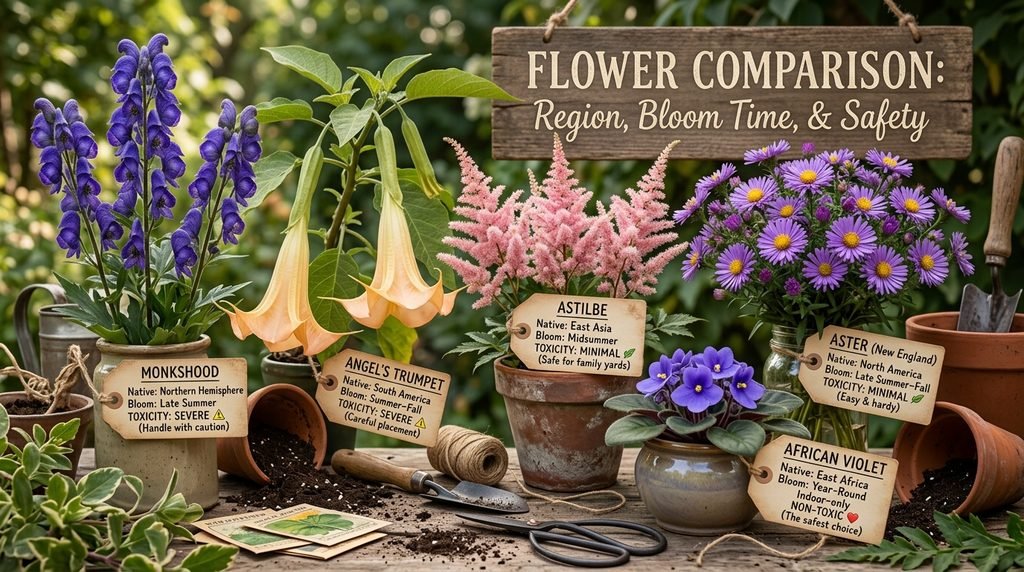
The table below compares 14 popular flowers side by side. Columns cover native region, bloom season, hardiness zones, and toxicity. Hardiness zones show where a plant survives winter outdoors, so check your zone before buying.
| Flower | Native Region | Bloom Season | Hardiness Zones | Toxicity |
| Allium (ornamental) | Northern Hemisphere | Late spring to early summer | 3–9 | Mild to moderate for cats and dogs |
| Agapanthus | South Africa | Summer | 7–11 | Mild; stomach upset |
| Alstroemeria | South America | Summer | 7–10 | Mild; sap can irritate skin |
| Japanese Anemone | East Asia | Late summer to fall | 4–8 | Mild to moderate; irritating sap |
| Columbine | Northern Hemisphere | Late spring | 3–8 | Mild; seeds and roots |
| Aster (New England) | North America | Late summer to fall | 4–8 | Minimal |
| Astilbe | East Asia | Early to midsummer | 3–8 | Minimal reported |
| Azalea | Asia and North America | Spring | 5–9 | Moderate to severe |
| Snapdragon | Mediterranean | Late spring to fall | 7–10, annual in cold zones | Minimal |
| African Violet | East Africa | Year-round indoors | Indoor only | Non-toxic |
| Amaryllis (Hippeastrum) | South America | Winter indoors | 8–11 outdoors | Moderate; bulb |
| Monkshood | Northern Hemisphere | Late summer to fall | 3–7 | Severe |
| Angel’s Trumpet | South America | Summer to fall | 8–11 | Severe |
| Sweet Alyssum | Mediterranean | Spring to fall | Annual | Minimal |
Two rows stand out right away. Monkshood and Angel’s Trumpet both carry severe toxicity, so they need careful placement. Aster and Astilbe sit at the safe end, with wide hardiness, which makes them easy picks for family yards. African Violet is the only indoor-only plant in the set, and it is also the safest.
Garden Favorites for Sun, Shade, and Pollinators
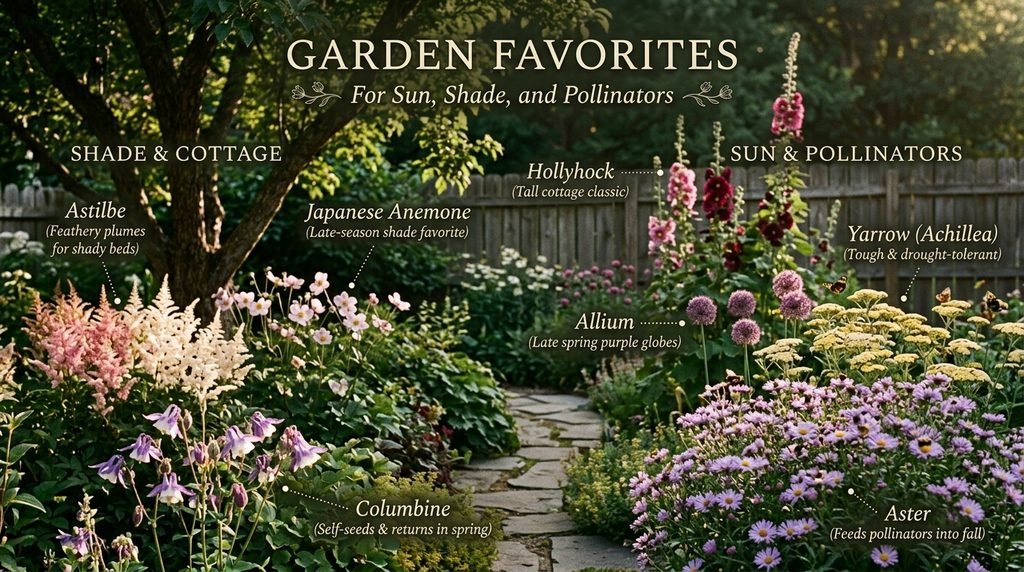
Gardeners who want easy wins among flowers that start with A should begin with Allium, Aster, and Yarrow. Allium bulbs go in the ground in fall and bloom in late spring with round purple globes. Aster takes over in late summer and feeds pollinators well into fall. Yarrow, or Achillea, shrugs off drought and poor soil. Astilbe fills shady beds with feathery plumes, and Japanese Anemone does the same later in the year. Columbine and Hollyhock suit cottage gardens, since both self-seed and return each spring.
Best Indoor Plants and Houseplants
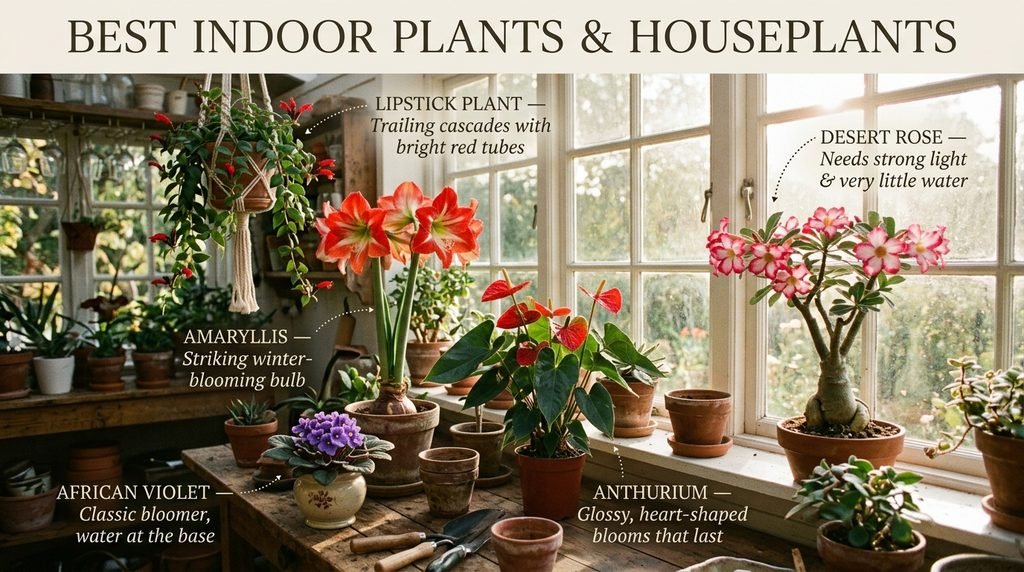
African Violet is the classic indoor bloomer. It likes bright, indirect light and flowers on and off all year. Water it at the base, since wet leaves can spot or rot. Anthurium offers glossy, heart-shaped blooms that can last for months. Amaryllis bulbs flower indoors in winter, often six to eight weeks after planting. Lipstick Plant, or Aeschynanthus, trails from hanging baskets with bright red tubes. Desert Rose, or Adenium, needs strong light and very little water, so it suits sunny windows.
Cut Flowers That Florists Love
Alstroemeria earns its spot in bouquets because it often lasts two weeks or longer in a vase. Allium adds height and a sculpted look. Anemone coronaria, the poppy anemone, shows up in many spring arrangements. Love-Lies-Bleeding, or Amaranthus, brings long, drooping tassels in deep red. Ammi, sometimes called Bishop’s Flower, gives a lacy, airy filler that softens bold blooms. Agapanthus and Astilbe add fullness, while Anthurium brings a modern, waxy shape that can last for weeks.
Rare and Unusual Finds
Some A-list flowers are hard to find. Anemonopsis, or False Anemone, grows in Japanese woodlands. Its nodding, waxy lilac blooms look like small lanterns. The Comet Orchid, Angraecum sesquipedale, comes from Madagascar and has a very long nectar spur. Charles Darwin predicted a moth with a matching long tongue, and one was later found. Prophet Flower, or Arnebia, bears yellow blooms with black spots that fade as each flower ages. White Forsythia, Abeliophyllum, is native to Korea and is endangered in the wild. Most of these plants need a specialty nursery or a collector’s catalog.
Toxic Flowers and Safety Notes
A few plants on this list can cause serious harm. Monkshood contains aconitine, which affects the heart and nerves. Even handling it without gloves is unwise. Angel’s Trumpet holds tropane alkaloids that can cause hallucinations and, in some cases, death. Autumn Crocus contains colchicine, and its leaves have been mistaken for wild garlic. Azalea carries grayanotoxins, and honey made from its nectar can also poison people.
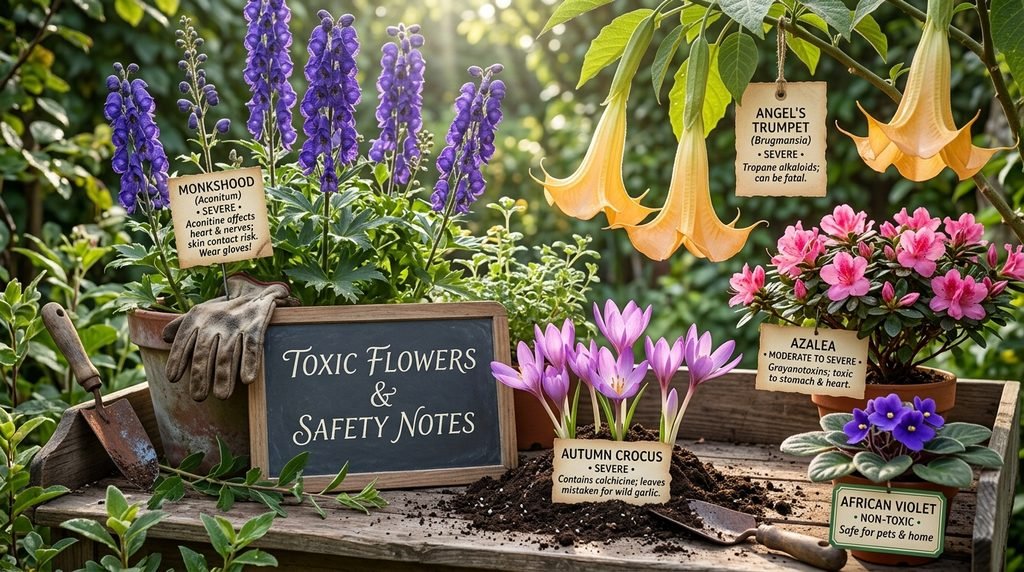
The table below ranks the main toxic plants on this list. Levels reflect the risk from eating a meaningful amount, not from a light touch. Always check a plant against a pet poison database before bringing it home.
| Flower | Toxicity Level | Main Concern |
| Monkshood (Aconitum) | Severe | Aconitine harms the heart and nerves; skin contact risk |
| Angel’s Trumpet (Brugmansia) | Severe | Tropane alkaloids; hallucinations; can be fatal |
| Autumn Crocus (Colchicum) | Severe | Colchicine; leaves mistaken for wild garlic |
| Azalea | Moderate to severe | Grayanotoxins affect heart and stomach |
| Dutchman’s Pipe (Aristolochia) | Moderate to severe | Aristolochic acid can damage kidneys |
| Amaryllis (Hippeastrum) | Moderate | Lycorine, mostly in the bulb; vomiting |
| Corncockle (Agrostemma) | Moderate | Seeds contain saponins |
| Arum Lily | Mild to moderate | Calcium oxalate irritates mouth and throat |
| Allium | Mild to moderate | Can harm cats and dogs in quantity |
| African Violet | Non-toxic | Considered safe for pets |
Monkshood, Angel’s Trumpet, and Autumn Crocus deserve the most caution. Keep them away from children, pets, and edible beds. African Violet sits at the opposite end, which makes it a smart choice for homes with curious animals.
Color Groups: Blue, Pink, White, Yellow, and Unusual
Color often drives the choice of flowers that start with A. This section groups plants by shade and suggests where each group works best.
Blue and purple shades are well covered. Allium, Agapanthus, Aster, Ageratum, and African Violet all offer rich tones. Monkshood adds deep blue too, though it needs careful placement. These flowers look best against green foliage or beside yellow blooms. Pink and red shades come from Astilbe, Azalea, Alstroemeria, Anemone, Anthurium, and Amaranthus. Use them for romantic borders and warm bouquets.
White flowers bring calm and light. Arum Lily, Apple Blossom, Sweet Alyssum, and Grecian Windflower all fit here. They glow at dusk and suit wedding designs. Yellow and orange flowers add warmth. Yarrow, Basket of Gold, African Marigold, and Arnica work well in sunny borders. Unusual shapes round out the list. Jack-in-the-Pulpit and Dutchman’s Pipe have odd hooded or curled flowers that spark curiosity in shaded woodland beds.
Life Cycle Guide: Annuals, Perennials, Bulbs, and Shrubs
Life cycle tells a gardener how much work to expect. Annuals bloom for one season and then end. Perennials return each year. Bulbs and corms store energy underground, while shrubs build a lasting frame for the garden. Matching the life cycle to your plan saves money and time.
| Flower | Life Cycle | What to Expect |
| Sweet Alyssum | Annual | One season; often self-seeds |
| Ageratum | Annual | One season; blooms until frost |
| Love-Lies-Bleeding | Annual | One season; reseeds easily |
| Snapdragon | Short-lived perennial | Often grown as an annual in cold zones |
| Hollyhock | Biennial | Blooms in year two, then self-seeds |
| Columbine | Short-lived perennial | Three to five years; self-seeds |
| Aster | Perennial | Many years; divide every few years |
| Astilbe | Perennial | Long-lived; slow to spread |
| Agapanthus | Perennial | Long-lived; blooms well when crowded |
| Allium | Bulb | Returns yearly; bulbs multiply |
| Amaryllis | Bulb | Rebloom needs a rest period |
| Autumn Crocus | Corm | Flowers in fall without leaves |
| Azalea | Shrub | Lives for decades in good soil |
| Abutilon | Tender shrub | Needs frost protection |
| African Violet | Houseplant perennial | Lives for years indoors |
Annuals give the fastest color, but they need replanting. Perennials and bulbs cost more at first and pay off over time. Hollyhock is a good example of a middle path, since it self-seeds and keeps coming back even though each plant lives only two years.
Botanical Name Crosswalk
Botanical names matter when you buy plants or search online. Common names change by region and can point to several plants. African Daisy, for example, can mean Osteospermum, Arctotis, or other daisy relatives. A botanical name gives one clear answer, which prevents mix-ups at the nursery.
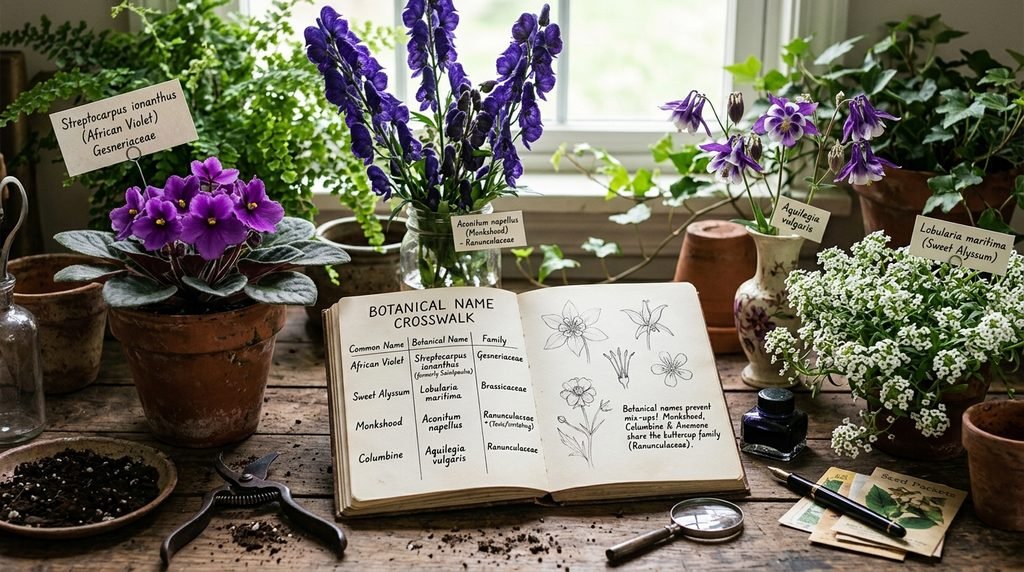
| Common Name | Botanical Name | Family |
| Yarrow | Achillea millefolium | Asteraceae |
| Monkshood | Aconitum napellus | Ranunculaceae |
| African Violet | Streptocarpus ionanthus (formerly Saintpaulia) | Gesneriaceae |
| Lily of the Nile | Agapanthus praecox | Amaryllidaceae |
| Hollyhock | Alcea rosea | Malvaceae |
| Sweet Alyssum | Lobularia maritima | Brassicaceae |
| Peruvian Lily | Alstroemeria spp. | Alstroemeriaceae |
| Store-bought Amaryllis | Hippeastrum hybrids | Amaryllidaceae |
| Japanese Anemone | Anemone hupehensis | Ranunculaceae |
| Angel’s Trumpet | Brugmansia suaveolens | Solanaceae |
| Flamingo Flower | Anthurium andraeanum | Araceae |
| Snapdragon | Antirrhinum majus | Plantaginaceae |
| Columbine | Aquilegia vulgaris | Ranunculaceae |
| Autumn Crocus | Colchicum autumnale | Colchicaceae |
| Calla Lily | Zantedeschia aethiopica | Araceae |
Two surprises show up here. Sweet Alyssum is really Lobularia, and African Violet now belongs to the genus Streptocarpus. Monkshood, Anemone, and Columbine share the buttercup family, which explains why several of them are irritating or toxic.
Meanings and Symbolism
The meanings behind these flowers reach back centuries. Agapanthus takes its name from Greek words for love and flower, so many people call it the love flower. Anemone comes from the Greek word for wind. Greek myth links the flower to the death of Adonis, which gave it a long tie to fragile or fading love.
Aster means star in Greek. It stands for patience and elegance, and it is a birth flower for September. Amaryllis is named after a shepherdess in classical poetry. It now signals pride, strength, and radiant beauty, which is why it is a favorite winter gift. Alstroemeria stands for friendship and devotion, so it appears often in bouquets for long-term friends and partners.
Azalea carried a gentle message in Victorian flower language. It often meant temperance, or a plea to take care of oneself. Acanthus has a different story. Its carved leaves topped Corinthian columns in ancient Greece, and the plant came to stand for enduring life and art. Monkshood sits on the darker side, since Victorian language linked it to caution and warning.
Anthurium stands for hospitality, which fits its popularity as a welcome gift in tropical regions. Allium suggests unity and good fortune. Taken together, these meanings give gardeners and gift givers a rich set of choices beyond color and shape.
Decision Guide: Match the Flower to Your Space
Use the table below to narrow your choices fast. Start with the row that matches your biggest need, such as shade, pet safety, or cut flowers. Then compare the two suggested plants and pick the one that fits your climate. Anyone sorting flowers that start with A will find this the quickest route from a long list to a final choice.
| If You Need | Try These |
| Full sun and low water | Yarrow, Agapanthus |
| Shade and moist soil | Astilbe, Japanese Anemone |
| Fall color for pollinators | Aster, Anise Hyssop |
| Easy houseplant | African Violet, Anthurium |
| Pet-safe options | African Violet, Snapdragon, Aster |
| Cut flowers for vases | Alstroemeria, Allium |
| Hummingbird visitors | Columbine, Anise Hyssop |
| Spring shrub color | Azalea, Abelia |
| Containers and edging | Sweet Alyssum, Angelonia |
| Cottage garden height | Hollyhock, Anchusa |
No single plant fits every need. Pet-safe picks such as Aster and Snapdragon work in most yards, while Yarrow and Agapanthus suit dry, sunny spots. If safety is a concern, skip the severely toxic plants from the earlier table and choose from the pet-safe row first.
Conclusion
Flowers that start with A offer something for nearly every garden, windowsill, and vase. They range from easy beginners such as Alyssum and Aster to rare treasures such as the Comet Orchid. They also include a few plants that call for real caution. Use the tables and guides above to match each plant to your light, space, and household. With more than 80 choices, flowers that start with A leave plenty of room to experiment.
Frequently Asked Questions
What are the easiest flowers that start with A to grow?
Sweet Alyssum, Aster, Yarrow, and Snapdragon are all beginner-friendly. They tolerate average soil and need little fuss. Alyssum and Snapdragon also bloom quickly from seed.
Which flowers are poisonous?
Monkshood, Angel’s Trumpet, Autumn Crocus, and Azalea are the most dangerous. Amaryllis bulbs, Arum Lily, and Allium can also upset pets. Keep all of them away from children and animals.
Is Amaryllis the same as Hippeastrum?
Most plants sold as Amaryllis in stores are really Hippeastrum. True Amaryllis belladonna is a different plant from South Africa. The two share a family, which explains the mix-up.
Which flower blooms in fall?
Aster and Japanese Anemone bloom from late summer into fall. Autumn Crocus flowers in fall too, without any leaves. Monkshood also blooms late in the season.
What is the best flower for shade?
Astilbe is the top choice for shade with moist soil. Japanese Anemone and Columbine also tolerate partial shade. Jack-in-the-Pulpit suits deep woodland shade.
Are African Violets safe for cats and dogs?
Yes, African Violets are considered non-toxic to cats and dogs. This makes them a popular houseplant for pet owners. Keep them in bright, indirect light for the best blooms.
Which flowers work best as cut flowers?
Alstroemeria, Allium, Anemone, Anthurium, and Ammi all perform well in vases. Alstroemeria often lasts two weeks or longer. Anthurium blooms can last for several weeks.
What does an Aster symbolize?
Aster stands for patience, elegance, and love. Its name means star in Greek. It is also a birth flower for September.
