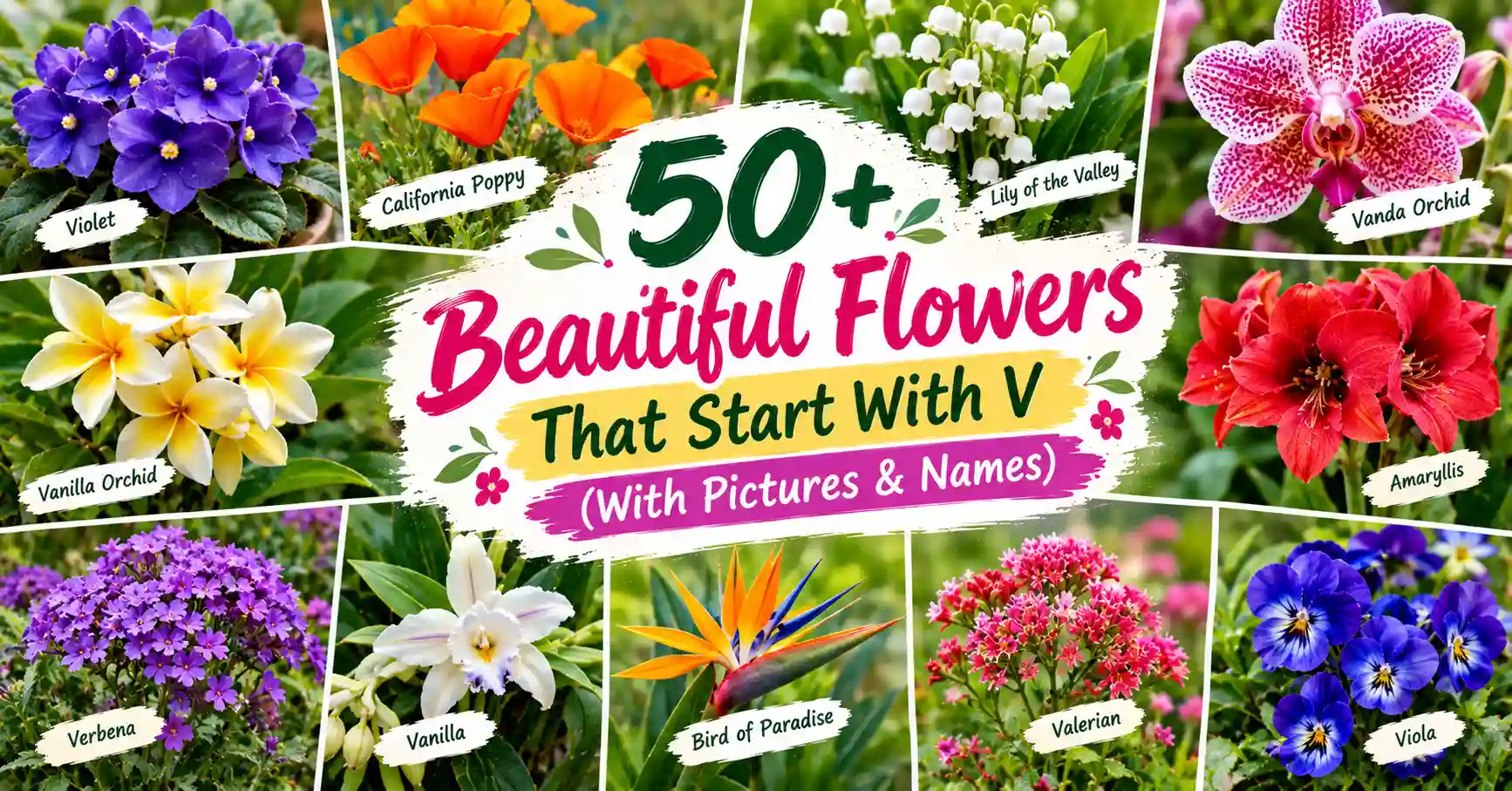
Flowers that start with V range from tiny violets to giant water lilies. Verbena spills from summer pots. Viola blooms in cool weather. Virginia Bluebells carpet spring woods. The Victoria Water Lily has leaves big enough to hold a child. This guide brings more than 50 of them together in one place, with clear notes on care and safety.
Every plant here is real, and the flower is the main reason people grow it, with a few exceptions. Shrubs and trees such as Viburnum, Vitex, and Virginia Creeper appear because their blooms are a major draw. Botanical names, native regions, bloom seasons, and toxicity notes were checked against more than one source. Safety facts got extra care, since a wrong guess can hurt a pet or a child.
The guide opens with a quick answer and a full alphabetical list. A comparison table follows. Then come sections on garden plants, houseplants, cut flowers, rare finds, and toxic plants. Color groups, life cycles, botanical names, and meanings come next. A short decision table closes the guide.
Why use a guide like this? Some readers want color for a shady bed. Others need a pet-safe plant, a fragrant shrub, or a bouquet idea. A clear structure helps each reader find an answer fast, without scrolling through dozens of names.
Quick Answer: Top Flowers That Start With V
Verbena, Viola, Veronica, Virginia Bluebells, and Viburnum give gardeners the best mix of color and reliability. Verbena blooms from spring to frost in pots and beds. Viola handles cool weather that stops most flowers. Veronica adds blue spires to sunny borders, while Virginia Bluebells carpet spring woods.
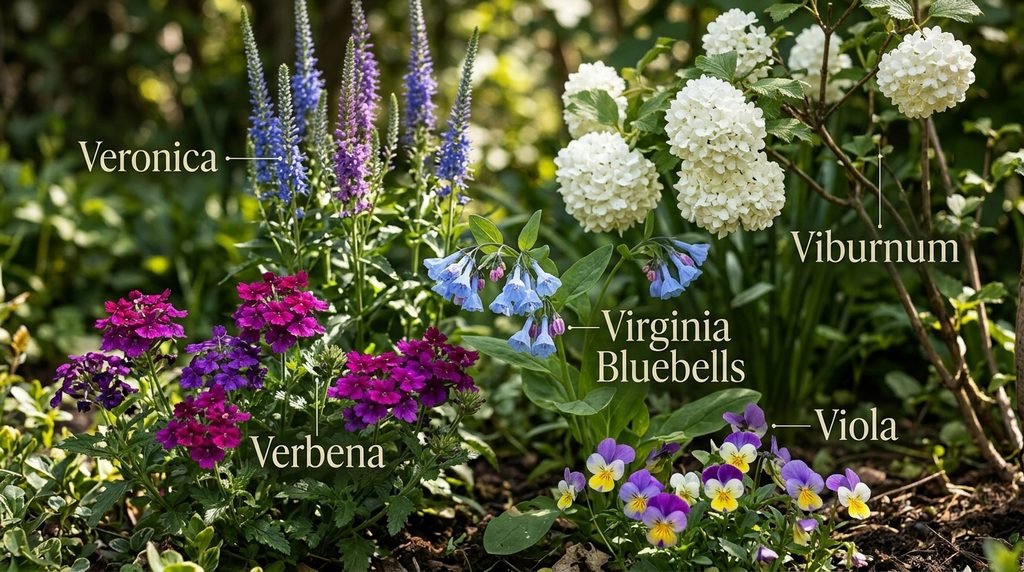
Viburnum brings fragrant blooms to a larger yard, Vinca minor covers shady ground, and Vriesea gives a bold red spike indoors, which shows how many needs flowers that start with V can meet.
Read More: 150+ Flowers That Start With T: Popular, Rare & Unique Blooms
Master List of Flowers That Start With V
The list below mixes common names and botanical names. Where people usually search by common name, that name comes first, such as Virginia Bluebells or Voodoo Lily. Where the botanical name is better known, it leads instead, such as Verbena or Viburnum. Several Viola, Verbena, Veronica, and Viburnum species are listed separately, since each has its own look and needs.
- Valerian
- Vallota (Scarborough Lily)
- Vancouveria (Inside-Out Flower)
- Vanda (Orchid)
- Vanda coerulea (Blue Vanda)
- Veltheimia (Forest Lily)
- Venidium (Cape Daisy)
- Venus’s Looking Glass
- Venus’s Navelwort
- Veratrum (False Hellebore)
- Verbascum (Mullein)
- Verbena
- Verbena bonariensis (Purpletop Vervain)
- Verbena canadensis (Rose Verbena)
- Verbena hastata (Blue Vervain)
- Verbena rigida (Slender Vervain)
- Verbena tenuisecta (Moss Verbena)
- Verbesina (Crownbeard)
- Vernonia (Ironweed)
- Veronica (Speedwell)
- Veronica longifolia (Longleaf Speedwell)
- Veronica prostrata (Prostrate Speedwell)
- Veronica spicata (Spike Speedwell)
- Veronicastrum (Culver’s Root)
- Verticordia (Featherflower)
- Vervain
- Vervain Mallow
- Vetch
- Viburnum
- Viburnum × bodnantense (Dawn Viburnum)
- Viburnum carlesii (Korean spice Viburnum)
- Viburnum macrocephalum (Chinese Snowball)
- Viburnum opulus (Guelder Rose)
- Viburnum plicatum (Doublefile Viburnum)
- Viburnum tinus (Laurustinus)
- Victoria Water Lily
- Vigna caracalla (Snail Vine)
- Vinca (Periwinkle)
- Vinca major
- Vinca minor
- Vinca rosea (Madagascar Periwinkle)
- Viola
- Viola cornuta (Horned Violet)
- Viola corsica (Corsican Violet)
- Viola labradorica (Labrador Violet)
- Viola odorata (Sweet Violet)
- Viola pedata Bird’s-foott Violet)
- Viola sororia (Common Blue Violet)
- Viola tricolor (Johnny-Jump-Up)
- Viola × wittrockiana (Garden Pansy)
- Violet Tubeflower
- Violet Wood Sorrel
- Viper’s Bugloss
- Virgilia (Cape Lilac)
- Virginia Bluebells
- Virginia Iris
- Virginia Rose
- Virginia Spiderwort
- Virginia Sweetspire
- Virgin’s Bower
- Viscaria
- Vitex (Chaste Tree)
- Volkameria
- Voodoo Lily
- Vriesea (Flaming Sword)
Some names cause mix-ups. Vinca rosea is an older name for Catharanthus roseus, so newer tags use that name. Venidium is now filed under Arctotis, though many nurseries still use the old name. Viola covers both tiny wild violets and large garden Pansies, which are the same genus.
Comparison Table: Region, Bloom Time, Zones, and Safety
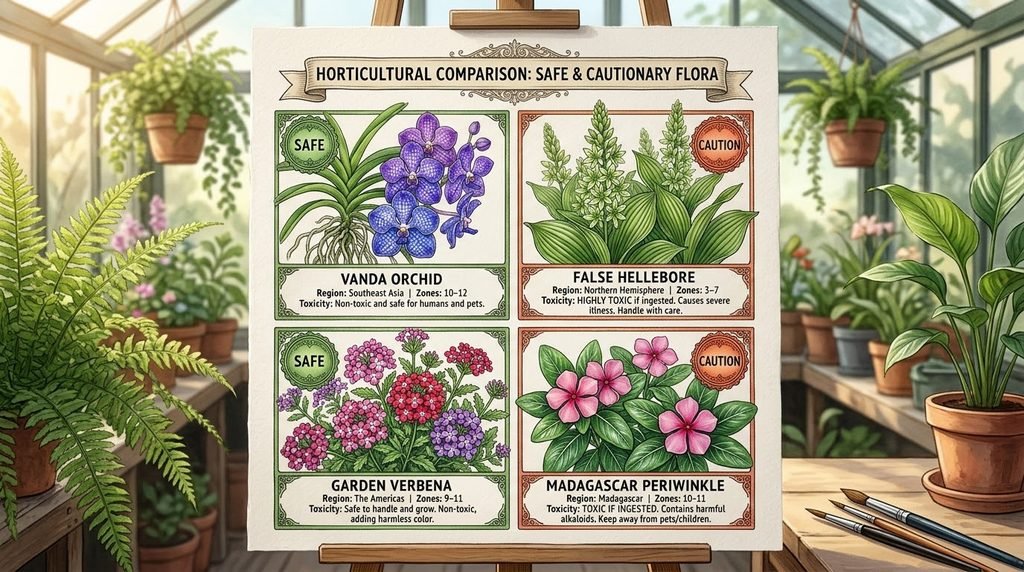
The table below compares 14 popular flowers side by side. Columns cover native region, bloom season, hardiness zones, and toxicity. Hardiness zones show where a plant survives winter outdoors, so check your own zone before buying.
| Flower | Native Region | Bloom Season | Hardiness Zones | Toxicity |
| Garden Verbena | The Americas | Spring to frost | 7–11, annual in cold zones | Minimal |
| Sweet Violet | Europe and Asia | Early spring | 6–9 | Minimal; flowers are edible |
| Spike Speedwell | Europe and Asia | Summer | 3–8 | Minimal |
| Vinca minor | Europe | Spring | 4–9 | Mild to moderate |
| Virginia Bluebells | Eastern North America | Spring | 3–8 | Minimal |
| Valerian | Europe and Asia | Early summer | 4–9 | Mild; cats are drawn to it |
| Korean spice Viburnum | Korea | Spring | 4–7 | Mild; berries |
| Chaste Tree (Vitex) | Mediterranean and Central Asia | Summer | 6–9 | Mild |
| Virginia Sweetspire | Eastern United States | Early summer | 5–9 | Minimal |
| Mullein | Europe and Asia | Summer | 3–9 | Mild |
| Vanda Orchid | Tropical Asia | Often twice a year, indoors | Grown indoors | Non-toxic |
| Madagascar Periwinkle | Madagascar | Spring to frost | Annual in most zones | Moderate |
| False Hellebore | Northern Hemisphere | Summer | 3–8 | Severe |
| Voodoo Lily | Tropical Asia | Spring | 7–10 | Moderate |
Three rows deserve a second look. False Hellebore carries severe toxicity, and foragers have mistaken it for wild garlic. Madagascar Periwinkle looks innocent in bedding trays, yet it can cause real illness if eaten. Vanda Orchid and Verbena sit at the safe end, which makes them good picks for homes with curious pets.
See More Flowers: 50+ Beautiful Flowers That Start With V (With Pictures & Names)
Garden Favorites for Sun, Shade, and Wet Soil
Gardeners who want easy wins among flowers that start with V should begin with Verbena, Veronica, and Viola. Verbena thrives in full sun and blooms until frost.
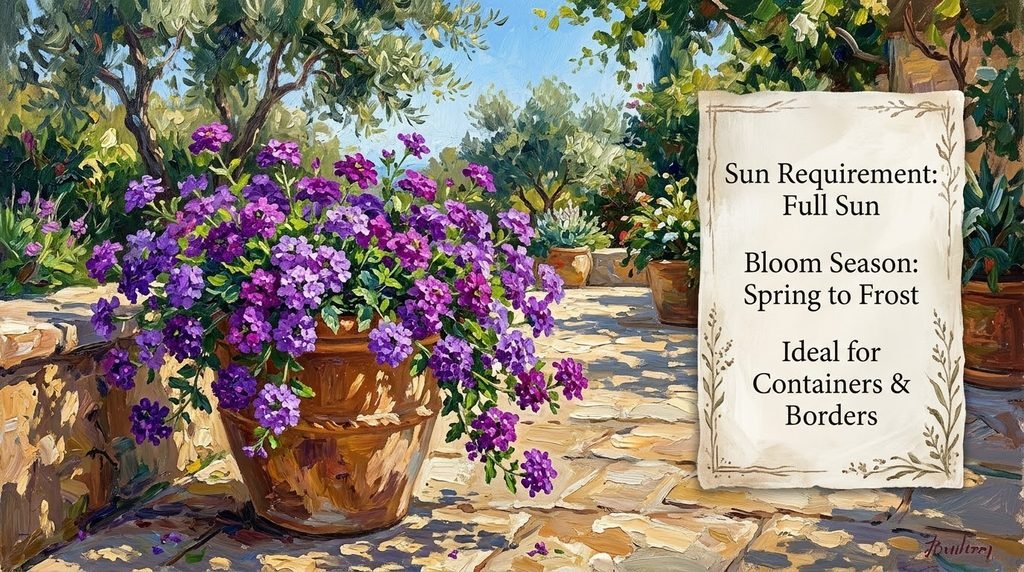
Purpletop Vervain adds tall, airy purple heads and often reseeds. Veronica gives blue spikes in summer, and Culver’s Root adds white candelabras for pollinators. Viola and Pansy handle chilly spring and fall days. Virginia Bluebells, Sweet Violet, and Vinca minor suit shade, while Blue Vervain and Virginia Iris thrive in wet ground.
Purple verbena flowers spilling over the edge of a sunny garden container
Best Indoor Plants and Houseplants
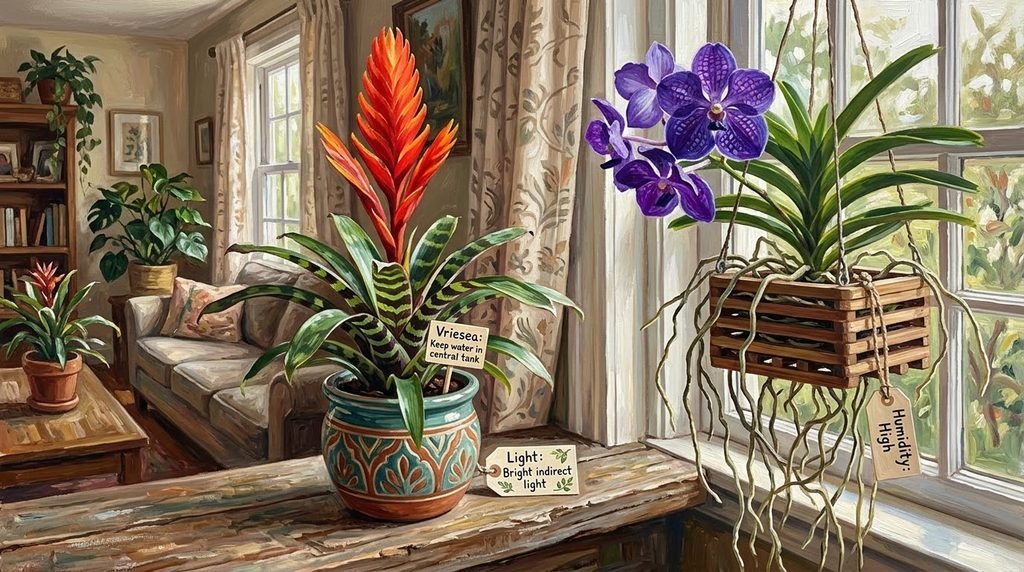
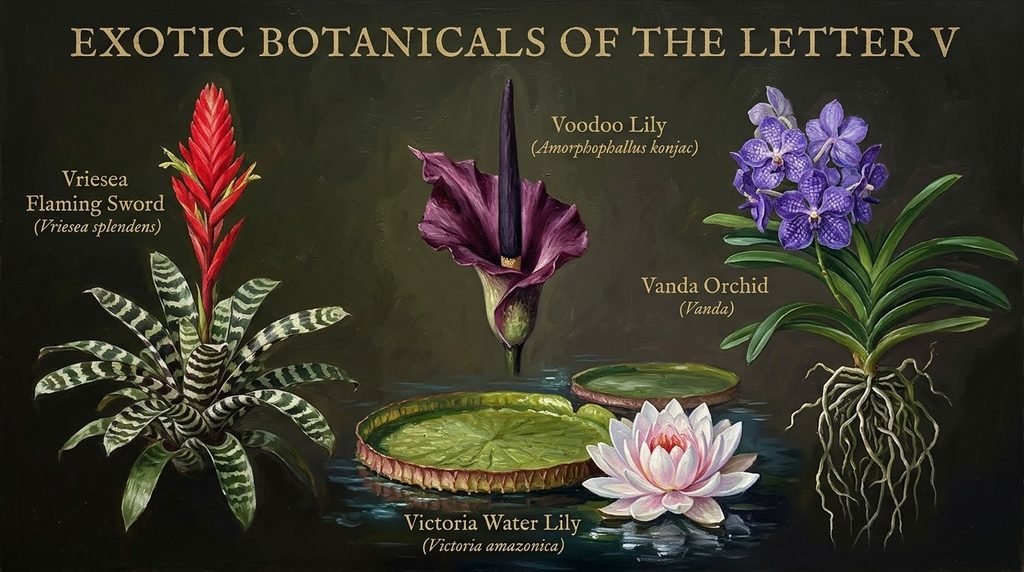
Several V plants live well indoors. Vriesea splendens, called Flaming Sword, sends up a bright red, sword-shaped flower spike that lasts for months. Keep a little water in its central cup. Vanda orchids need strong light and plenty of humidity, and they often bloom twice a year. Vellozia, the Forest Lily, blooms in winter with pink-yellow flower spikes, then rests in summer. Vallota is a potted bulb with scarlet lily flowers in late summer. All four are safer than many houseplants, though Vallota bulbs can upset the stomach.
Bright red Vriesea flaming sword flower spike on a bromeliad houseplant
Cut Flowers That Florists Love
Viburnum is a florist favorite, especially the Snowball types with big, round white blooms. Veronica and Culver’s Root add slim vertical spires to arrangements. Verbena bonariensis brings airy purple clusters that float above other flowers. Vanda orchids appear in corsages and formal bouquets, since each bloom is long-lasting. Violas make sweet, edible garnishes for cakes and salads. Vitex adds lavender spikes to late-summer bouquets. Each one suits a different style, from formal to relaxed.
See More Flowers: Flowers That Start With W: 90+ Names, Meanings & Beautiful Photos
Rare and Unusual Finds
Some V flowers are hard to find, and each has its own story. The Victoria Water Lily grows in the Amazon basin. Its leaves can reach about nine feet across, and its white flowers open at night and turn pink by the second day. Blue Vanda, or Vanda coerulea, grows wild in the hills of northeast India and Myanmar.

It is protected, and its sky-blue flowers are prized by collectors. Featherflower, or Verticordia, comes from Western Australia and has fringed, feathery blooms that need perfect drainage. Inside-Out Flower, or Vancouveria, is a cool woodland plant from the Pacific Northwest with petals that fold backward. Specialty nurseries and botanical gardens are the best places to see them.
Giant Victoria water lily leaves and a pink flower floating on a tropical pond
Toxic Flowers and Safety Notes
Several V plants can cause real harm. False Hellebore, or Veratrum, contains strong alkaloids that affect the heart and nerves. Every year, foragers mistake its young leaves for wild leeks and get sick. Madagascar Periwinkle holds vinca alkaloids. Voodoo Lily contains calcium oxalate crystals, and its flower smells like rotting meat. Viper’s Bugloss holds alkaloids that harm the liver of grazing animals.
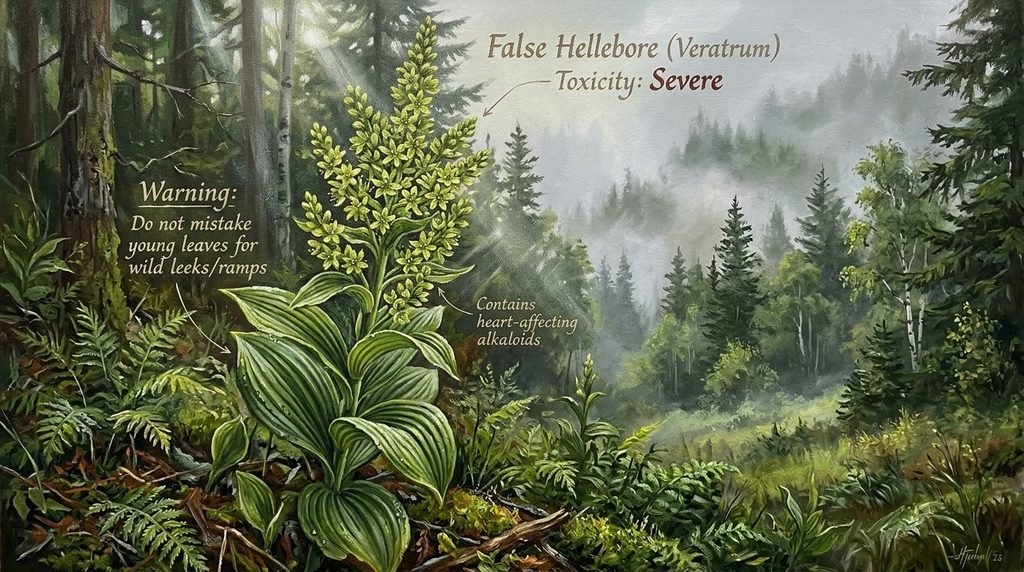
The table below ranks the main risks on this list. Levels reflect the effect of eating a meaningful amount, not a light touch. Check any plant against a pet poison database before planting it near animals.
| Flower | Toxicity Level | Main Concern |
| False Hellebore (Veratrum) | Severe | Alkaloids affect heart and nerves |
| Madagascar Periwinkle | Moderate | Vinca alkaloids cause illness if eaten |
| Voodoo Lily | Moderate | Oxalate crystals irritate mouth and throat |
| Vallota | Moderate | Bulbs contain lycorine; vomiting |
| Viper’s Bugloss | Moderate | Liver-damaging alkaloids in grazing animals |
| Vinca minor | Mild to moderate | Leaves can upset the stomach |
| Virgin’s Bower | Mild to moderate | Sap irritates skin and mouth |
| Vetch | Mild to moderate | Seeds can harm animals in quantity |
| Valerian | Mild | Can cause drowsiness; cats love it |
| Viburnum | Mild | Raw berries can upset the stomach |
| Verbena | Minimal | Generally considered safe |
| Vanda Orchid | Non-toxic | Considered safe for pets |
False Hellebore deserves the most care, especially for foragers. Madagascar Periwinkle is the sneakiest, since it is sold everywhere as a harmless bedding plant. Verbena and Vanda sit at the opposite end and are safer choices for homes with children and pets.
Tall green veratrum false hellebore plant with pleated leaves growing in a damp meadow
Color Groups: Purple, Blue, Pink, White, and Unusual
Color often drives the choice of flowers that start with V. This section groups the plants by shade and shows where each group works best.
Purple and violet shades lead this letter. Verbena, Viola, Vitex, Violet Tubeflower, and Vervain all carry rich tones. They look best against silver foliage or beside yellow blooms. Blue shades come from Virginia Bluebells, Veronica, Viper’s Bugloss, Vinca minor, and Blue Vanda. They bring a cool, calm feel to shaded beds and cottage borders.
Pink and red shades add warmth. Valerian, Dawn Viburnum, Koreanspice Viburnum, Vallota, and Vriesea all fit here. They suit winter gardens, early spring beds, and bold indoor displays. White flowers glow at dusk. Culver’s Root, Virginia Sweetspire, Chinese Snowball, Virgin’s Bower, and Inside-Out Flower work well in shady corners and wedding designs. Unusual shapes round out the list. Voodoo Lily has a dark, hooded bloom, and Snail Vine has flowers that twist like a corkscrew.
Life Cycle Guide: Annuals, Perennials, Bulbs, and Shrubs
Life cycle tells a gardener how much work a plant needs. Annuals bloom for one season and end. Perennials return each year. Bulbs store energy underground, while shrubs build a lasting frame. Matching the life cycle to your plan saves money, time, and replanting.
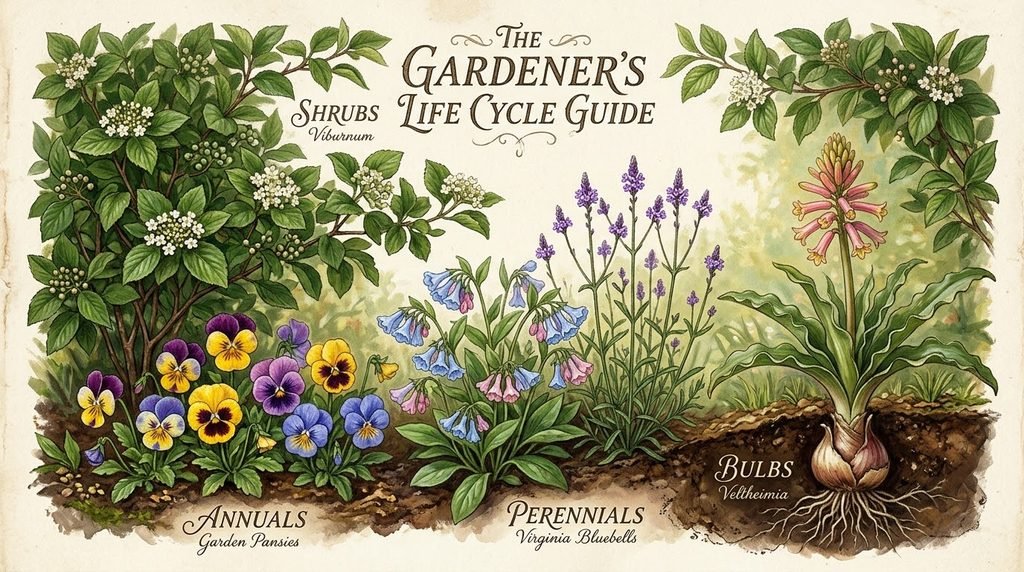
| Flower | Life Cycle | What to Expect |
| Garden Pansy | Cool-season annual | Blooms best in spring and fall |
| Johnny-Jump-Up | Short-lived perennial | Self-seeds freely |
| Garden Verbena | Annual or tender perennial | Blooms until frost |
| Purpletop Vervain | Short-lived perennial | Reseeds in sunny beds |
| Madagascar Periwinkle | Annual | Heat-loving; toxic |
| Venidium | Annual | Closes on cloudy days |
| Mullein | Biennial | Blooms in year two, then self-seeds |
| Speedwell | Perennial | Long-lived; divides every few years |
| Valerian | Perennial | Spreads by seed and roots |
| Virginia Bluebells | Spring ephemeral | Dies back by early summer |
| Vinca minor | Evergreen groundcover | Spreads steadily in shade |
| Veltheimia | Bulb | Blooms in winter; rests in summer |
| Viburnum | Shrub | Long-lived; prune after bloom |
| Chaste Tree | Shrub | Blooms on new growth |
| Victoria Water Lily | Tropical aquatic | Grown as an annual in cool climates |
Annuals give the fastest color but need replanting, though Johnny-Jump-Up often reseeds on its own. Perennials, bulbs, and shrubs cost more at first and pay off over time. Virginia Bluebells are a special case, since they vanish by summer, so mark their spot to avoid digging them up.
Botanical Name Crosswalk
Botanical names matter when you buy plants or search online. Common names change by region and can point to several plants. Periwinkle, for example, can mean a shady groundcover or a toxic bedding annual. A botanical name gives one clear answer, which prevents mix-ups at the nursery.
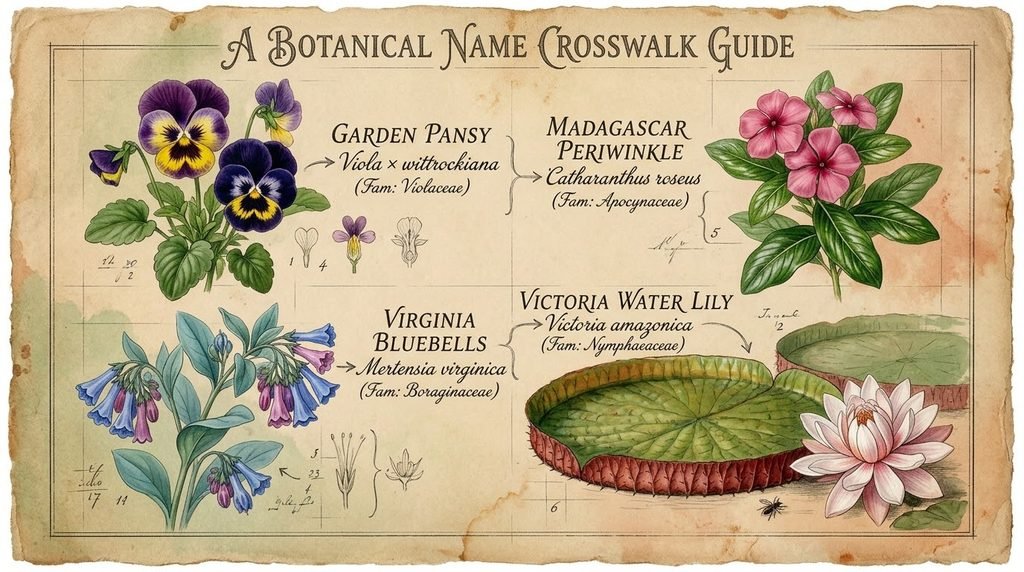
| Common Name | Botanical Name | Family |
| Garden Verbena | Verbena × hybrida | Verbenaceae |
| Purpletop Vervain | Verbena bonariensis | Verbenaceae |
| Spike Speedwell | Veronica spicata | Plantaginaceae |
| Culver’s Root | Veronicastrum virginicum | Plantaginaceae |
| Valerian | Valeriana officinalis | Caprifoliaceae |
| Mullein | Verbascum thapsus | Scrophulariaceae |
| Sweet Violet | Viola odorata | Violaceae |
| Garden Pansy | Viola × wittrockiana | Violaceae |
| Periwinkle | Vinca minor | Apocynaceae |
| Madagascar Periwinkle | Catharanthus roseus | Apocynaceae |
| Virginia Bluebells | Mertensia virginica | Boraginaceae |
| Chaste Tree | Vitex agnus-castus | Lamiaceae |
| Korean spicebush | Viburnum carlesii | Adoxaceae |
| Victoria Water Lily | Victoria amazonica | Nymphaeaceae |
| False Hellebore | Veratrum viride | Melanthiaceae |
Two surprises show up here. Madagascar Periwinkle is not a Vinca at all anymore, though it once was. Verbena and Vitex are both tied to the old Verbenaceae family, but Vitex now sits with the mints in Lamiaceae. Pansy and Violet share a genus, which explains why they look so alike when small.
Meanings and Symbolism
Flowers that start with V carry deep stories, and many have shaped how people give and read flowers. Violet has long stood for modesty and faithfulness. Napoleon Bonaparte loved the flower, so his supporters wore violets as a quiet symbol during his exile. Viola tricolor has a famous literary role. In Shakespeare’s A Midsummer Night’s Dream, it is the love-in-idleness flower that causes a spell.
Verbena carries an older, mystical meaning. Ancient Romans and Druids treated vervain as a sacred herb, linked to protection and enchantment. Valerian stood for an accommodating spirit in Victorian flower language, and it has long been used for sleep. Periwinkle meant sweet remembrance, and in parts of Europe it also marked graves.
The Victoria Water Lily has a royal story. It was named for Queen Victoria in the 1800s. Joseph Paxton, the designer of the Crystal Palace, is said to have drawn ideas from the ribbed underside of its giant leaves. Virginia Bluebells carry a gentler message of hope, since they mark the turn from winter to spring. Taken together, these meanings give gardeners and gift givers a rich set of choices beyond color and shape.
Decision Guide: Match the Flower to Your Space
Use the table below to narrow your choices fast. Start with the row that matches your main need, such as shade, wet soil, or pet safety. Then compare the suggested plants and pick the one that suits your climate. Anyone sorting flowers that start with V will find this the quickest route from a long list to a final choice.
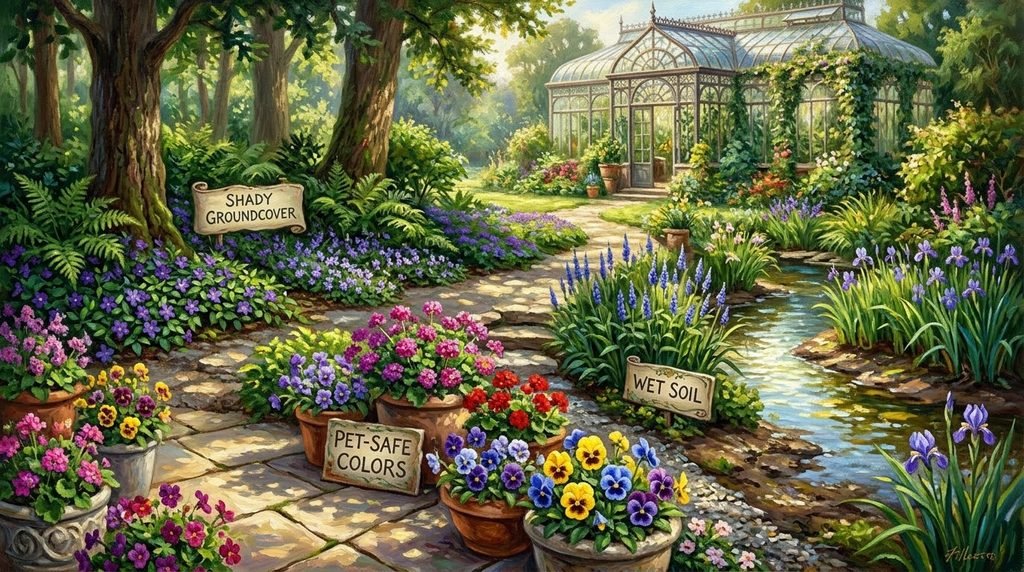
| If You Need | Try These |
| Shady groundcover | Vinca minor, Sweet Violet |
| Cool-season color | Viola, Garden Pansy |
| Long-blooming containers | Verbena |
| Wet soil | Blue Vervain, Virginia Iris |
| Pet-safe options | Viola, Verbena, Vanda |
| Pollinators | Culver’s Root, Purpletop Vervain, Ironweed |
| Fragrance | Korean spicebush, Sweet Violet, Snail Vine |
| Winter flowers | Dawn Viburnum, Laurustinus |
| Indoor drama | Vriesea, Vanda |
| Native woodland | Virginia Bluebells, Inside-Out Flower |
No single plant fits every need. Viola and Verbena work for homes with curious pets, while Blue Vervain handles soggy ground that kills most flowers. If safety is a concern, skip the toxic plants from the earlier table and choose from the pet-safe row first.
Final Thoughts on Flowers That Start With V
Flowers that start with V offer something for nearly every garden, windowsill, and vase. They range from easy beginners such as Verbena and Viola to rare treasures such as the Victoria Water Lily. A few, like False Hellebore and Madagascar Periwinkle, call for real caution. Use the tables and guides above to match each plant to your light, space, and household. With so many choices, there is room to experiment.
Frequently Asked Questions
What are the easiest flowers that start with V to grow?
Verbena, Viola, Veronica, and Vinca minor are all beginner-friendly. They tolerate average soil and need little fuss. Verbena and Viola also bloom quickly from nursery plants.
Which V flowers are poisonous?
False Hellebore is the most dangerous. Madagascar Periwinkle, Voodoo Lily, Vallota, and Viper’s Bugloss are also toxic. Keep all of them away from children and pets.
Can False Hellebore be mistaken for wild garlic?
Yes. Young Veratrum leaves look like wild leeks, and foragers have been poisoned this way. Always check for the onion smell, which Veratrum lacks.
What is the difference between a Pansy and a Viola?
Both belong to the genus Viola. Pansies have larger flowers with bold face markings. Violas have smaller, more numerous blooms and often tolerate heat better.
Does Verbena come back every year?
Some types do. Purpletop Vervain and Rose Verbena return in mild climates. Garden Verbena is usually grown as an annual in cold zones.
Is Vinca minor invasive?
It can spread aggressively in shade, and some regions list it as invasive. Plant it where it can be contained. Check local rules before planting.
Why did my Virginia Bluebells disappear?
This is normal. Virginia Bluebells go dormant by early summer. They return the next spring, so mark their spot to avoid digging them up.
How big does the Victoria Water Lily get?
Its leaves can grow about nine feet across. Each leaf can support a small child. It needs a large, very warm pond and strong sun.
Is Valerian safe if I have cats?
It is generally safe, but cats are strongly drawn to it. Some cats roll in it or chew it. Plant it where it can be enjoyed without damage.