
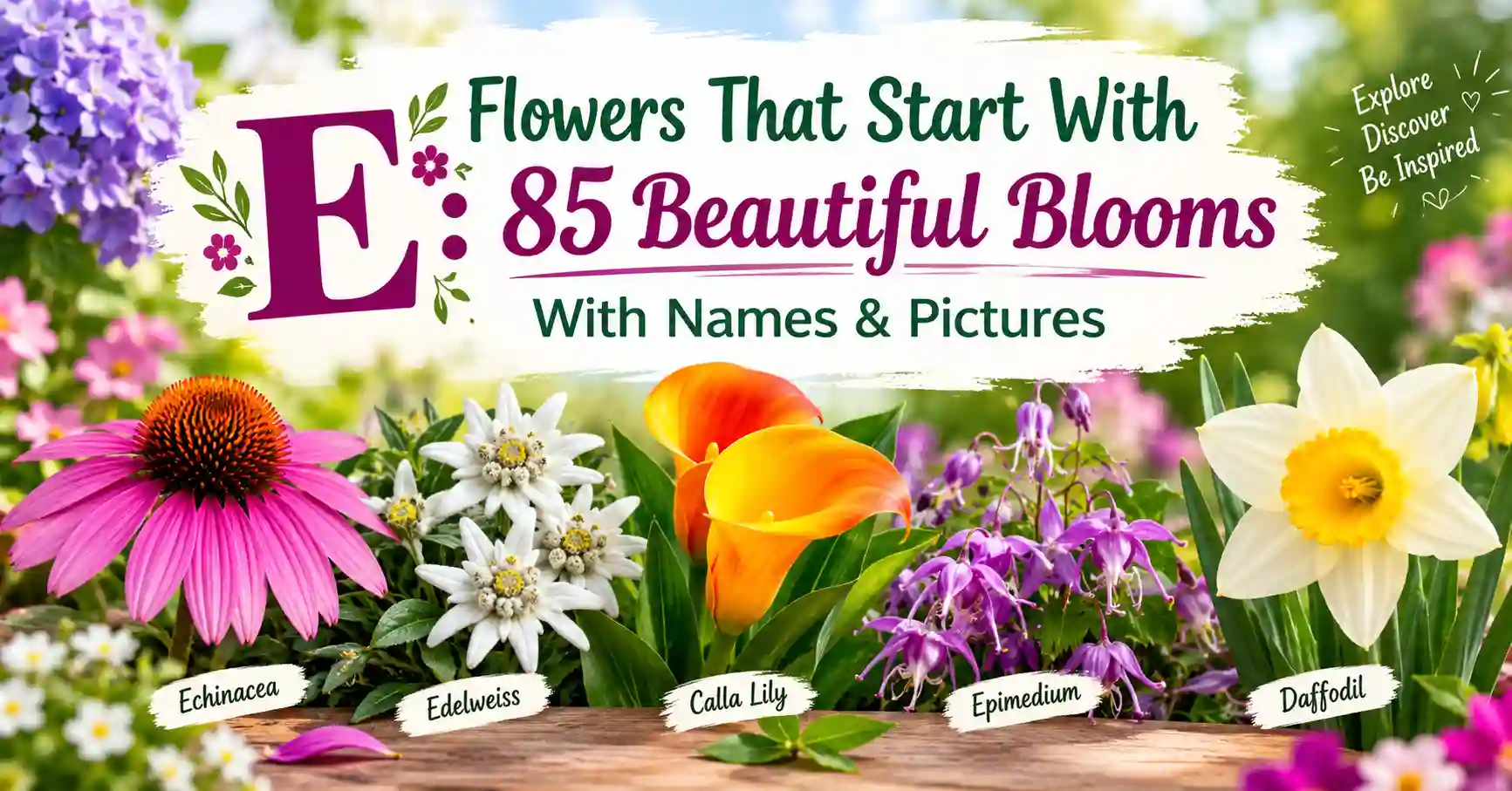
Flowers that start with E stretch from the sunny echinacea to the snowy edelweiss. English lavender, evening primrose, and eryngium are names many gardeners know well. But the letter E also hides oddities, like elephant’s head, emu bush, and a cactus that blooms for a single night. This guide gathers 85 of them in one place.
Every plant below is real and has a verified botanical name. You will find border favorites, houseplants, florist picks, wildflowers, and a few rarities that most lists never mention. Nothing here is filler.
A big list only helps if you can use it. So this guide sorts the plants by color, life cycle, and use. A bloom’s beauty means little if it dies in your climate. It means even less if it harms a pet. Each table is explained in plain words first, so you never face a bare spreadsheet.
Read straight through or jump to what you need. Have a cat? Check the toxicity section first, because one famous E flower is dangerous to cats. Want a name for a project? Use the alphabetical list. Want a quick pick? Try the decision table near the end.
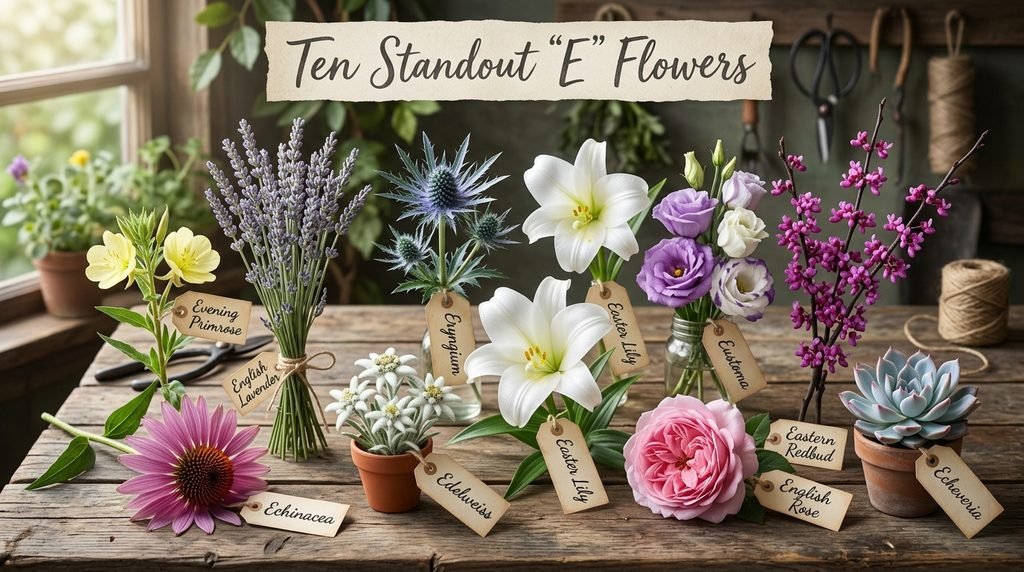
Quick Answer: Ten Standout E Flowers
Echinacea is the easiest star, a tough summer bloomer that feeds bees and finches. English lavender brings scent and silvery leaves to sunny borders, while eryngium adds spiky, steel-blue drama with almost no care. Evening primrose opens its yellow cups at dusk, and edelweiss is the famous alpine icon for collectors. Easter lily and eustoma are the florist favorites, one for pure white trumpets and the other for rose-like blooms that last. English rose and eastern redbud cover the romance and the spring-tree show, and echeveria rounds out the list as the sculptural succulent for sunny windowsills.
Master Alphabetical List of Flowers That Start With E
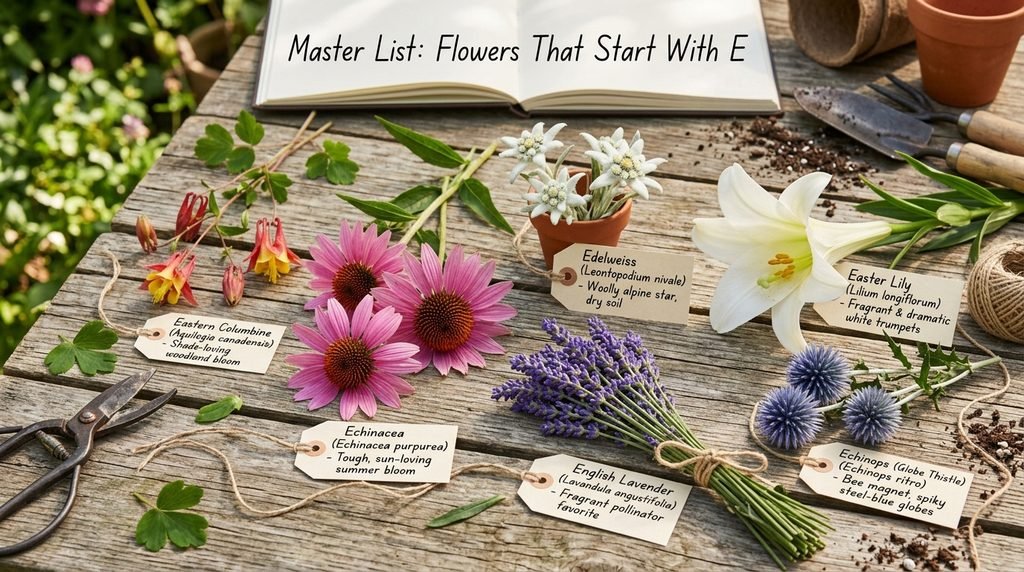
This list names 85 flowers. Most entries use a common name that gardeners already know. A few are better known by their botanical name, so they appear under the name nurseries print on plant tags. Each row has a short note, so you can see at a glance what the plant looks like and where it grows best.
| Flower | Botanical Name | Note |
| Early Blue Violet | Viola adunca | Small violet blooms, native wildflower |
| Early Meadow Rue | Thalictrum dioicum | Airy purple-green tassels in spring woods |
| Early Purple Orchid | Orchis mascula | Wild European orchid with spotted leaves |
| Early Saxifrage | Saxifraga virginiensis | Tiny white stars on rocky ledges |
| Easter Cactus | Rhipsalidopsis gaertneri | Red star blooms on a trailing houseplant |
| Easter Daisy | Townsendia exscapa | Low white-pink daisy of dry western prairies |
| Easter Lily | Lilium longiflorum | White fragrant trumpets, very toxic to cats |
| Eastern Blue-Eyed Grass | Sisyrinchium atlanticum | Tiny violet-blue stars over grassy leaves |
| Eastern Bluestar | Amsonia tabernaemontana | Pale blue stars, golden fall color |
| Eastern Columbine | Aquilegia canadensis | Red and yellow lanterns, hummingbird favorite |
| Eastern Prickly Pear | Opuntia humifusa | Yellow cactus blooms, hardy in cold zones |
| Eastern Redbud | Cercis canadensis | Pink-magenta blooms on bare branches |
| Eastern Shooting Star | Dodecatheon meadia | Swept-back pink petals on woodland stems |
| Echeveria | Echeveria elegans | Rosette succulent with coral bell blooms |
| Echinacea | Echinacea purpurea | Pink coneflower, long summer bloom |
| Echinocereus (Hedgehog Cactus) | Echinocereus triglochidiatus | Scarlet cups on a spiny cactus |
| Echinopsis (Easter Lily Cactus) | Echinopsis oxygona | Large, short-lived blooms on a small cactus |
| Echinops (Globe Thistle) | Echinops ritro | Steel-blue spiky globes, bee magnet |
| Echium (Pride of Madeira) | Echium candicans | Tall blue-purple spires, coastal shrub |
| Edelweiss | Leontopodium nivale | Woolly white alpine star, cultural icon |
| Edging Lobelia | Lobelia erinus | Blue-violet trailing blooms for borders |
| Eglantine Rose | Rosa rubiginosa | Pink wild rose with apple-scented leaves |
| Egyptian Blue Lotus | Nymphaea caerulea | Pale blue water lily, sacred in ancient Egypt |
| Egyptian Star Cluster | Pentas lanceolata | Star clusters, butterfly favorite |
| Elatior Begonia | Begonia × hiemalis | Winter-blooming indoor begonia |
| Elderflower | Sambucus nigra | Creamy lacy clusters used in cordials |
| Elegant Brodiaea | Brodiaea elegans | Violet star clusters on slender stems |
| Elegant Camas | Antirrhinum elegans | White-green woodland spikes, highly toxic |
| Elegant Clarkia | Clarkia unguiculata | Pink-salmon spring wildflower annual |
| Elephant’s Head | Pedicularis groenlandica | Pink spikes shaped like tiny elephant heads |
| Embothrium (Chilean Fire Bush) | Embothrium coccineum | Blazing orange-red tubular blooms |
| Emilia (Flora’s Paintbrush) | Emilia javanica | Tassel-like scarlet blooms |
| Empress Tree | Paulownia tomentosa | Fragrant lavender trumpets before the leaves |
| Emu Bush | Eremophila maculata | Spotted tubular blooms, Australian native |
| Enchanter’s Nightshade | Circaea lutetiana | Tiny white woodland flowers |
| Engelmann Daisy | Engelmannia peristenia | Yellow prairie daisy for dry soil |
| English Bluebell | Hyacinthoides non-scripta | Nodding blue woodland bells, toxic bulbs |
| English Daisy | Bellis perennis | Small pink-white daisy, cool-season edging |
| English Hawthorn | Crataegus laevigata | White or pink spring clusters on a small tree |
| English Iris | Iris latifolia | Blue-purple bulbous iris, summer bloom |
| English Lavender | Lavandula angustifolia | Fragrant purple spikes, bee favorite |
| English Marigold | Calendula officinalis | Orange daisy, edible petals |
| English Primrose | Primula vulgaris | Pale yellow early spring bloom |
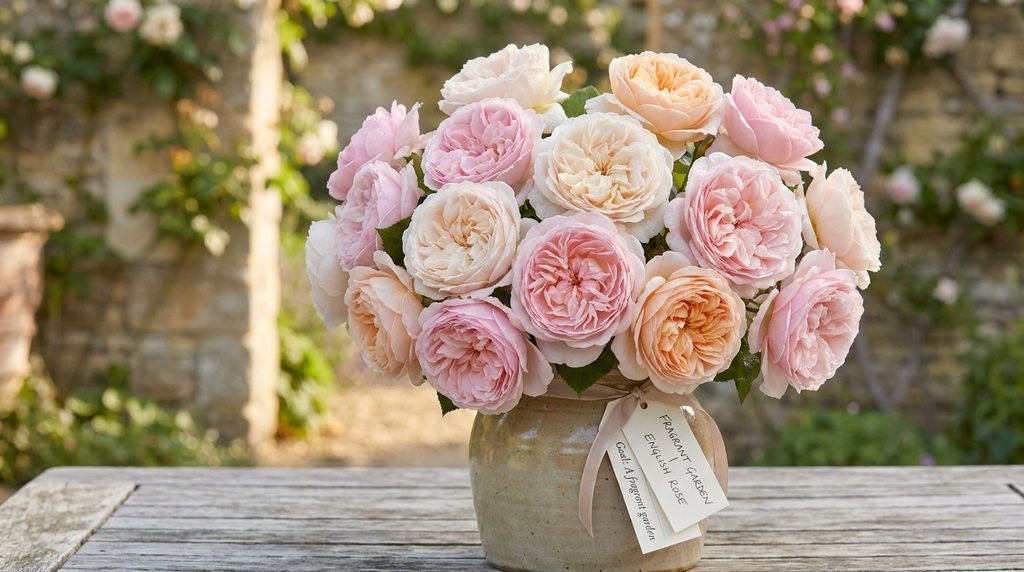
| English Rose | Rosa (David Austin hybrids) | Full, fragrant, old-style rose |
| Enkianthus | Enkianthus campanulatus | Cream-red bells, fiery fall leaves |
| Epidendrum (Crucifix Orchid) | Epidendrum radicans | Orange-red orchid clusters for warm gardens |
| Epigaea (Trailing Arbutus) | Epigaea repens | Fragrant pink-white woodland bloom |
| Epimedium | Epimedium grandiflorum | Spurred blooms for dry shade |
| Epiphyllum (Orchid Cactus) | Epiphyllum oxypetalum | Night-blooming, large and fragrant |
| Eranthemum (Blue Sage) | Eranthemum pulchellum | Blue winter-blooming tropical shrub |
| Eranthis (Winter Aconite) | Eranthis hyemalis | Bright yellow, one of the earliest blooms |
| Eremurus (Foxtail Lily) | Eremurus robustus | Towering pink-white spikes |
| Erica (Heath) | Erica carnea | Winter-blooming pink bell clusters |
| Erigeron (Fleabane) | Erigeron speciosus | Lavender daisies with yellow centers |
| Erinus (Fairy Foxglove) | Erinus alpinus | Tiny purple-pink rock garden spikes |
| Eriogonum (Wild Buckwheat) | Eriogonum umbellatum | Sulfur-yellow pom-poms for dry slopes |
| Eriophyllum (Woolly Sunflower) | Eriophyllum lanatum | Golden daisies over silvery wool |
| Erodium (Stork’s Bill) | Erodium manescavii | Magenta geranium-like blooms |
| Eryngium (Sea Holly) | Eryngium planum | Steel-blue thistle-like heads |
| Erysimum (Wallflower) | Erysimum ‘Bowles’s Mauve’ | Mauve spikes that bloom for months |
| Erythronium (Dog-Tooth Violet) | Erythronium dens-canis | Swept-back pink petals, mottled leaves |
| Escallonia | Escallonia rubra | Pink-red hedge blooms |
| Eschscholzia (California Poppy) | Eschscholzia californica | Orange silky cups |
| Eucalyptus (Red-Flowering Gum) | Corymbia ficifolia | Crimson blossom clusters on a tree |
| Eucharis (Amazon Lily) | Eucharis × grandiflora | White fragrant daffodil-like blooms |
| Eucomis (Pineapple Lily) | Eucomis comosa | Spiked blooms topped with a leafy crown |
| Eucryphia | Eucryphia glutinosa | White cups with golden stamens |
| Euphorbia (Spurge) | Euphorbia characias | Chartreuse bracts, irritating sap |
| Euryale (Gorgon Plant) | Euryale ferox | Giant spiny pads, purple water bloom |
| Euryops | Euryops pectinatus | Yellow daisies for warm gardens |
| Eurybia (Wood Aster) | Eurybia divaricata | White fall asters for shade |
| Eustoma (Lisianthus) | Eustoma grandiflorum | Rose-like cut flower |
| Eutrochium (Joe-Pye Weed) | Eutrochium purpureum | Tall dusty-pink clusters for butterflies |
| Evening Campion | Silene latifolia | White blooms opening at dusk |
| Evening Primrose | Oenothera biennis | Yellow cups that open at dusk |
| Evening Scented Stock | Matthiola longipetala | Plain blooms, strongly fragrant at night |
| Evening Snow | Linanthus dichotomus | White western wildflower, opens in the evening |
| Eve’s Necklace | Styphnolobium affine | Pink pea-like chains on a Texas native tree |
| Everlasting Pea | Lathyrus latifolius | Magenta climbing sprays, toxic seeds |
| Evergreen Candytuft | Iberis sempervirens | White evergreen edging, spring bloom |
| Evergreen Clematis | Clematis armandii | Fragrant white spring climber |
| Evergreen Wisteria | Millettia reticulata | Late-summer purple clusters, toxic seeds |
| Exacum (Persian Violet) | Exacum affine | Lavender fragrant indoor blooms |
| Exochorda (Pearl Bush) | Exochorda racemosa | Pearl-like buds open to white sprays |
| Eyebright | Euphrasia officinalis | Tiny white-purple herb bloom |
That table names 85 distinct flowers that start with E. Edelweiss and elderflower sit far apart in habitat. One clings to Alpine rock. The other lines country lanes. Both show how wide this single letter reaches.
Read More: Beautiful Flowers That Start With F: Names, Pictures & Symbolism
Full Comparison Table: Sun, Water, and Bloom Time
When two plants seem equally good, sun and water needs usually pick the winner. The table below compares the main E flowers from this guide. Read the sun column first. Then check the water column and the bloom season to see if the plant fits your space and your calendar.
| Flower | Sun Needs | Water Needs | Bloom Season |
| Easter Lily | Full sun to part shade | Moderate | Summer outdoors, spring as a florist plant |
| Eastern Columbine | Part shade | Moderate | Spring |
| Echinacea | Full sun | Low to moderate | Summer to fall |
| Echinops | Full sun | Low | Midsummer |
| Echeveria | Bright light or full sun | Low | Spring to summer |
| Edelweiss | Full sun, sharp drainage | Low | Summer |
| English Lavender | Full sun | Low | Early summer |
| English Primrose | Part shade | Moderate to high | Early spring |
| English Daisy | Full sun to part shade | Moderate | Spring |
| English Rose | Full sun | Moderate | Late spring to fall |
| Epimedium | Part to full shade | Low once established | Spring |
| Eryngium | Full sun | Low | Summer |
| Evening Primrose | Full sun | Low | Summer |
| Eucomis | Full sun | Moderate | Midsummer |
| Erica (Heath) | Full sun | Moderate | Winter to early spring |
| Eastern Redbud | Full sun to part shade | Moderate | Early spring |
| Euphorbia | Full sun | Low | Spring |
| Easter Cactus | Bright indirect light | Low to moderate | Spring |
Echinops, eryngium, and edelweiss are the best picks for hot, dry, lean soil. All three resent wet feet. English primrose sits at the other end. It wants cool roots, partial shade, and steady moisture.
Garden Favorites Among E Flowers
A handful of E flowers earn a place in almost every sunny border. Echinacea blooms for months and keeps pollinators busy. English lavender brings scent and a tidy mound of silver leaves. Eryngium and echinops give spiky texture that few other plants can match. Evening primrose fills dry corners with soft yellow light at dusk.
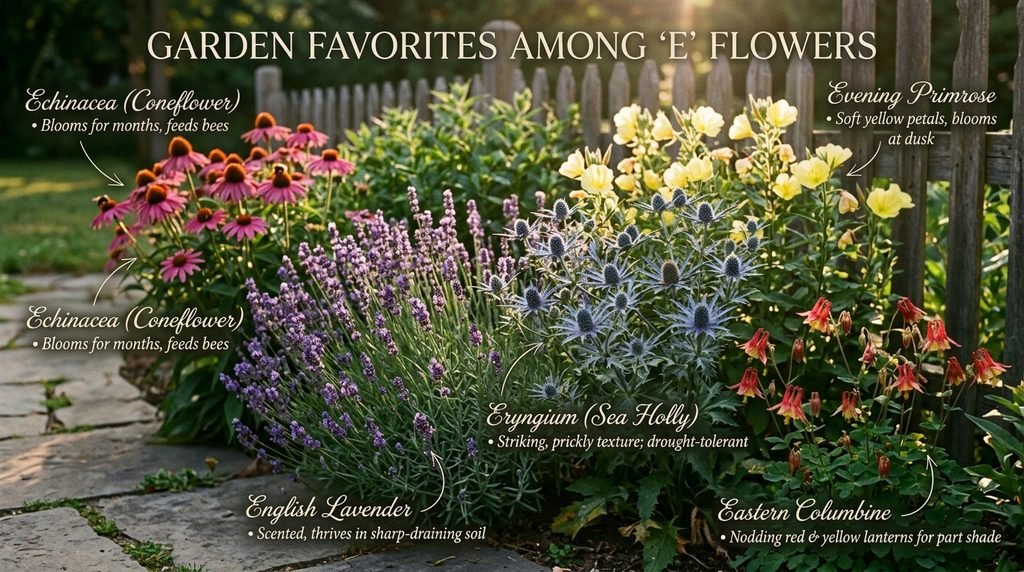
- Echinacea returns each year and feeds bees and goldfinches.
- English Lavender thrives in poor, sharp-draining soil.
- Eryngium needs almost no water once settled.
- Eastern Columbine brings red and yellow lanterns to part shade.
- Evening Primrose self-seeds in dry, sunny spots.
Echinacea and English lavender make a classic pair. One gives bold, daisy-like heads. The other adds scent and a soft purple haze. Together they look full from early summer to fall.
A few care habits keep these plants happy. Do not overfeed echinacea, eryngium, or lavender. Rich soil makes them floppy and short-lived. Cut English lavender back lightly after flowering, but never into old wood. Leave echinacea seed heads standing through fall. Goldfinches feed on them, and they look lovely under frost.
Indoor Plants Among E Flowers
Only a few E flowers thrive indoors, but they are good ones. Easter cactus blooms in spring with bright star-shaped flowers. Echeveria forms sculptural rosettes and sends up coral blooms in bright light. Exacum, called Persian violet, offers fragrant lavender flowers for months. Elatior begonia brightens winter rooms when little else is in bloom.
- Easter Cactus needs bright light and a cool rest in fall.
- Echeveria wants sun and a gritty, fast-draining mix.
- Exacum prefers steady moisture and bright, indirect light.
- Elatior Begonia blooms best in a cool, bright room.
Echeveria is the easiest of the group for beginners. It forgives missed waterings. Just give it plenty of light, or it will stretch and lose its tight shape.
Light matters more than anything else for indoor Echeveria flowers. A south or east window suits echeveria and Easter cactus. Exacum and elatior begonia prefer bright light without hot midday sun. Avoid cold drafts and soggy saucers. Most of these plants fail from too much water, not too little.
Explore More Ideas: 65+ Beautiful Flowers That Start With G (With Pictures & Names)
Florist Favorites Among E Flowers
Florists lean on E flowers for form and fragrance. Eustoma, also called lisianthus, looks like a ruffled rose and lasts up to two weeks in a vase. Eryngium adds spiky, blue texture to modern bouquets. Easter lily brings pure white trumpets and a strong scent. English roses supply full, old-fashioned blooms for romantic arrangements.
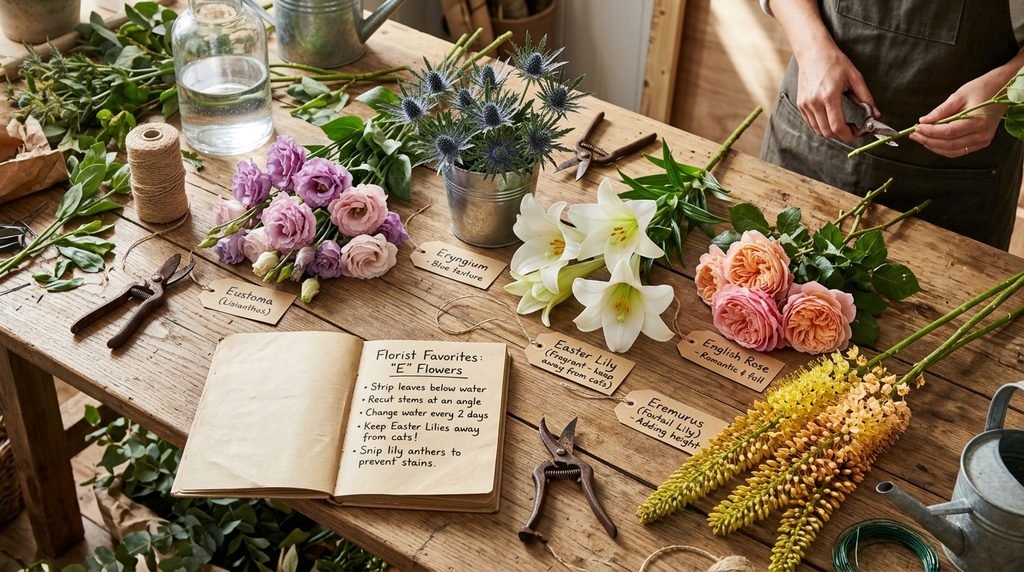
- Eustoma lasts a long time and comes in many soft colors.
- Eryngium adds blue color and texture, and it dries well.
- Easter Lily is fragrant, but keep it away from cats.
- English Rose gives lush, fragrant, many-petaled blooms.
- Eremurus (Foxtail Lily) adds height to large arrangements.
Eustoma and eryngium are the quiet workhorses. They rarely steal the show. But many bouquets would feel flat without them.
Good vase care doubles the life of any cut flower. Strip the leaves below the water line. Recut the stems at an angle. Change the water every two days. Keep the vase away from ripening fruit and direct heat. For Easter lily, snip off the pollen-bearing anthers. This keeps pollen from staining cloth. It does not make the lily safe for cats, so skip it entirely if you share your home with one.
Rare and Unusual E Flowers
Some E plants are hard to find or hard to grow. Edelweiss grows high in the Alps and is protected in several European countries, so most garden plants come from cultivated stock. Epiphyllum oxypetalum, called queen of the night, opens its huge, fragrant white blooms for just one night. Embothrium, the Chilean fire bush, lights up cool, damp gardens with blazing orange-red flowers but sulks in heat. Egyptian blue lotus floats on warm water and was sacred in ancient Egypt, but it needs a sunny, heated pond to thrive.
These four plants share one trait. Each wants a very specific home. That is why they stay special. If you want to grow one, buy nursery-grown plants only. Never dig wild plants, since many rare E species are protected by law.
Caution: Toxic E Flowers
Several E flowers can harm pets, livestock, or people. Easter lily is the one cat owners must know. Even a small amount of any part can cause kidney failure in cats. Elegant camas is a woodland relative of death camas, and every part is poisonous. Winter aconite and English bluebell contain compounds that affect the heart and stomach. Euphorbia sap burns skin and eyes.
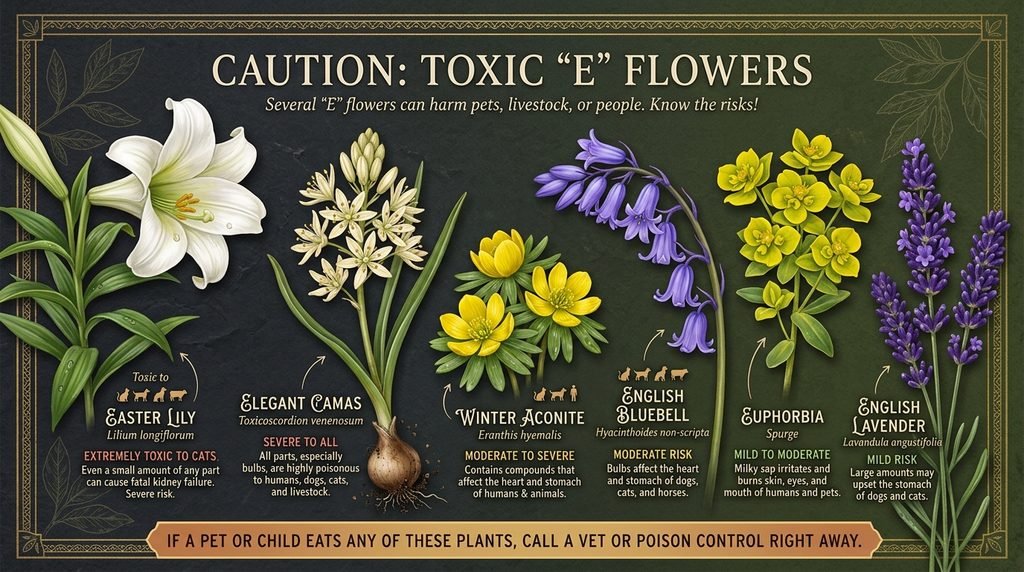
| Flower | Toxic To | Severity |
| Easter Lily | Cats (extremely), dogs (mild) | Severe for cats — all parts, can cause kidney failure |
| Elegant Camas | Humans, dogs, cats, livestock | Severe — all parts, especially bulbs |
| Eranthis (Winter Aconite) | Humans, dogs, cats, livestock | Moderate to severe — heart and stomach effects |
| English Bluebell | Dogs, cats, horses | Moderate — bulbs affect heart and stomach |
| Evergreen Wisteria | Dogs, cats, humans | Moderate — seeds and pods upset the stomach |
| Everlasting Pea | Dogs, cats, horses | Moderate — seeds are the riskiest part |
| Echium (Pride of Madeira) | Livestock, humans (skin) | Mild to moderate — sap irritates skin, leaves can harm livestock |
| Euphorbia (Spurge) | Dogs, cats, humans | Mild to moderate — milky sap irritates skin, eyes, and mouth |
| Elderflower (Sambucus) | Humans, dogs, cats | Mild to moderate — leaves, stems, bark, and raw berries are the risk |
| English Lavender | Dogs, cats | Mild — large amounts may upset the stomach |
Easter lily and elegant camas deserve the loudest warning. Keep Easter lily out of any home with a cat, even as a cut flower. Lavender is a milder risk, but a chewing dog can still get sick. Elderflower blossoms are used in cordials, but the rest of the plant needs care. If a pet or child eats any plant on this list, call a vet or poison control right away.
See Related Flowers: 100+ Flowers That Start With D (Names, Meanings & Beautiful Photos)
E Flowers Grouped by Color
Pink and rose tones run through echinacea, eastern redbud, English rose, erica, and eutrochium. Eastern redbud gives the boldest show, since the whole tree blooms before the leaves appear. Echinacea suits sunny beds and butterfly gardens. English rose suits scented, romantic borders.
White and cream flowers include edelweiss, Easter lily, elderflower, eucharis, and evergreen clematis. White brightens shade and glows at dusk. Easter lily and eucharis make fragrant, formal choices. Evergreen clematis covers a fence with early spring scent.
Blue and purple are the cool side of E. Echinops, eryngium, eustoma, English lavender, and erysimum all deliver steel, violet, or lilac tones. Use them to calm hot-colored beds. Echinops and eryngium bring a spiky shape. English lavender adds scent and a soft haze.
Yellow and orange bring warmth. Evening primrose, euryops, eschscholzia, English marigold, and eranthis glow in the sun. Eranthis is one of the very first blooms of the year. Eschscholzia and English marigold are easy from seed.
Red-hot accents come from embothrium, eastern columbine, and echinocereus. All three are showy and rare in gardens. Eastern columbine and embothrium also draw hummingbirds.
Life-Cycle Groupings for E Flowers
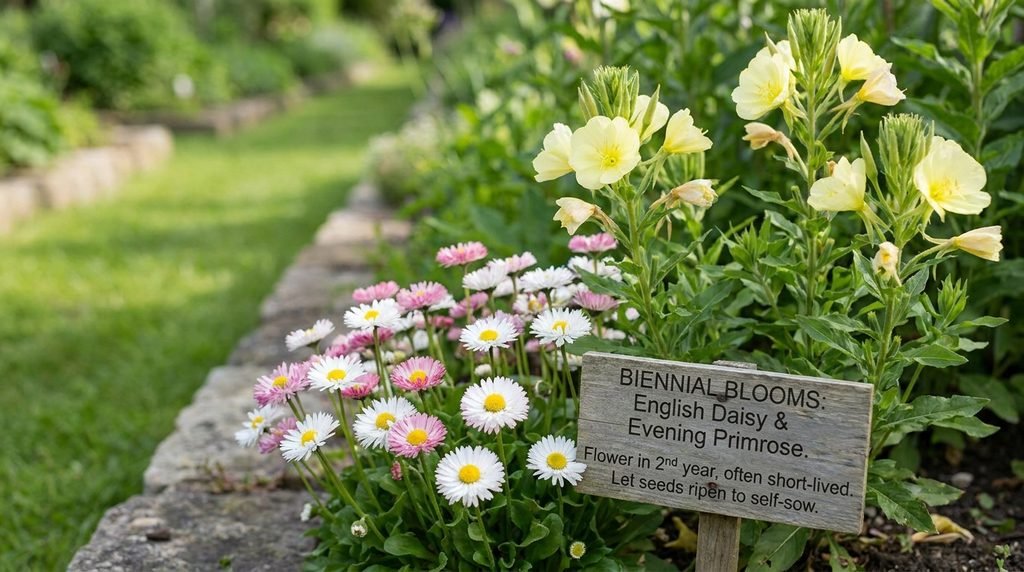
A plant’s life cycle tells you how much work to expect. Annuals live one season, so you replant each year. Biennials flower in their second year. Perennials return on their own. Tender plants need warmth or winter protection. Zones below are approximate and vary by variety, so check your own plant tag.
| Flower | Life Cycle | Typical Zones |
| Edging Lobelia | Annual | All zones (seasonal) |
| Evening Scented Stock | Annual | All zones (seasonal) |
| Eustoma (Lisianthus) | Annual or short-lived perennial | 8–10 (perennial), elsewhere annual |
| English Daisy | Biennial or short-lived perennial | 4–8 |
| Evening Primrose | Biennial | 4–9 |
| Erysimum (Wallflower) | Short-lived perennial | 6–9 |
| Echinacea | Perennial | 3–9 |
| Echinops | Perennial | 3–9 |
| Eastern Columbine | Perennial | 3–8 |
| Eryngium | Perennial | 4–9 |
| Epimedium | Perennial | 4–9 |
| English Primrose | Perennial | 4–8 |
| Edelweiss | Short-lived perennial | 4–7 |
| English Lavender | Perennial (shrub) | 5–9 |
| English Rose | Perennial (shrub) | 5–9 |
| Erica (Heath) | Perennial (shrub) | 5–7 |
| Eastern Redbud | Perennial (small tree) | 4–9 |
| Easter Lily | Perennial (bulb) | 4–9 |
| Eucomis | Tender perennial (bulb) | 7–10 |
| Echeveria | Tender perennial (succulent) | 9–11 (indoors elsewhere) |
| Easter Cactus | Tender perennial (houseplant) | 10–11 (indoors elsewhere) |
Evening primrose and English daisy are the two to watch. Many people expect them to live for many years. In truth, they often fade after one or two. Let a few seed heads ripen, and the patch will keep itself going.
Botanical Name Crosswalk
Common names change from place to place. Botanical names do not. Nursery tags and seed packets use Latin for this reason. It also helps you search online with confidence. Two different plants can share one common name, so the Latin name protects you from a wrong purchase.
| Common Name | Botanical Name |
| Echinacea | Echinacea purpurea |
| English Lavender | Lavandula angustifolia |
| Easter Lily | Lilium longiflorum |
| Eryngium | Eryngium planum |
| Evening Primrose | Oenothera biennis |
| Edelweiss | Leontopodium nivale |
| Eustoma | Eustoma grandiflorum |
| Eastern Redbud | Cercis canadensis |
| Eastern Columbine | Aquilegia canadensis |
| English Primrose | Primula vulgaris |
| English Daisy | Bellis perennis |
| Echeveria | Echeveria elegans |
| Echinops | Echinops ritro |
| Elderflower | Sambucus nigra |
| Eranthis | Eranthis hyemalis |
English primrose shows why this matters. Many nurseries sell it as Primula vulgaris. Older books may list a different name. Both point to the same plant, so check both when you shop. Also, do not confuse English primrose with evening primrose. They are unrelated.
What E Flowers Mean
Flower meanings vary by culture, but a good number of E flowers carry steady symbolism. Edelweiss stands for devotion, courage, and purity. Alpine climbers once risked steep cliffs to pick it as proof of love, and it is a proud emblem of Austria and Switzerland. Easter lily is tied to purity, hope, and resurrection, which is why it fills churches in spring.
English primrose, in Victorian flower language, meant young love and the line “I cannot live without you.” English daisy stands for innocence and new beginnings, which suits its modest, cheerful look.
Echinacea carries a modern meaning of strength and health, thanks to its long use in herbal remedies. Evening primrose, in some old traditions, meant inconstancy, since its blooms open and fade so quickly. Epiphyllum, the queen of the night, is a symbol of fleeting beauty, because its giant bloom lasts only hours. Egyptian blue lotus stood for rebirth and the rising sun in ancient Egypt.
Elderflower appears in many folk traditions as a plant of protection and compassion. Match the flower to your message, and remember that the same bloom can mean something different in another culture.
Decision Table: Which E Flower Fits Your Situation
You do not have to read the whole list to choose well. Start with your goal in the left column. The right column names the best E flower for it. Then check the toxicity section if you have pets or children.
| If You Want… | Choose This E Flower |
| A tough, sunny, low-water border | Echinacea, Eryngium, or Echinops |
| Pollinator support | Echinacea, Eutrochium, or Eastern Columbine |
| A fragrant garden | English Lavender or English Rose |
| Color in part shade | Eastern Columbine or Epimedium |
| Early spring color | Eranthis, Erica, or English Primrose |
| A spring flowering tree | Eastern Redbud |
| An easy houseplant with blooms | Echeveria, Easter Cactus, or Exacum |
| Long-lasting cut flowers | Eustoma or Eryngium |
| Evening bloom and scent | Evening Primrose or Evening Scented Stock |
| A cat-safer household | Echinacea, Eustoma, or English Rose |
Echinacea appears three times because it is easy, long-blooming, and not on the toxic list in this guide. Eustoma and English rose are good partners for it. Always double-check any plant with your vet if a pet is likely to chew it.
Conclusion
Flowers that start with E offer a very wide choice, from the humble English daisy to the dramatic foxtail lily. This guide sorted 85 of them by color, life cycle, and use, so you can pick with confidence. Whether you want a sunny pollinator border, a fragrant corner, or a plant for a bright windowsill, there is an E flower that fits. Use the tables above, read the toxicity notes, and start planting.
Frequently Asked Questions
How many flowers start with E?
More than 85 well-known flowers start with E. This guide lists 85, from common garden plants to rare alpine and woodland species.
What is the most popular flower that starts with E?
Echinacea, English lavender, and Easter lily are among the most popular. Evening primrose and eustoma are also widely grown.
What are the easiest flowers that start with E to grow?
Echinacea, English marigold, Eschscholzia, and evening primrose are very easy. Echeveria is the easiest E houseplant.
Which E flowers attract butterflies and hummingbirds?
Echinacea, Eutrochium, and Egyptian star cluster draw butterflies. Eastern columbine, embothrium, and emu bush draw hummingbirds.
Is Easter lily poisonous to cats?
Yes. Easter lily is one of the most dangerous plants for cats. Even a small bite, or pollen licked off fur, can cause kidney failure. Keep it out of any home with a cat.
Which E flower is the most dangerous?
Easter lily is the most dangerous for cats. Elegant camas is the most dangerous for people and livestock.
Is echinacea safe for pets?
Echinacea is generally listed as non-toxic to dogs and cats. Still, check with your vet if a pet tends to chew plants.
What does edelweiss symbolize?
Edelweiss stands for devotion, courage, and purity. It is also a proud emblem of the Alps.
Which E flowers bloom in late winter?
Eranthis, erica, and English primrose bloom in late winter or very early spring. Elatior begonia blooms indoors in winter.
Do evening primroses come back every year?
Evening primrose is usually a biennial. It flowers in its second year, then returns by self-seeding if you let some seed heads ripen.
4 thoughts on “Flowers That Start With E: 85 Beautiful Blooms With Names & Pictures”