Flowers that start with Z end the alphabet with a burst of color. Zinnia is the star, and calla lily, zonal geranium, and Christmas cactus follow close behind. But the letter Z also hides odd and lovely finds, like a night-scented phlox, a ginger with beehive-shaped blooms, and a giant flower that smells like rotting meat. This guide gathers 30 of them in one place.
Every plant below is real and has a verified botanical name. You will find easy annuals, bulbs, houseplants, native wildflowers, and a few rarities. Only one entry is grown mainly for leaves, and it is clearly marked as an exception. Z is a short letter, so many names are Latin genus names with the common name in brackets.
A short list still needs to be useful. So this guide sorts the plants by color, life cycle, and use. A bloom’s beauty means little if it dies in your climate. It means even less if it harms a child or a pet. Each table is explained in plain words first, so you never face a bare spreadsheet.
Many Z plants love heat, so they suit hot, sunny summers well. Read straight through or jump to what you need. Have a pet? Check the toxicity section first. Want a quick pick? Try the decision table near the end.
Quick Answer: Ten Standout Z Flowers
Zinnia is the easy star, a heat-loving annual that blooms from seed in nearly every color. Zahara zinnia is its tidy, disease-resistant cousin for hot, humid gardens. Zantedeschia, the calla lily, brings elegant white or pink spathes to beds and bouquets.
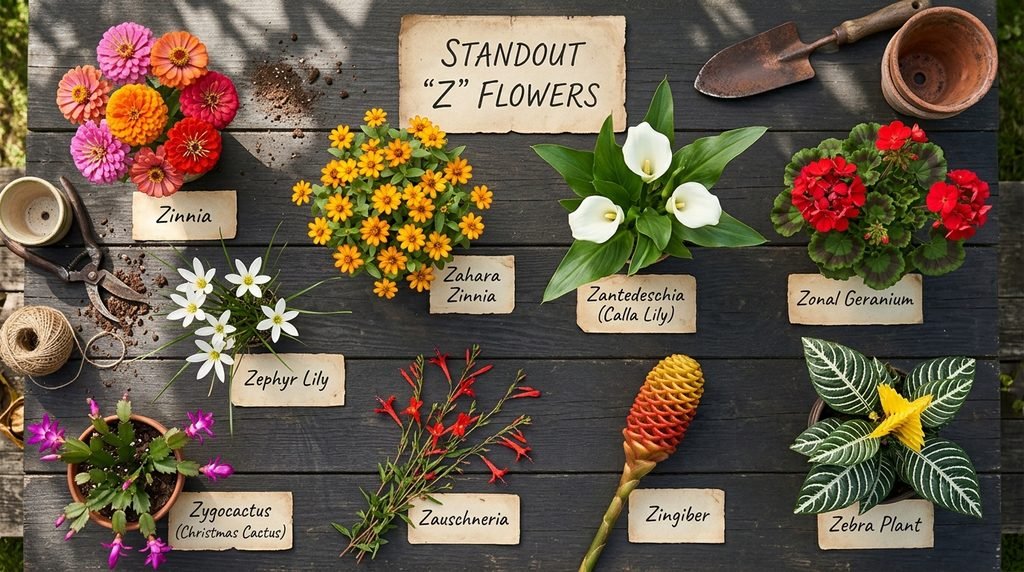
Zonal geranium is the classic pot plant for sunny patios, and Christmas cactus, called zygocactus, blooms in the darkest months. Zephyr lily pops open after rain like a small white crocus. Zauschneria, or California fuchsia, feeds hummingbirds in late summer, and zingiber, the beehive ginger, makes a bold tropical statement. Zebra plant rounds out the list as the houseplant with golden bracts and striped leaves.
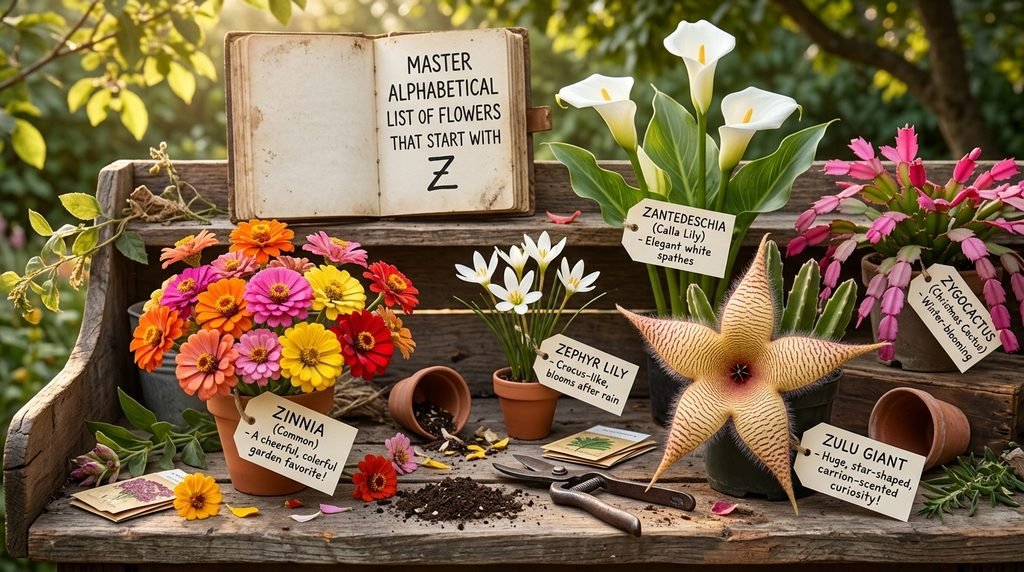
Master Alphabetical List of Flowers That Start With Z
This list names 30 flowers. A few entries use a common name that gardeners already know, like zinnia and zebra plant. Many others are better known by their botanical name, so they appear under the genus nurseries print on plant tags, with the common name in brackets. Each row has a short note, so you can see at a glance what the plant looks like and where it grows best. One entry is marked as an exception because the flower is not the main reason people grow it.
Read More: 60+ Beautiful Flowers That Start With Y (With Pictures & Names)
| Flower | Botanical Name | Note |
| Zahara Zinnia | Zinnia marylandica ‘Zahara’ | Disease-resistant, heat-loving blooms in bright colors |
| Zaluzianskya (Night Phlox) | Zaluzianskya capensis | White blooms with a honey-almond scent after dusk |
| Zantedeschia (Calla Lily) | Zantedeschia aethiopica | Elegant white spathes around a yellow spike |
| Zantedeschia (Pink Calla) | Zantedeschia rehmannii | Smaller pink spathes, tender and graceful |
| Zauschneria (California Fuchsia) | Epilobium canum | Scarlet trumpets that draw hummingbirds in fall |
| Zebra Plant | Aphelandra squarrosa | Golden bracts above striped, glossy leaves |
| Zebrina (exception) | Tradescantia zebrina | Grown for striped leaves, small pink-purple flowers |
| Zebrina Mallow | Malva sylvestris ‘Zebrina’ | Pale pink blooms striped with purple veins |
| Zenobia (Honeycup) | Zenobia pulverulenta | White bell flowers on a southeastern native shrub |
| Zephyr Lily | Zephyranthes candida | White crocus-like blooms that appear after rain |
| Zephyranthes (Pink Rain Lily) | Zephyranthes grandiflora | Pink star-shaped blooms in summer |
| Zephyranthes (Yellow Rain Lily) | Zephyranthes citrina | Golden blooms on a tough small bulb |
| Zig-Zag Cactus | Disocactus anguliger | Zigzag stems with creamy night-blooming flowers |
| Zigzag Clover | Trifolium medium | Magenta clover blooms on a wiry stem |
| Zigzag Goldenrod | Solidago flexicaulis | Yellow fall blooms for part shade |
| Zingiber (Beehive Ginger) | Zingiber spectabile | Beehive-shaped bracts in gold and red |
| Zingiber (Shampoo Ginger) | Zingiber zerumbet | Pinecone-like red bracts with a soapy sap |
| Zinnia (Common) | Zinnia elegans | Bold daisies in nearly every color, easy from seed |
| Zinnia (Creeping) | Sanvitalia procumbens | Small golden daisies for baskets and edges |
| Zinnia (Desert) | Zinnia acerosa | Tiny white blooms on a tough, low desert plant |
| Zinnia (Mexican) | Zinnia haageana | Orange and mahogany daisies, heat-tough |
| Zinnia (Narrowleaf) | Zinnia angustifolia | Orange daisies on a drought-proof groundcover |
| Zinnia (Peruvian) | Zinnia peruviana | Small red-and-gold flowers for hot beds |
| Zinnia (Prairie) | Zinnia grandiflora | Golden perennial zinnia for dry, sunny spots |
| Zizia (Golden Alexanders) | Zizia aurea | Yellow umbels that feed native pollinators |
| Zizia (Heart-Leaved Alexanders) | Zizia aptera | Yellow flower clusters over heart-shaped leaves |
| Zonal Geranium | Pelargonium × hortorum | Round clusters in red, pink, or white |
| Zulu Giant | Stapelia gigantea | Huge star-shaped bloom with a carrion smell |
| Zygocactus (Christmas Cactus) | Schlumbergera truncata | Pink or red blooms that arrive in winter |
| Zygopetalum | Zygopetalum intermedium | Fragrant orchid with green, brown, and violet blooms |
That table names 30 distinct flowers that start with Z. Zinnia and Zulu giant sit at opposite ends of the story. One is a cheerful garden favorite. The other is a giant, carrion-scented curiosity. Both show how wide this last letter reaches.
Full Comparison Table: Sun, Water, and Bloom Time
When two plants seem equally good, sun and water needs usually pick the winner. The table below compares the main Z flowers from this guide. Read the sun column first. Then check the water column and the bloom season to see if the plant fits your space and your calendar.
See More Flowers: 20+ Beautiful Flowers That Start With X (With Pictures & Names)
| Flower | Sun Needs | Water Needs | Bloom Season |
| Zinnia (Common) | Full sun | Moderate | Summer to frost |
| Zahara Zinnia | Full sun | Low to moderate | Summer to frost |
| Zinnia (Creeping) | Full sun | Low | Summer to frost |
| Zinnia (Mexican) | Full sun | Low | Summer to frost |
| Zinnia (Desert) | Full sun | Very low | Summer to fall |
| Zantedeschia (Calla Lily) | Full sun to part shade | Moderate to high | Spring to summer |
| Zantedeschia (Pink Calla) | Full sun to part shade | Moderate | Summer |
| Zaluzianskya (Night Phlox) | Full sun | Moderate | Summer evenings |
| Zauschneria (California Fuchsia) | Full sun | Low | Late summer to fall |
| Zebra Plant | Bright indirect light | Moderate | Late summer, indoors |
| Zenobia (Honeycup) | Part shade | Moderate | Late spring to summer |
| Zephyr Lily | Full sun to part shade | Moderate | Summer, after rain |
| Zigzag Goldenrod | Part shade | Moderate | Late summer to fall |
| Zingiber (Beehive Ginger) | Full sun to part shade | High | Summer to fall |
| Zizia (Golden Alexanders) | Full sun to part shade | Moderate | Late spring |
| Zonal Geranium | Full sun | Low to moderate | Spring to fall |
| Zygocactus (Christmas Cactus) | Bright indirect light | Low to moderate | Late fall to winter |
| Zygopetalum | Bright indirect light | Moderate | Fall to winter |
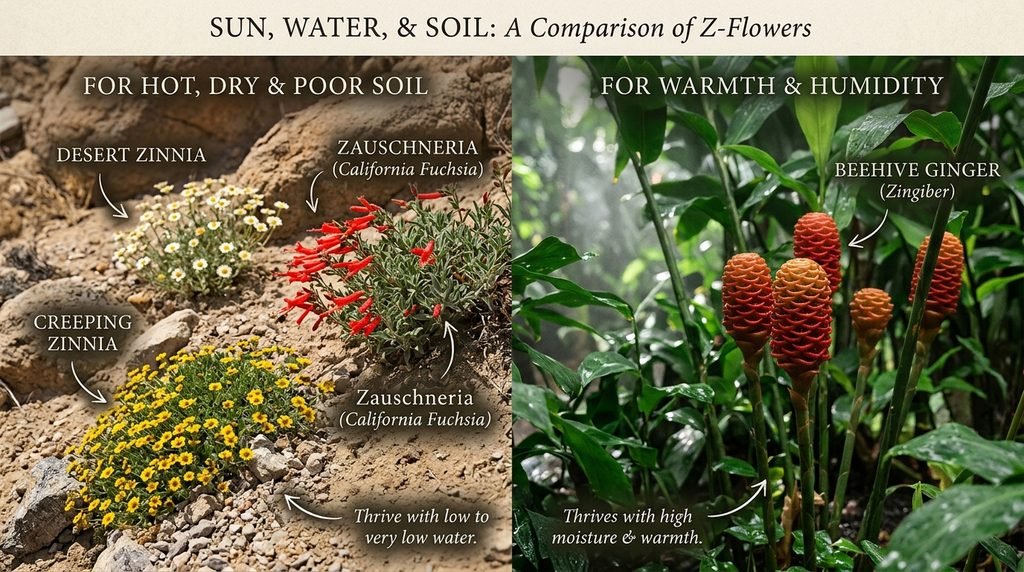
Desert zinnia, creeping zinnia, and zauschneria are the best picks for hot, dry, poor soil. All three bloom better when they are not overwatered. Beehive ginger sits at the other end. It wants warmth, moisture, and humidity.
Garden Favorites Among Z Flowers
A handful of Z flowers earn a place in almost every sunny garden. Zinnia is the champion of summer, with huge color range and nonstop blooms. Zahara zinnia holds up in heat and humidity without mildew. Zauschneria blooms when almost nothing else does. Zigzag goldenrod and Golden Alexanders bring native color and pollinators to lightly shaded beds.
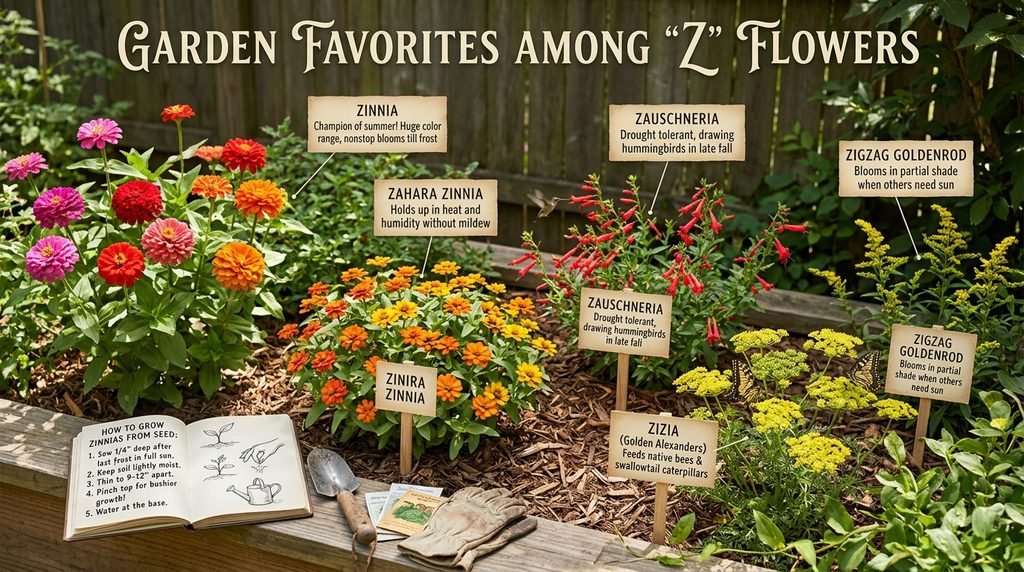
- Zinnia grows fast from seed and blooms until frost.
- Zahara Zinnia resists leaf diseases and keeps blooming in humid heat.
- Zauschneria thrives in dry soil and draws hummingbirds in fall.
- Zizia (Golden Alexanders) feeds native bees and swallowtail caterpillars.
- Zigzag Goldenrod blooms in part shade when most goldenrods need sun.
Zinnia and Zauschernia make a strong pair. One carries midsummer, and the other carries late summer and fall. Together they keep a hot, dry border alive for months.
A few care habits keep these plants happy. Water zinnias at the base to avoid mildew. Pinch young zinnias for bushier plants. Cut zauschneria back hard in late winter. Leave Golden Alexanders seed heads for birds.
How do you grow zinnias from seed? Start after the last frost, since zinnias hate cold soil. Pick a spot with at least six hours of sun. Loosen the soil and sow the seeds about a quarter inch deep. Keep the soil lightly moist until the seeds sprout, usually within a week. Thin the seedlings to about nine to twelve inches apart so air can move between them. Water at the base, not the leaves. Pinch the top of each young plant once it has three sets of leaves, and it will branch and flower more. Most zinnias bloom within two months of sowing, so you can have a full bed by midsummer.
Indoor and Container Picks Among Z Flowers
Several Z plants do well indoors. Zygocactus, the Christmas cactus, is a favorite that blooms in the darkest months of the year. Zebra plant gives golden bracts and striped leaves in a bright room. Zygopetalum is a fragrant orchid for cooler, bright spaces. Zonal geranium and zinnia thrive in sunny pots and balconies.
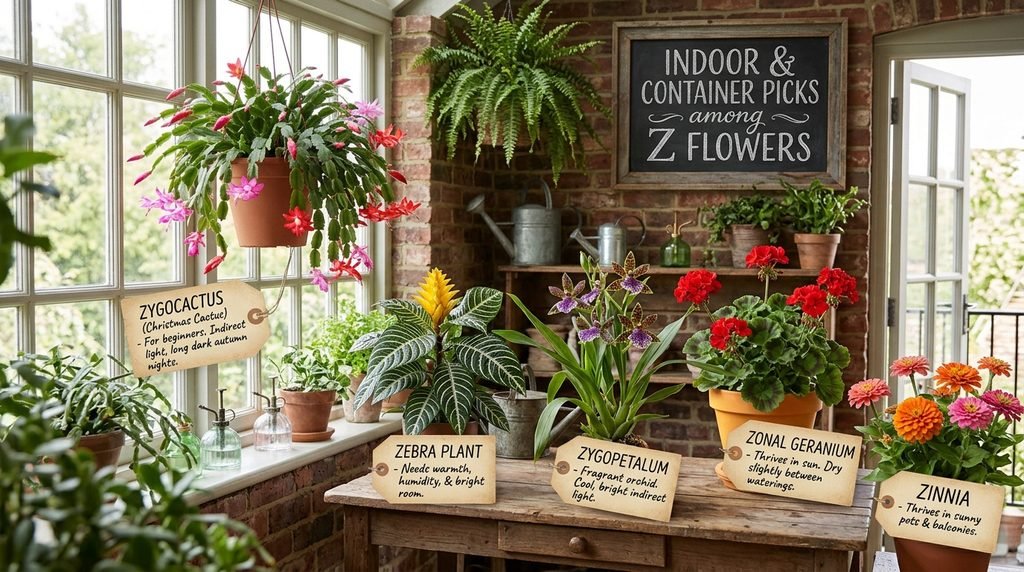
- Zygocactus needs long dark nights in autumn to set buds.
- Zebra Plant wants warmth, humidity, and bright light.
- Zygopetalum likes bright indirect light and cooler nights.
- Zonal Geranium blooms best in sun and likes to dry slightly between waterings.
Zygocactus is the pick for beginners. It forgives missed waterings. Just keep it out of hot, direct sun, and give it cool, dark nights before it blooms.
Light matters more than anything else for indoor Z plants. A bright east window suits zygocactus and zebra plant. Avoid cold drafts and soggy saucers. Most of these plants fail from too much water, not too little.
Find More Ideas: Flowers That Start With P: Beautiful Names, Meanings & Photos
Florist Favorites Among Z Flowers
Florists use Z flowers for bold color and clean lines. Zinnia is a favorite cut flower in summer, loved for its long stems and bright colors. Zantedeschia, the calla lily, brings sleek, modern shapes to weddings and events. Zingiber and its bracts add tropical height to large arrangements. Zahara and common zinnias last about a week in a vase.
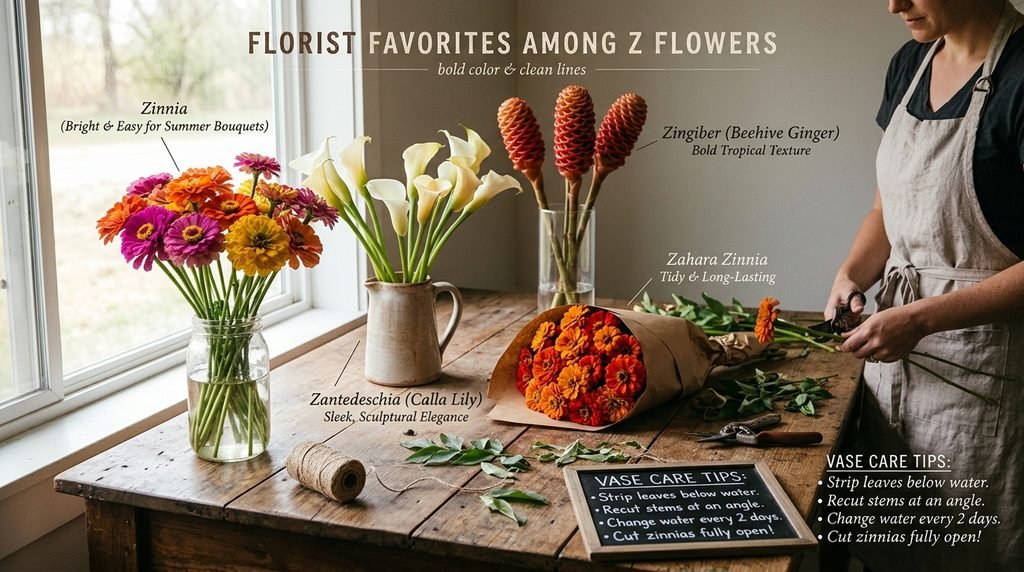
- Zinnia is easy, bright, and ideal for summer bouquets.
- Zantedeschia (Calla Lily) gives clean, sculptural elegance.
- Zingiber (Beehive Ginger) adds bold tropical texture.
- Zahara Zinnia gives tidy, long-lasting stems in warm colors.
Zinnia and calla lily are the quiet workhorses. They anchor a bouquet with color and shape. A florist’s summer cooler would feel plain without them.
Good vase care doubles the life of any cut flower. Strip the leaves below the water line. Recut the stems at an angle. Change the water every two days. For zinnias, cut them when the blooms are fully open, since they do not open more after cutting.
Rare and Unusual Z Flowers
Some Z plants are hard to find or hard to grow. Zulu giant is a South African succulent with huge star-shaped flowers that smell like rotting meat to draw flies. Zenobia, or honeycup, is a southeastern native shrub with white bell flowers that is rarely seen in gardens. Zig-zag cactus has flattened, zigzag stems and creamy flowers that open at night. Zingiber spectabile, the beehive ginger, has bright golden bracts that look like beehives.
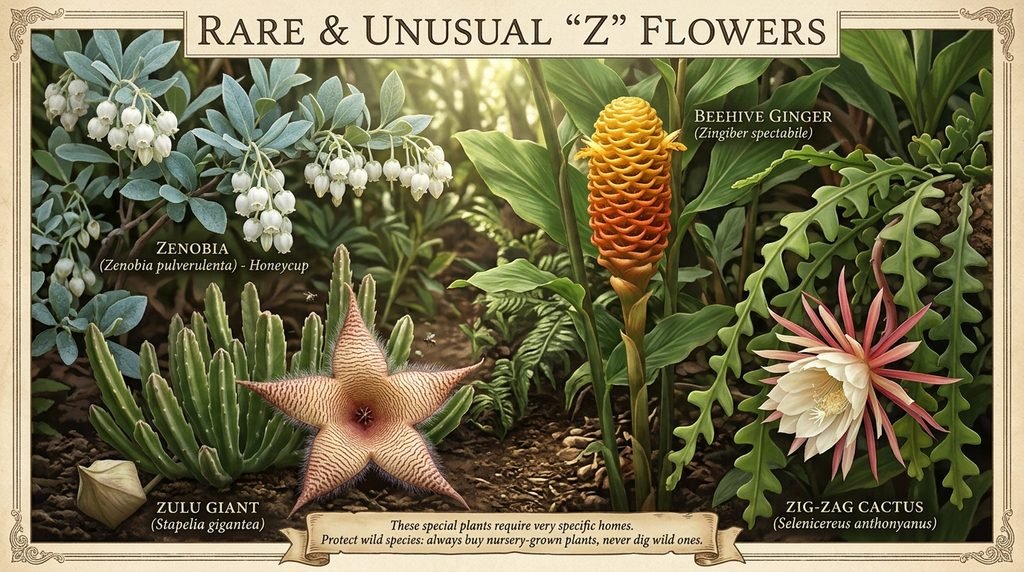
These four plants share one trait. Each wants a very specific home. That is why they stay special. If you want to grow one, buy nursery-grown plants only. Never dig wild plants, since many rare Z species are protected by law.
Caution: Toxic Z Flowers
Only a few Z plants cause problems for pets, and most are mild. Calla lilies contain crystals that burn the mouth and throat. Zephyr lilies have bulbs that cause vomiting if eaten. Zonal geraniums can cause stomach upset and skin irritation. Zebrina can cause skin rashes in sensitive pets and people.
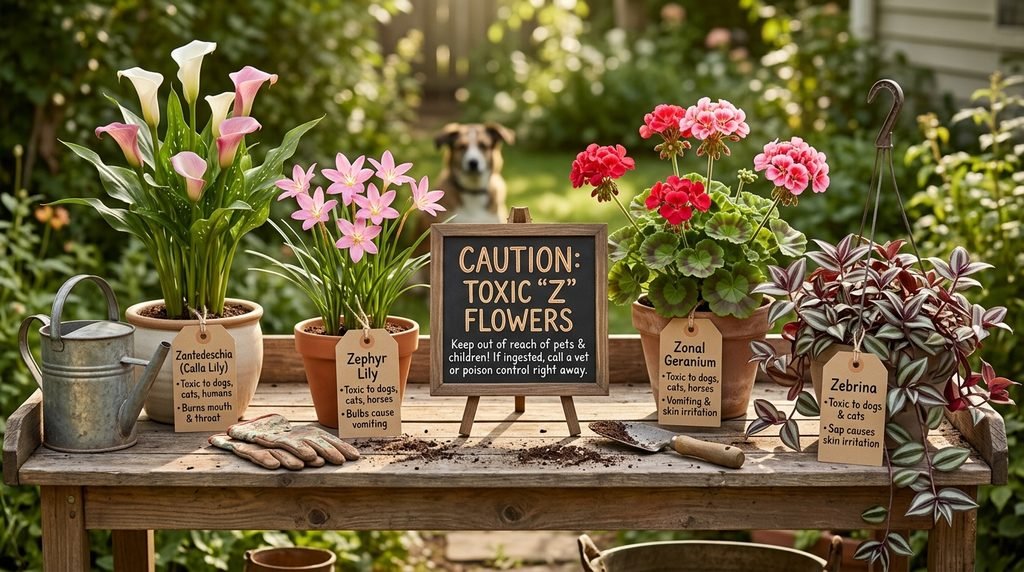
| Flower | Toxic To | Severity |
| Zantedeschia (Calla Lily) | Dogs, cats, humans | Mild to moderate — oxalate crystals burn the mouth and throat |
| Zantedeschia (Pink Calla) | Dogs, cats, humans | Mild to moderate — oxalate crystals burn the mouth and throat |
| Zephyr Lily | Dogs, cats, horses | Mild to moderate — bulbs cause vomiting and drooling |
| Zephyranthes (Pink Rain Lily) | Dogs, cats, horses | Mild to moderate — bulbs cause vomiting and drooling |
| Zonal Geranium | Dogs, cats, horses | Mild to moderate — vomiting and skin irritation |
| Zebrina | Dogs, cats | Mild — sap can cause skin irritation |
Calla lilies and zephyr lilies deserve the most caution. Keep them out of reach of children and pets that chew. Zinnia, zygocactus, and zebra plant, by contrast, are not on this list. If a pet or child eats any plant on this list, call a vet or poison control right away.
Z Flowers Grouped by Color
Orange, red, and gold bring heat. Zinnia, Mexican zinnia, narrowleaf zinnia, Zauschneria, and zonal geranium glow in full sun. Zinnia and Mexican zinnia give the biggest show through summer. Zauschneria brings scarlet trumpets in fall. Zonal geranium suits pots and window boxes.
Yellow and gold are the native colors of Z. Zizia, zigzag goldenrod, creeping zinnia, and yellow rain lily all shine in sun or light shade. Zizia blooms first in late spring. Zigzag goldenrod lights up late summer and fall. Creeping zinnia suits baskets and edges.
Pink, rose, and magenta come from Zaharaa zinnia, pink calla, pink rain lily, zonal geranium, and zigzag clover. Pink calla and pink rain lily bring soft, delicate shades. Zigzag clover adds a magenta wildflower look to meadows. Zebrina mallow adds pink with purple stripes.
White and cream flowers include calla lily, zephyr lily, night phlox, zenobia, and zig-zag cactus. White glows at dusk and brightens in shade. Night phlox and zig-zag cactus open in the evening. Calla lily suits formal gardens. Zenobia suits woodland-style gardens.
Purple and violet are rare in this letter, but zygopetalum brings them. Its fragrant orchid blooms are green and brown with violet lips. It suits indoor collections and bright, cool rooms.
Life-Cycle Groupings for Z Flowers
A plant’s life cycle tells you how much work to expect. Annuals live one season, so you replant each year. Perennials return on their own. Bulbs and rhizomes need the right winter, cold or warm, to come back. Zones below are approximate and vary by variety, so check your own plant tag.
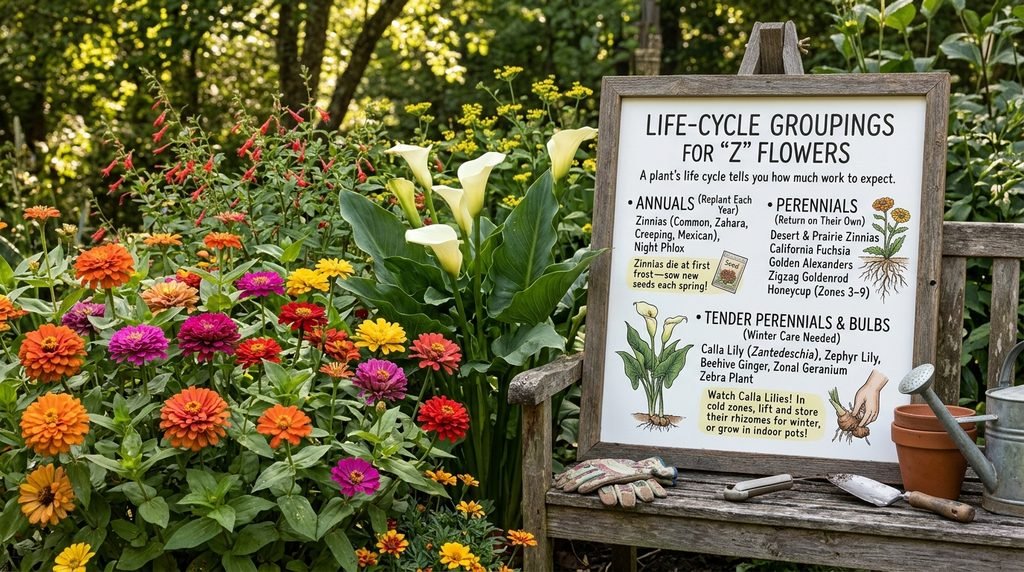
| Flower | Life Cycle | Typical Zones |
| Zinnia (Common) | Annual | All zones (seasonal) |
| Zahara Zinnia | Annual | All zones (seasonal) |
| Zinnia (Creeping) | Annual | All zones (seasonal) |
| Zinnia (Mexican) | Annual | All zones (seasonal) |
| Zaluzianskya (Night Phlox) | Annual | All zones (seasonal) |
| Zinnia (Narrowleaf) | Annual or short-lived perennial | All zones (seasonal) |
| Zinnia (Desert) | Perennial | 5–9 |
| Zinnia (Prairie) | Perennial | 4–9 |
| Zauschneria (California Fuchsia) | Perennial | 5–9 |
| Zizia (Golden Alexanders) | Perennial | 3–8 |
| Zigzag Goldenrod | Perennial | 3–8 |
| Zigzag Clover | Perennial | 3–8 |
| Zebrina Mallow | Biennial or short-lived perennial | 4–9 |
| Zenobia (Honeycup) | Perennial (shrub) | 5–9 |
| Zantedeschia (Calla Lily) | Tender perennial (rhizome) | 8–10 |
| Zephyr Lily | Tender perennial (bulb) | 8–11 |
| Zonal Geranium | Tender perennial | 10–11 (annual elsewhere) |
| Zingiber (Beehive Ginger) | Tender perennial | 10–12 |
| Zebra Plant | Tender perennial (houseplant) | 10–12 (indoors elsewhere) |
| Zygocactus (Christmas Cactus) | Tender perennial (houseplant) | 10–12 (indoors elsewhere) |
Zinnia and calla lily are the two to watch. Zinnia dies at first frost, so sow new seed each spring. Calla lily is the opposite. In cold zones, it needs its rhizomes lifted and stored for winter, or grown in a pot indoors.
Botanical Name Crosswalk
For many Z plants, the botanical name is the common name. Nursery tags and seed packets use Latin for this reason. It also helps you search online with confidence. Two different plants can share one common name, so the Latin name protects you from a wrong purchase.
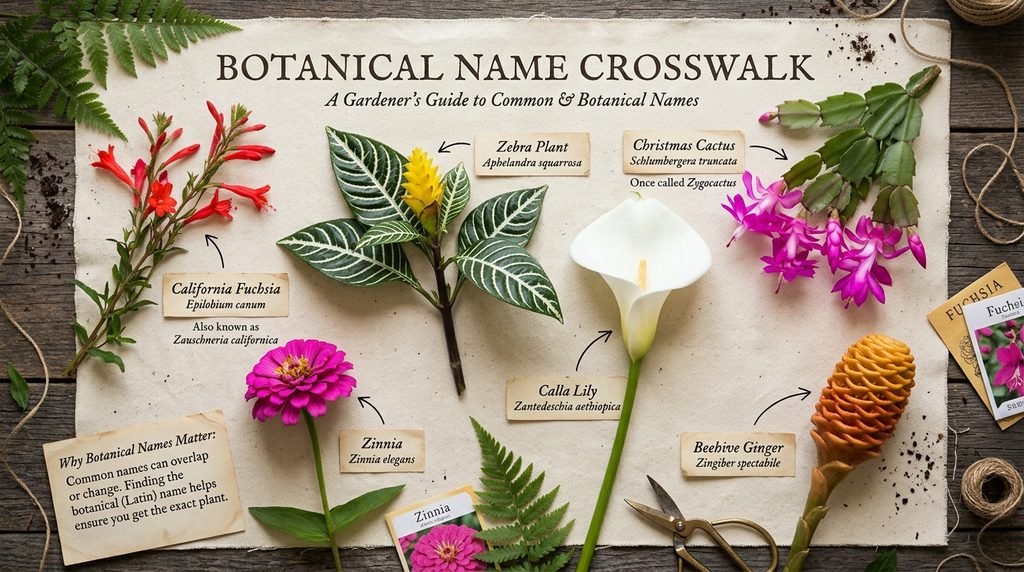
| Common Name | Botanical Name |
| Zinnia | Zinnia elegans |
| Zahara Zinnia | Zinnia marylandica ‘Zahara’ |
| Calla Lily | Zantedeschia aethiopica |
| Zonal Geranium | Pelargonium × hortorum |
| Christmas Cactus | Schlumbergera truncata |
| Zephyr Lily | Zephyranthes candida |
| California Fuchsia | Epilobium canum |
| Night Phlox | Zaluzianskya capensis |
| Beehive Ginger | Zingiber spectabile |
| Zebra Plant | Aphelandra squarrosa |
| Golden Alexanders | Zizia aurea |
| Zigzag Goldenrod | Solidago flexicaulis |
| Honeycup | Zenobia pulverulenta |
| Zulu Giant | Stapelia gigantea |
| Zygopetalum | Zygopetalum intermedium |
California fuchsia shows why this matters. It was long sold as Zauschneria californica, and many nurseries still use that name. Today it is classified as Epilobium canum. Both names point to the same plant, so check both when you shop. Also, zonal geranium is a Pelargonium, not a true geranium, and Christmas cactus was once called Zygocactus.
What Z Flowers Mean
Flower meanings are lighter for this letter, but a few have clear symbolism. Zinnia stands for thoughts of absent friends and lasting affection. It is named for the German botanist Johann Zinn, and it comes from Mexico, where it grows wild. It is the state flower of Indiana. Its bright, long-lasting blooms have made it a symbol of friendship.
The calla lily stands for magnificent beauty and rebirth. It is a favorite at weddings and at Easter. The zephyr lily takes its name from Zephyrus, the Greek god of the west wind, and it stands for sudden joy, since it blooms right after rain. Zygocactus, or Christmas cactus, stands for holiday cheer and endurance.
In Hawaii, shampoo ginger, Zingiber zerumbet, has been used for centuries as a natural shampoo, and its sap is still prized. Zulu giant stands for the strange and unexpected. Golden Alexanders stand for welcome to native wildlife, since it feeds many beneficial insects. Match the flower to your message, and remember that the same bloom can mean something different in another culture.
Decision Table: Which Z Flower Fits Your Situation
You do not have to read the whole list to choose well. Start with your goal in the left column. The right column names the best Z flower for it. Then check the toxicity section if you have pets or children.
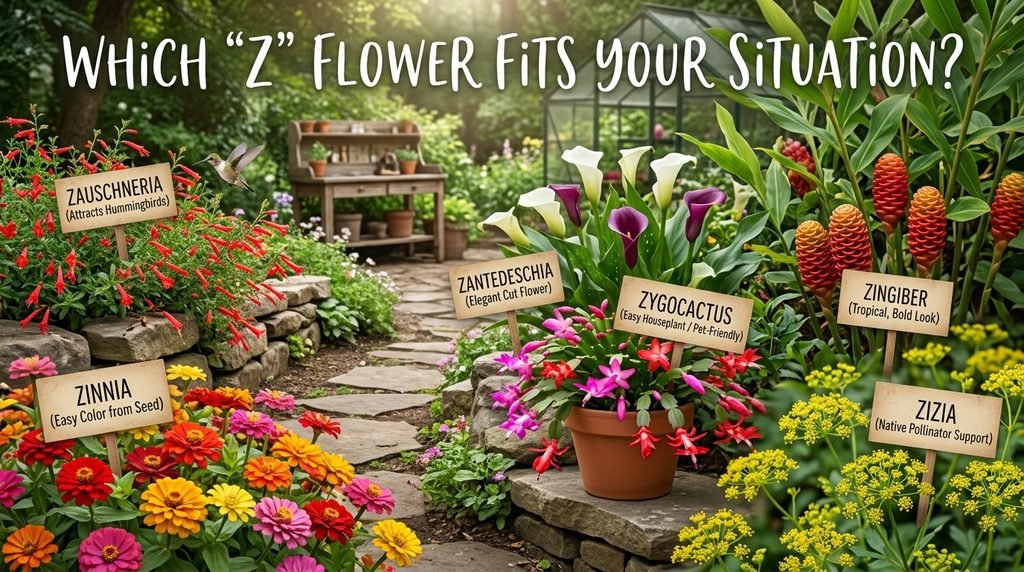
| If You Want… | Choose This Z Flower |
| Easy color from seed | Zinnia, Zahara Zinnia, or Creeping Zinnia |
| A tough, dry, sunny border | Desert Zinnia, Zauschneria, or Mexican Zinnia |
| Hummingbirds | Zauschneria |
| Native pollinator support | Zizia, Zigzag Goldenrod, or Zigzag Clover |
| Evening fragrance | Zaluzianskya (Night Phlox) |
| An elegant cut flower | Zantedeschia (Calla Lily) |
| An easy houseplant with blooms | Zygocactus (Christmas Cactus) |
| A tropical, bold look | Zingiber (Beehive Ginger) |
| A collector’s curiosity | Zulu Giant or Zig-Zag Cactus |
| A pet-friendlier garden | Zinnia, Zygocactus, or Zebra Plant (absent from this guide’s toxic list) |
Zinnia appears three times because it is the easiest and the most useful Z flower. Zygocactus and zebra plant are good partners for it indoors. Always double-check any plant with your vet if a pet is likely to chew it.
Conclusion
Flowers that start with Z close the alphabet in style, from the cheerful zinnia to the strange Zulu giant. This guide sorted 30 of them by color, life cycle, and use, so you can pick with confidence. Whether you want a hot, sunny border, an elegant cut flower, or an easy houseplant for winter, there is a Z flower that fits. Use the tables above, read the toxicity notes, and start planting.
Frequently Asked Questions
How many flowers start with Z?
More than 25 well-known flowers start with Z. This guide lists 30, from common zinnias to rare succulents and orchids.
What is the most popular flower that starts with Z?
Zinnia is by far the most popular. Calla lily, zonal geranium, and Christmas cactus are also widely grown.
What are the easiest flowers that start with Z to grow?
Zinnia, Zahara zinnia, creeping zinnia, and zonal geranium are very easy. Zygocactus is the easiest Z houseplant.
Do zinnias come back every year?
Most zinnias are annuals and die at first frost. Sow new seed each spring, or let a few flowers go to seed so they self-sow.
Which Z flowers attract butterflies and hummingbirds?
Zinnias draw butterflies and bees. Zauschneria draws hummingbirds, and Golden Alexanders feed native bees and swallowtail caterpillars.
Are zinnias safe for pets?
Zinnias are generally listed as non-toxic to dogs and cats. Still, check with your vet if a pet tends to chew plants.
Is calla lily poisonous?
Yes, mildly. Calla lilies contain crystals that burn the mouth and throat. They are not true lilies, so they are less dangerous to cats than true lilies, but they should still be kept out of reach.
Why is it called a zebra plant?
The zebra plant, Aphelandra squarrosa, has dark green leaves with bold white veins that look like zebra stripes. Its golden bracts rise above the leaves in late summer.
What is zygocactus?
Zygocactus is an older name for the Christmas cactus, Schlumbergera truncata. It blooms in winter with pink, red, or white flowers.
What is shampoo ginger?
Shampoo ginger, Zingiber zerumbet, has red pinecone-like bracts that hold a soapy, fragrant liquid. In Hawaii, it has long been used as a natural shampoo.
Which Z flowers work well in dry, sunny gardens?
Desert zinnia, creeping zinnia, Mexican zinnia, and Zauschneria thrive in dry sun. Zonal geranium also tolerates short dry spells.
What is the rarest flower that starts with Z?
Zulu giant, zig-zag cactus, and zenobia are among the unusual ones. All three are rarely seen in ordinary gardens.
Which Z flowers make good cut flowers?
Zinnia, calla lily, Zahara zinnia, and beehive ginger all cut well. Zinnias last about a week in a vase.
Where can I find a full list of flowers that start with Z?
You are in the right place. The master alphabetical list above names 30 flowers that start with Z, with botanical names and short notes.