
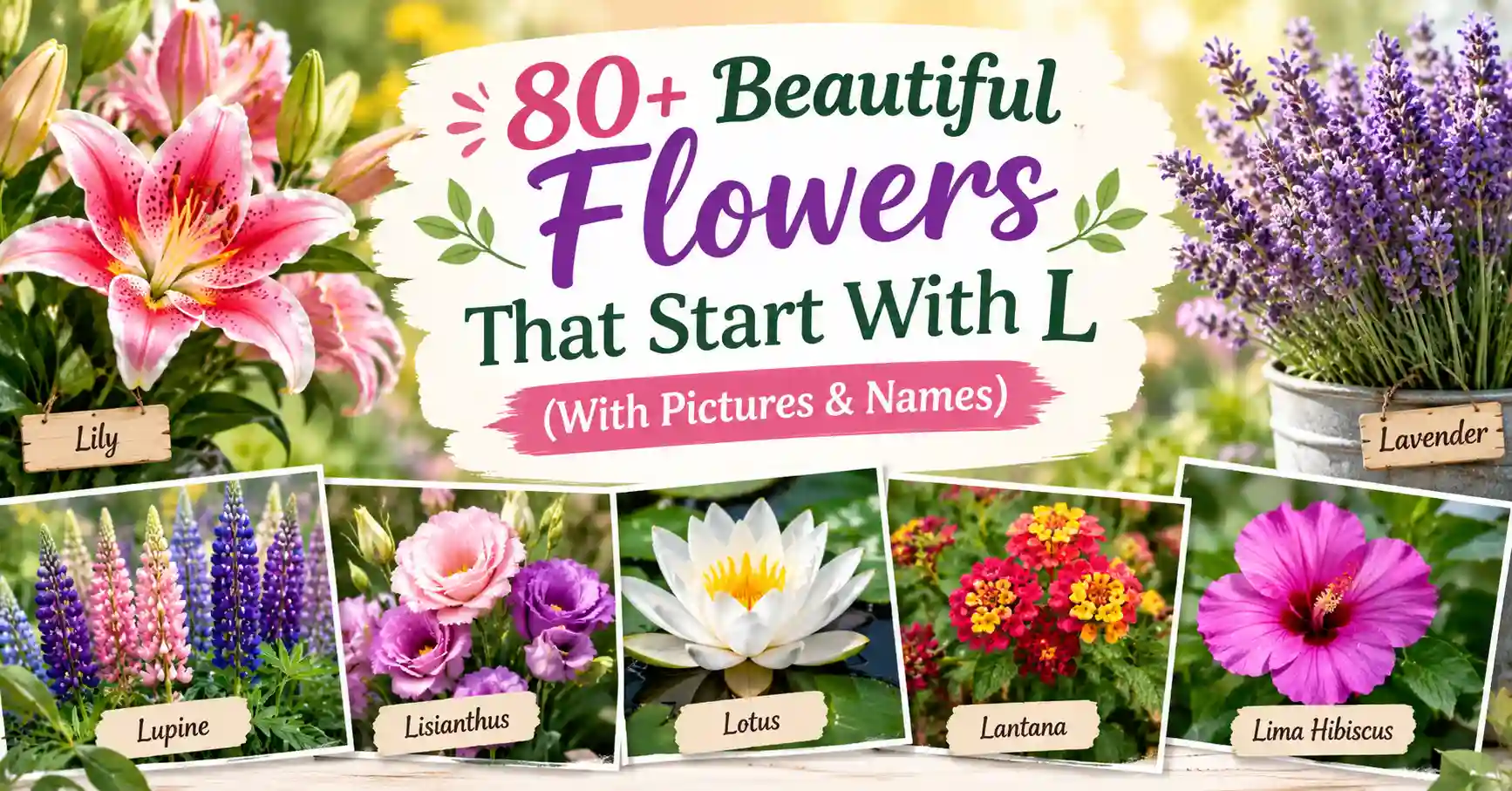
Flowers that start with L are some of the best-loved blooms in the world. Lavender, lilac, lily of the valley, and lupine are the names most people know. But the letter L also hides unusual finds, like living stones that look like pebbles, a lipstick-red houseplant, and the national flower of Chile. This guide gathers 86 of them in one place.
Every plant below is real and has a verified botanical name. You will find border favorites, houseplants, florist picks, wildflowers, and several rare treasures. Four entries are grown mainly for leaves, groundcover, or safety awareness, and each one is clearly marked as an exception.
A long list only helps if you can use it. So this guide sorts the plants by color, life cycle, and use. A bloom’s beauty means little if it dies in your climate. It means even less if it harms a child or a pet. Each table is explained in plain words first, so you never face a bare spreadsheet.
One warning comes up again and again in this letter. Several true lilies are deadly to cats, and so are daylilies. You will see them flagged in the toxicity section. Read straight through or jump to what you need. Want a quick pick? Try the decision table near the end.
Quick Answer: Ten Standout L Flowers
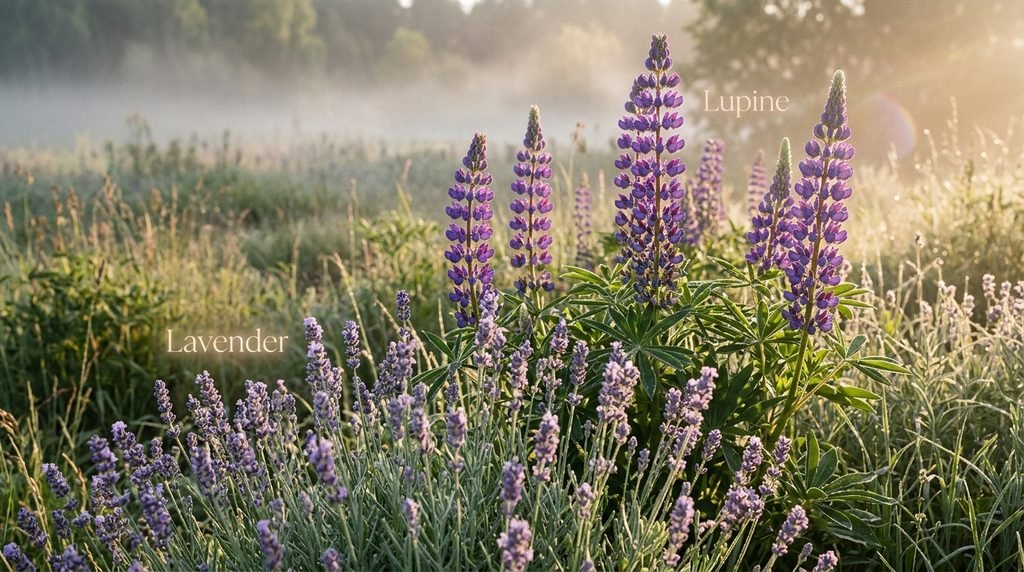
Lavender is the classic, with scented purple spikes that bees adore and almost no care needs. Lilac fills spring with perfume, and lily of the valley does the same in shade, though every part of it is toxic. Lupine and larkspur bring tall, colorful spires to cottage borders.
Lady’s mantle softens any edge with chartreuse froth, while love-in-a-mist adds blue stars and striped seed pods. Lantana blooms nonstop in heat and draws butterflies, and lisianthus is the long-lasting florist favorite that looks like a ruffled rose. Lotus closes the list as the sacred, sculptural water flower.
Uncover More Flower Varieties: 70+ Flowers That Start With K: Beautiful Names, Meanings & Photos
Master Alphabetical List of Flowers That Start With L
This list names 86 flowers. Most entries use a common name that gardeners already know. A few are better known by their botanical name, so they appear under the name nurseries print on plant tags. Each row has a short note, so you can see at a glance what the plant looks like and where it grows best. Four entries are marked as exceptions because the flower is not the main reason people grow them.
| Flower | Botanical Name | Note |
| Laburnum | Laburnum anagyroides | Hanging yellow chains, highly toxic |
| Lace Flower | Orlaya grandiflora | White lacy umbels for cottage borders |
| Lacecap Hydrangea | Hydrangea macrophylla | Flat flower heads ringed with showy florets |
| Lacecap Viburnum | Viburnum plicatum f. tomentosum | Layered white blooms on horizontal branches |
| Lacy Phacelia | Phacelia tanacetifolia | Lavender fuzzy spikes, bee magnet and cover crop |
| Lady Banks Rose | Rosa banksiae | Thornless yellow or white climbing rose |
| Lady of the Night Orchid | Brassavola nodosa | White orchid, perfumed after dark |
| Lady Slipper Orchid | Paphiopedilum insigne | Pouch-shaped orchid, tolerates lower light |
| Lady Tulip | Tulipa clusiana | Slim red-and-white tulip that naturalizes |
| Lady’s Bedstraw | Galium verum | Frothy yellow, honey-scented wildflower |
| Lady’s Mantle | Alchemilla mollis | Chartreuse sprays over soft, rounded leaves |
| Lady’s Slipper | Cypripedium parviflorum | Wild yellow orchid, protected in many places |
| Lady’s Smock | Cardamine pratensis | Pale lilac meadow flower for damp ground |
| Lagerstroemia | Lagerstroemia indica | Frilly summer blooms on a small tree |
| Lamb’s Ear (exception) | Stachys byzantina | Grown for fuzzy silver leaves, purple flower spikes |
| Lambkill | Kalmia angustifolia | Pink cups on a small shrub, highly toxic |
| Lamium | Lamium maculatum | Silver-marked groundcover with pink blooms |
| Lance-Leaved Coreopsis | Coreopsis lanceolata | Golden daisies for dry, sunny spots |
| Lantana | Lantana camara | Multicolored clusters, butterfly magnet, toxic berries |
| Lantern Tree | Crinodendron hookerianum | Crimson hanging lanterns on a Chilean shrub |
| Lapageria (Chilean Bellflower) | Lapageria rosea | Waxy red bells, national flower of Chile |
| Large-Flowered Trillium | Trillium grandiflorum | Big white three-petaled woodland bloom |
| Larkspur | Consolida ajacis | Tall blue, pink, or white spikes, toxic |
| Laurustinus | Viburnum tinus | Pink-budded white winter clusters |
| Lavatera (Tree Mallow) | Lavatera trimestris | Large pink or white satin cups |
| Lavender | Lavandula angustifolia | Fragrant purple spikes, bee favorite |
| Lavender Cotton (exception) | Santolina chamaecyparissus | Grown for silver foliage, yellow button flowers |
| Lavender Mist | Thalictrum rochebruneanum | Airy lilac clouds on tall stems |
| Leadwort | Ceratostigma plumbaginoides | Brilliant blue fall flowers, red autumn leaves |
| Leichtlin’s Camass | Camassia leichtlinii | Tall spikes of starry blue-violet blooms |
| Lemon Bottlebrush | Callistemon citrinus | Red brush-shaped blooms, hummingbird plant |
| Lemon Lily | Hemerocallis lilioasphodelus | Fragrant yellow daylily, toxic to cats |
| Lent Lily | Narcissus pseudonarcissus | The wild yellow daffodil of early spring |
| Lenten Rose | Helleborus orientalis | Nodding winter blooms, toxic |
| Leopard Lily | Lilium pardalinum | Orange-red spotted lily, deadly to cats |
| Leopard Plant | Ligularia dentata | Golden daisies for moist shade |
| Leopard’s Bane | Doronicum orientale | Early yellow daisies |
| Leptospermum (Tea Tree) | Leptospermum scoparium | Small pink or white blooms, Australian and NZ shrub |
| Leschenaultia | Lechenaultia formosa | Bright red and yellow Australian wildflower |
| Lesser Celandine | Ficaria verna | Glossy yellow stars in very early spring |
| Lesser Periwinkle | Vinca minor | Blue-purple spring groundcover for shade |
| Lesser Spearwort | Ranunculus flammula | Small yellow buttercup for wet margins |
| Leucanthemum (Oxeye Daisy) | Leucanthemum vulgare | Classic white meadow daisy |
| Leucojum (Snowflake) | Leucojum aestivum | Nodding white bells, taller than snowdrops |
| Leucospermum (Pincushion Protea) | Leucospermum cordifolium | Orange pincushion blooms from South Africa |
| Lewis Mock Orange | Philadelphus lewisii | Fragrant white blooms, state flower of Idaho |
| Lewisia | Lewisia cotyledon | Rosettes with pink-striped rock garden blooms |
| Liatris | Liatris spicata | Purple bottlebrush spikes, butterfly favorite |
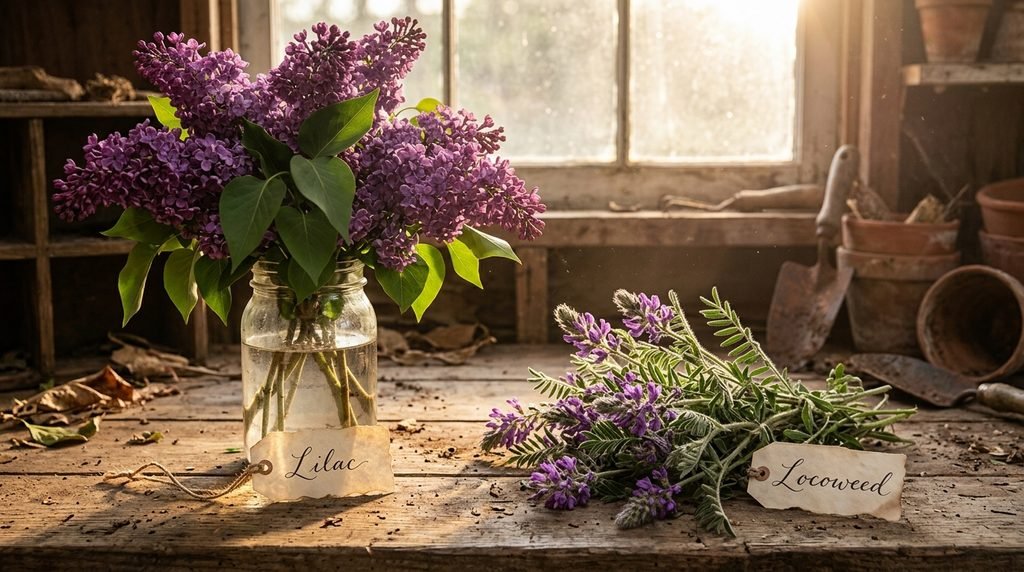
| Lilac | Syringa vulgaris | Fragrant purple spring clusters |
| Lilac Vine | Hardenbergia violacea | Purple pea flowers on a climbing vine |
| Lily Magnolia | Magnolia liliiflora | Purple-pink tulip-shaped blooms in spring |
| Lily of the Field | Sternbergia lutea | Golden crocus-like autumn bulb |
| Lily of the Incas | Alstroemeria aurea | Orange streaked blooms, long vase life |
| Lily of the Nile | Agapanthus africanus | Blue globes on tall stems |
| Lily of the Valley | Convallaria majalis | Tiny scented white bells, highly toxic |
| Lily Turf (exception) | Liriope muscari | Grown as groundcover, purple flower spikes |
| Lily-Flowered Tulip | Tulipa ‘Ballerina’ | Pointed, graceful tulip petals |
| Limelight Hydrangea | Hydrangea paniculata ‘Limelight’ | Lime-green cones that age to pink |
| Linaria (Toadflax) | Linaria maroccana | Tiny snapdragon-like blooms in many colors |
| Linden Blossom | Tilia cordata | Fragrant blooms used for tea, bee tree |
| Linum (Flax) | Linum perenne | Sky-blue blooms that open each morning |
| Lipstick Plant | Aeschynanthus radicans | Red tubular blooms on trailing houseplant stems |
| Lisianthus | Eustoma grandiflorum | Rose-like cut flower in soft colors |
| Lithops (Living Stones) | Lithops lesliei | Pebble-like succulent with daisy-like blooms |
| Live-Forever | Sedum telephium | Pink fall flower heads on thick leaves |
| Lizard Orchid | Himantoglossum hircinum | Rare orchid with long, twisting lip |
| Lizard’s Tail | Saururus cernuus | White tails of flowers for wet ground |
| Lobelia | Lobelia erinus | Blue trailing blooms for baskets |
| Lobster Claw | Heliconia rostrata | Hanging red and yellow tropical bracts |
| Locoweed (exception) | Oxytropis lambertii | Purple wildflower, poisonous to livestock |
| Loosestrife (Purple) | Lythrum salicaria | Magenta spikes, invasive in wetlands |
| Lords-and-Ladies | Arum maculatum | Hooded green spathe, toxic red berries |
| Loropetalum | Loropetalum chinense | Pink spidery blooms on dark foliage |
| Lotus | Nelumbo nucifera | Sacred pink or white water bloom |
| Louisiana Iris | Iris hexagona | Wet-soil iris in rich blues and purples |
| Lousewort | Pedicularis canadensis | Yellow-red woodland spikes |
| Love-in-a-Mist | Nigella damascena | Blue blooms in feathery foliage, striped pods |
| Love-in-a-Puff | Cardiospermum halicacabum | Tiny white blooms, puffy balloon seed pods |
| Love-Lies-Bleeding | Amaranthus caudatus | Ropes of crimson tassels |
| Lunaria (Honesty) | Lunaria annua | Purple spring blooms, silver seed discs |
| Lungwort | Pulmonaria longifolia | Pink and blue blooms, spotted leaves |
| Lupine | Lupinus polyphyllus | Tall colorful spikes, toxic seeds |
| Lychnis (Rose Campion) | Lychnis coronaria | Magenta blooms over silver leaves |
| Lycoris (Surprise Lily) | Lycoris squamigera | Pink lilies on bare stems in late summer |
| Lyreflower | Lamprocapnos spectabilis | Pink hearts on arching stems |
| Lysimachia (Yellow Loosestrife) | Lysimachia punctata | Yellow whorled flowers, spreads fast |
That table names 86 distinct flowers that start with L. Lilac and locoweed sit at opposite ends of the story. One is a beloved spring perfume. The other is a wild plant that poisons livestock. Both show how wide this single letter reaches.
Discover Flowers by Name: Beautiful Flowers That Start With F: Names, Pictures & Symbolism
Full Comparison Table: Sun, Water, and Bloom Time
When two plants seem equally good, sun and water needs usually pick the winner. The table below compares the main L flowers from this guide. Read the sun column first. Then check the water column and the bloom season to see if the plant fits your space and your calendar.
| Flower | Sun Needs | Water Needs | Bloom Season |
| Lady’s Mantle | Full sun to part shade | Moderate | Late spring to summer |
| Lavender | Full sun | Low | Early to midsummer |
| Lantana | Full sun | Low | Summer to frost |
| Larkspur | Full sun | Moderate | Late spring to summer |
| Lupine | Full sun to part shade | Moderate | Late spring to early summer |
| Lily of the Valley | Part to full shade | Moderate | Spring |
| Lilac | Full sun | Moderate | Mid to late spring |
| Lenten Rose | Part shade | Low to moderate | Late winter to early spring |
| Liatris | Full sun | Low to moderate | Midsummer |
| Love-in-a-Mist | Full sun | Low to moderate | Late spring to summer |
| Lobelia | Full sun to part shade | Moderate to high | Spring to fall |
| Lisianthus | Full sun | Moderate | Summer |
| Lamium | Part to full shade | Low to moderate | Spring to summer |
| Lily of the Nile | Full sun | Moderate | Summer |
| Lunaria (Honesty) | Part shade | Moderate | Spring |
| Lychnis | Full sun | Low | Early to midsummer |
| Lycoris (Surprise Lily) | Full sun to part shade | Low | Late summer |
| Lagerstroemia | Full sun | Low | Summer |
Lavender, lantana, and lychnis are the best picks for hot, dry, poor soil. All three bloom better when they are not fed or watered too much. Lily of the valley and lamium sit at the other end. They want cool shade and steady moisture.
Garden Favorites Among L Flowers
A handful of L flowers earn a place in almost every garden. Lavender brings scent, silver leaves, and bees to sunny beds. Lady’s mantle turns the edge of a path into a soft green-gold cloud. Lupine gives tall, colorful spires in late spring. Liatris sends up purple bottlebrush spikes that butterflies cannot resist.
- Lavender thrives in poor, sharp-draining soil and full sun.
- Lady’s Mantle holds drops of dew on its leaves and spreads gently.
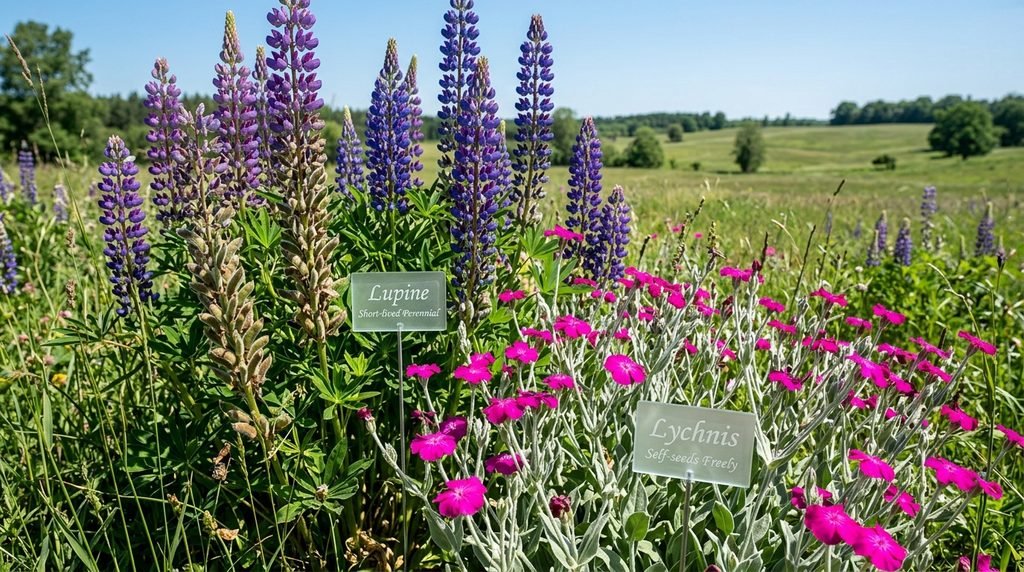
- Lupine loves cool summers and self-seeds in good spots.
- Liatris is a tough native that handles dry spells.
- Lychnis blooms magenta over silver leaves and self-seeds freely.
Lavender and lady’s mantle make a strong pair. One gives upright purple spikes, and the other gives soft, rounded froth. Together they carry a border from early summer into fall.
A few care habits keep these plants happy. Trim lavender lightly after bloom, never into old wood. Cut lady’s mantle back hard after flowering for fresh leaves. Give lupine cool roots and deadhead it to get a second flush. Plant liatris bulbs where the soil drains well.
Indoor and Container Picks Among L Flowers
Only a few L plants thrive indoors, but they are worth knowing. The lipstick plant is the easiest, with trailing stems and red tubular blooms in a bright room. Lithops, or living stones, are small succulents that sprout daisy-like flowers in autumn. Lady slipper orchids and lady of the night orchids bring rare beauty to bright windowsills. Lily of the Nile grows well in large pots on sunny patios.
- Lipstick Plant wants bright, indirect light and warmth.
- Lithops needs full sun, very little water, and gritty soil.
- Lady Slipper Orchid tolerates lower light than most orchids.
- Lily of the Nile blooms best when its roots are slightly crowded.
Lipstick plant is the pick for beginners. It forgives missed waterings. Lithops is the opposite. It rots quickly if you water it too often, so water only when the old leaves have shriveled.
Light matters more than anything else for indoor L plants. A bright east or south window suits lipstick plant and orchids. Avoid cold drafts and soggy saucers. Most of these plants fail from too much water, not too little.
Florist Favorites Among L Flowers
Florists use L flowers for fragrance, color, and long vase life. Lisianthus looks like a ruffled rose and lasts up to two weeks. Larkspur and lupine bring height to large arrangements. Lilac adds perfume to spring bouquets, though it wilts fast unless the stems are treated well. Lunaria seed discs are prized for dried arrangements.
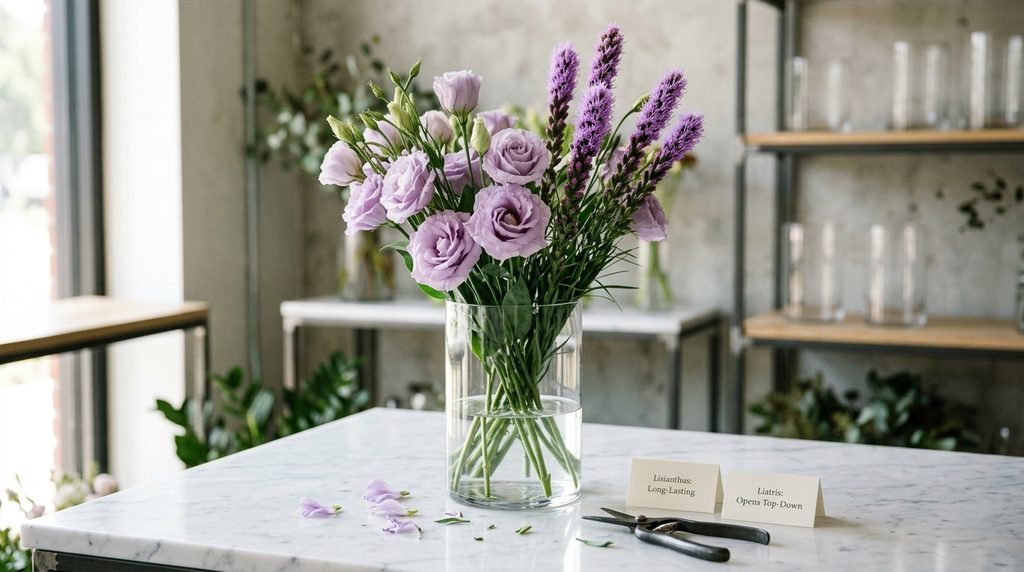
- Lisianthus is long-lasting and comes in soft pastel colors.
- Larkspur adds tall spikes in blue, pink, and white.
- Liatris opens from the top down and dries well.
- Lilac gives scent and volume, but needs careful conditioning.
- Lunaria (Honesty) gives silver discs that last for years when dried.
Lisianthus and liatris are the quiet workhorses. They hold up in the vase long after other flowers have faded. A florist’s bouquet in summer would feel empty without them.
Good vase care doubles the life of any cut flower. Strip the leaves below the water line. Recut the stems at an angle. Change the water every two days. For lilac, split the woody stem ends and use warm water to help the flowers drink.
Rare and Unusual L Flowers
Some L plants are hard to find or hard to grow. Lapageria is the most famous. It is the national flower of Chile, where it is called copihue, and its waxy red bells hang from forest vines. Lady’s slipper orchids are wild beauties that are protected in many places and rarely survive transplanting. Lizard orchid is a rare European orchid with a long, twisting lip that looks like a lizard’s tail. Leschenaultia is a bright Australian wildflower that is tricky to grow outside its home soils.
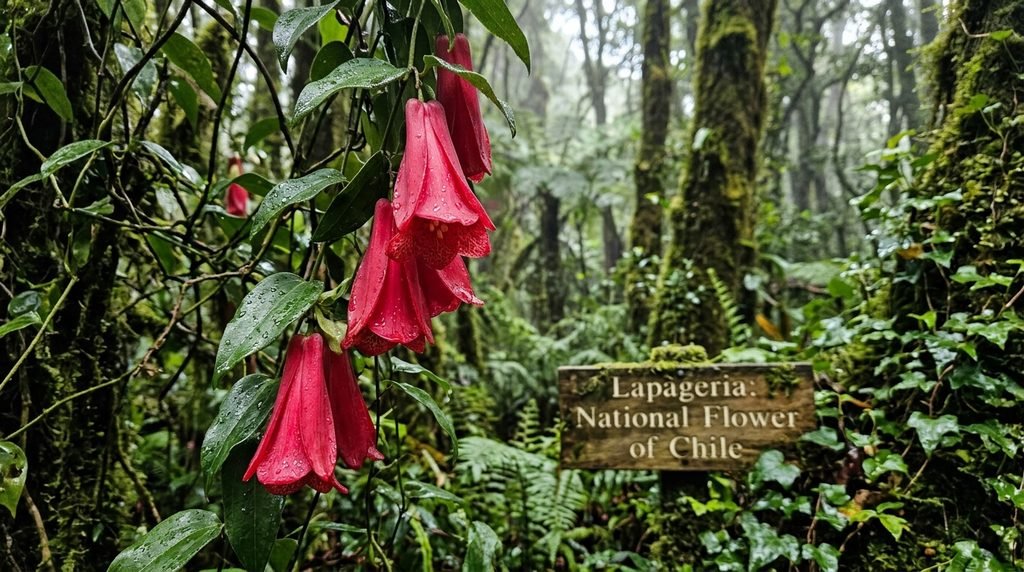
These four plants share one trait. Each wants a very specific home. That is why they stay special. If you want to grow one, buy nursery-grown plants only. Never dig wild plants, since many rare L species are protected by law.
Browse Flowers A to Z: 60+ Beautiful Flowers That Start With J (With Pictures & Names)
Caution: Toxic L Flowers
Several L plants can harm pets, livestock, or people. Lily of the valley, laburnum, and lambkill are the most dangerous. Every part of each plant is poisonous. Cat owners need to know about two more. True lilies, like leopard lily, and daylilies, like lemon lily, can cause kidney failure in cats from even a small nibble or a lick of pollen.
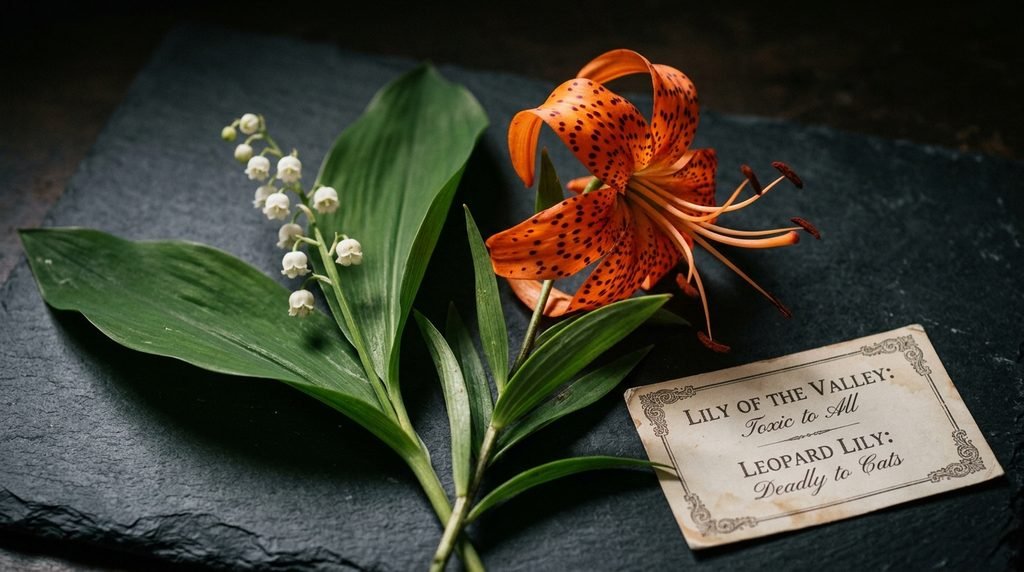
| Flower | Toxic To | Severity |
| Lily of the Valley | Humans, dogs, cats, horses | Severe — all parts affect the heart |
| Laburnum | Humans, dogs, cats, horses, livestock | Severe — all parts, especially seeds and pods |
| Lambkill | Dogs, cats, horses, livestock | Severe — all parts affect the heart and stomach |
| Leopard Lily | Cats (extremely), dogs (mild) | Severe for cats — can cause kidney failure |
| Lemon Lily | Cats (extremely), dogs (mild) | Severe for cats — daylilies can cause kidney failure |
| Larkspur | Horses, cattle, dogs, cats, humans | Severe — all parts, especially young plants and seeds |
| Locoweed | Horses, cattle, sheep | Severe — causes nerve damage in grazing animals |
| Lantana | Dogs, cats, horses, livestock | Moderate to severe — leaves and unripe berries |
| Lupine | Dogs, cats, horses, livestock | Moderate to severe — seeds and pods contain alkaloids |
| Lords-and-Ladies | Dogs, cats, humans | Moderate to severe — oxalate crystals and red berries |
| Lenten Rose | Dogs, cats, horses | Moderate — all parts upset the stomach and heart |
| Lycoris (Surprise Lily) | Dogs, cats, horses | Moderate — bulbs cause vomiting and drooling |
Lily of the valley, laburnum, lamb’s-bitter, and the two lilies for cats deserve the loudest warning. Keep them away from children and pets. Lantana and lupine are milder, but a chewing dog can still get sick. If a pet or child eats any plant on this list, call a vet or poison control right away.
Explore the Flower Directory: 65+ Beautiful Flowers That Start With G (With Pictures & Names)
L Flowers Grouped by Color
Purple, blue, and lilac lead the L list. Lavender, lilac, larkspur, lupine, love-in-a-mist, and Louisiana iris all bring cool, rich tones. Lavender and lilac add scent. Larkspur and lupine add height. Louisiana iris and lily of the Nile add bold shape to wet or sunny spots.
Pink and rose tones show up in lagerstroemia, lychnis, lyreflower, lycoris, and lenten rose. Lagerstroemia, also called crape myrtle, gives the biggest show, since a whole small tree fills with blooms. Lyreflower and lycoris suit soft, romantic corners. Lychnis brings a hot magenta that stands out against silver leaves.
White and cream flowers include lily of the valley, lace flower, lacecap hydrangea, leucojum, and lotus. White brightens shade and glows at dusk. Lily of the valley and leucojum suit woodland spots. Lace flower and lacecap hydrangea suit cottage borders. Lotus suits still ponds.
Yellow, gold, and chartreuse bring warmth. Laburnum, lemon lily, lysimachia, leopard’s bane, lesser celandine, and lady’s mantle all glow in sun or light shade. Lesser celandine and leopard’s bane arrive early. Lemon lily and lysimachia carry yellow into summer.
Red and orange accents come from lobster claw, lapageria, lantern tree, lemon bottlebrush, and love-lies-bleeding. Lobster claw and lapageria are the bold, tropical-looking pair. Lemon bottlebrush and lantern tree draw hummingbirds. Love-lies-bleeding drapes crimson ropes over borders.
Life-Cycle Groupings for L Flowers
A plant’s life cycle tells you how much work to expect. Annuals live one season, so you replant each year. Biennials flower in their second year. Perennials return on their own. Bulbs need the right winter, cold or warm, to come back. Trees and shrubs take longer to bloom but last for decades. Zones below are approximate and vary by variety, so check your own plant tag.
| Flower | Life Cycle | Typical Zones |
| Larkspur | Annual | All zones (seasonal) |
| Love-in-a-Mist | Annual | All zones (seasonal) |
| Love-Lies-Bleeding | Annual | All zones (seasonal) |
| Lobelia | Annual | All zones (seasonal) |
| Lavatera | Annual | All zones (seasonal) |
| Lisianthus | Annual or biennial | All zones (seasonal) |
| Lantana | Tender perennial, grown as annual | 8–11 (perennial), elsewhere annual |
| Lunaria (Honesty) | Biennial | 4–8 |
| Lady’s Mantle | Perennial | 3–8 |
| Lamium | Perennial | 3–8 |
| Lupine | Perennial | 4–8 |
| Liatris | Perennial | 3–9 |
| Lychnis | Short-lived perennial | 4–8 |
| Lenten Rose | Perennial | 4–9 |
| Lily of the Valley | Perennial | 3–8 |
| Lamb’s Ear | Perennial | 4–8 |
| Louisiana Iris | Perennial | 4–9 |
| Lewisia | Perennial | 4–8 |
| Lent Lily | Perennial (bulb) | 3–8 |
| Lycoris (Surprise Lily) | Perennial (bulb) | 5–9 |
| Lily of the Nile | Tender perennial | 8–10 |
| Lavender | Perennial (shrub) | 5–9 |
| Lilac | Perennial (shrub) | 3–7 |
| Laburnum | Perennial (small tree) | 5–7 |
| Lagerstroemia | Perennial (small tree) | 7–9 |
| Lotus | Perennial (aquatic) | 4–10 |
Lupine and lychnis are the two to watch. Many gardeners expect them to live for many years. In truth, both often fade after three or four seasons. Let a few seed heads ripen, and the patch will keep renewing itself.
Botanical Name Crosswalk
Common names change from place to place. Botanical names do not. Nursery tags and seed packets use Latin for this reason. It also helps you search online with confidence. Two different plants can share one common name, so the Latin name protects you from a wrong purchase.
| Common Name | Botanical Name |
| Lavender | Lavandula angustifolia |
| Lilac | Syringa vulgaris |
| Lily of the Valley | Convallaria majalis |
| Lupine | Lupinus polyphyllus |
| Larkspur | Consolida ajacis |
| Lady’s Mantle | Alchemilla mollis |
| Love-in-a-Mist | Nigella damascena |
| Lantana | Lantana camara |
| Lisianthus | Eustoma grandiflorum |
| Liatris | Liatris spicata |
| Lotus | Nelumbo nucifera |
| Lily of the Nile | Agapanthus africanus |
| Lenten Rose | Helleborus orientalis |
| Laburnum | Laburnum anagyroides |
| Lagerstroemia | Lagerstroemia indica |
Lily names cause the most trouble. Lily of the valley, lily of the Nile, and lily turf are not true lilies at all. True lilies are in the genus Lilium, like leopard lily, and they are deadly to cats. Always check the Latin name before you bring a lily-named plant into a home with pets.
What L Flowers Mean
Flower meanings vary by culture, but a good number of L flowers carry steady symbolism. Lily of the valley stands for the return of happiness. In France, people give small bunches on May Day for luck, and it is the national flower of Finland. The lotus stands for purity, rebirth, and enlightenment in Buddhism and Hinduism, and it is the national flower of India and Vietnam.
Lilac stands for first love and youthful innocence, especially the purple kind. Lavender stands for devotion, calm, and clean, quiet beauty. Lisianthus is given to say thank you and show appreciation. Larkspur stands for an open heart, and it is one of the birth flowers for July.
Some meanings are wry and old. In Victorian flower language, love-in-a-mist meant “you puzzle me,” and love-lies-bleeding stood for hopeless love. Lantana carried a sense of rigor, and laburnum meant forsaken. Lady’s slipper stood for capricious beauty, since the wild orchid is so hard to catch or grow.
Lady’s mantle has an old story too. Alchemists collected the dew from its leaves and believed it held magic powers. Lapageria, the copihue, is the national flower of Chile and a symbol of the country’s forests. Match the flower to your message, and remember that the same bloom can mean something different in another culture.
Decision Table:
You do not have to read the whole list to choose well. Start with your goal in the left column. The right column names the best L flower for it. Then check the toxicity section if you have pets or children.
| If You Want… | Choose This L Flower |
| A tough, sunny, low-water border | Lavender, Lantana, or Lychnis |
| Butterfly and bee support | Liatris, Lavender, or Lacy Phacelia |
| Strong spring fragrance | Lilac or Lily of the Valley (keep away from pets) |
| Color in shade | Lamium, Lady’s Mantle, or Lenten Rose |
| Tall cottage-garden height | Lupine, Larkspur, or Liatris |
| An easy houseplant with blooms | Lipstick Plant |
| Long-lasting cut flowers | Lisianthus, Liatris, or Larkspur |
| A pond or water flower | Lotus |
| A flowering tree | Lagerstroemia, Lilac, or Lily Magnolia |
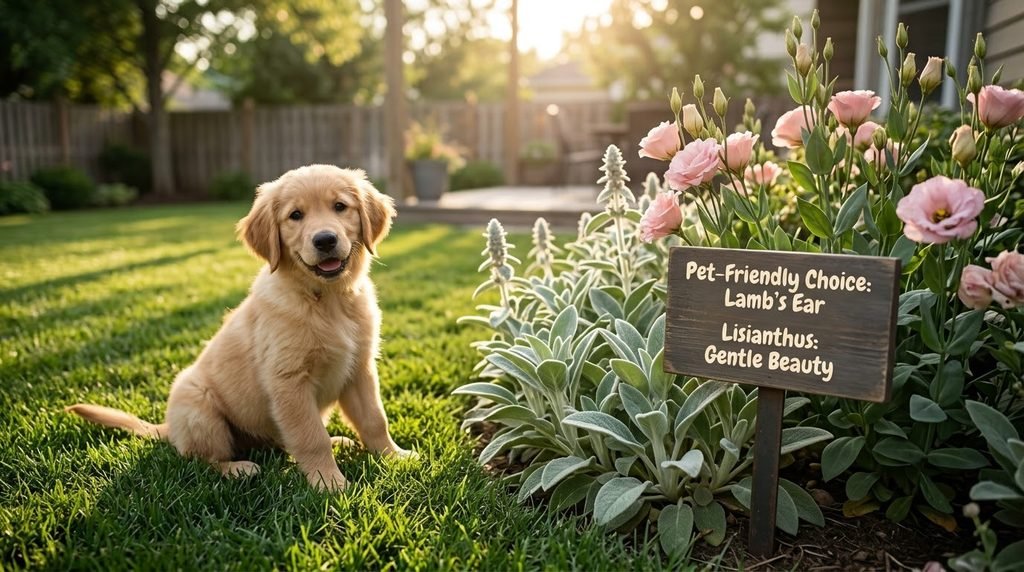
| A pet-friendlier garden | Lady’s Mantle, Lisianthus, or Lamb’s Ear (absent from this guide’s toxic list) |
Lavender appears twice because it is easy, fragrant, and a magnet for bees. Lady’s mantle is a good partner for it in a family garden. Always double-check any plant with your vet if a pet is likely to chew it.
Conclusion
Flowers that start with L offer a very wide choice, from the scented lavender to the sacred lotus. This guide sorted 86 of them by color, life cycle, and use, so you can pick with confidence. Whether you want a sunny bee border, a fragrant spring shrub, or a bright houseplant, there is an L flower that fits. Use the tables above, read the toxicity notes, and start planting.
Frequently Asked Questions
How many flowers start with L?
More than 80 well-known flowers start with L. This guide lists 86, from common garden plants to rare orchids and tropical blooms.
What is the most popular flower that starts with L?
Lavender, lilac, lily of the valley, and lupine are among the most popular. Lotus and lisianthus are also widely loved.
What are the easiest flowers that start with L to grow?
Lavender, lantana, lady’s mantle, lamium, and love-in-a-mist are very easy. The lipstick plant is the easiest L houseplant.
Which L flowers attract butterflies and hummingbirds?
Liatris, lantana, and lavender draw butterflies and bees. Lemon bottlebrush, lantern tree, and lobster claw draw hummingbirds.
Are lilies poisonous to cats?
True lilies, like leopard lily, and daylilies, like lemon lily, are deadly to cats. Even a small nibble or a lick of pollen can cause kidney failure. Keep them out of any home with a cat.
Which L flower is the most dangerous?
Lily of the valley, laburnum, and lamb’s-ear are the most dangerous for people and pets. Leopard lily and lemon lily are the most dangerous for cats.
Is lavender safe for pets? Lavender can cause mild stomach upset if a pet eats a lot of it. It is far less risky than the plants in the toxicity table. Check with your vet if your pet chews plants.
What does lily of the valley symbolize?
Lily of the valley stands for the return of happiness. It is the national flower of Finland and a May Day tradition in France.
Which L flowers bloom in winter or very early spring?
Lenten rose, laurustinus, lesser celandine, and leopard’s bane bloom very early. Lent lily follows soon after.
What is the difference between lily of the valley and a true lily?
Lily of the valley belongs to a different plant family from true lilies. True lilies are in the genus Lilium, and they are deadly to cats. Lily of the valley is toxic to people and pets in a different way.
Which L flowers work well in dry, sunny gardens?
Lavender, lantana, lychnis, liatris, and lance-leaved coreopsis thrive in dry sun. Leucospermum also does well in lean, sharp-draining soil.
Can I grow lithops indoors?
Yes. Lithops, or living stones, grow well on a bright sunny windowsill. Water only when the old leaves have shriveled, and use gritty soil.
3 thoughts on “80+ Beautiful Flowers That Start With L (With Pictures & Names)”