

Flowers that start with T give gardeners a huge range of choices. The list includes spring Tulips, summer Tickseed, and fall Toad Lilies. It also includes rare giants such as the Titan Arum, and a few plants that can seriously harm pets or people. This guide brings more than 150 of them together in one place.
Every plant here is real. The flower is the main reason people grow it, with a few exceptions. Trees such as Tea Olive and Tulip Poplar appear because their blooms are a major draw. Botanical names, native regions, bloom seasons, and toxicity notes were checked against more than one source. Safety facts got extra care, since a wrong guess can hurt a pet or a child.
The guide opens with a quick answer and a full alphabetical list. A comparison table follows. Then come sections on garden plants, houseplants, cut flowers, rare finds, and toxic plants. Color groups, life cycles, botanical names, and meanings come next. A short decision table closes the guide.
Why use a guide like this? Some readers want color for a shady bed. Others need a pet-safe plant, a wedding bouquet idea, or a spring bulb that returns each year. A clear structure helps each reader find an answer fast, without scrolling through a hundred names.
Colorful collection of garden flowers starting with T, including tulips, tickseed, and torenia
Quick Answer: Top Flowers That Start With T
Tulip, Tickseed, Torenia, Trumpet Creeper, and Tiger Lily give gardeners the best mix of color and reliability. Tulip lights up spring beds, while Tickseed blooms for months in full sun. Torenia colors shady containers, and Trumpet Creeper covers a fence with hummingbird bait.
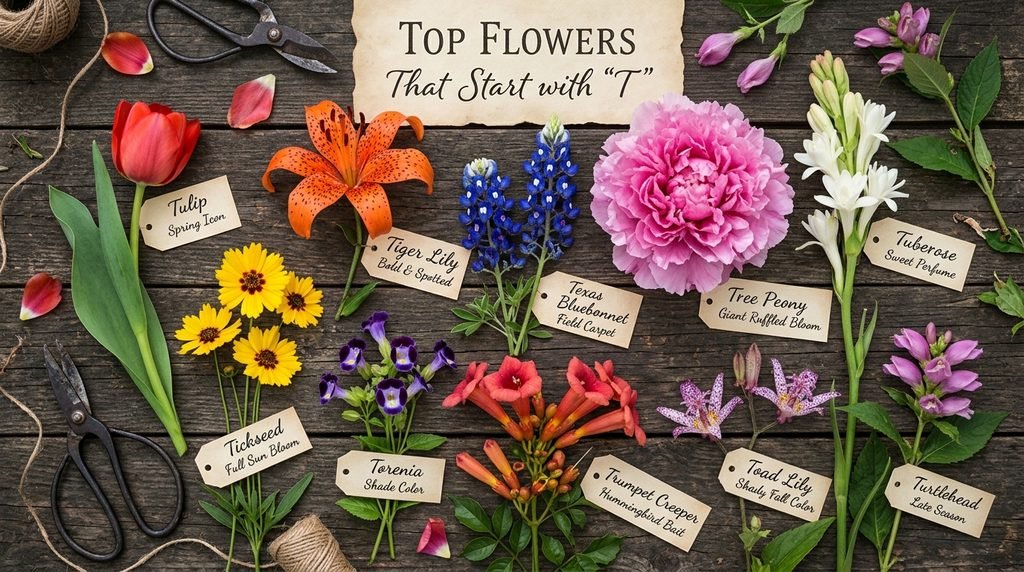
Texas Bluebonnet carpets open fields, Tuberose perfumes a bouquet, and Tree Peony adds huge, ruffled blooms. Toad Lily and Turtlehead carry color into fall, which shows how many needs flowers that start with T can meet.
Read More: 30+ Beautiful Flowers That Start With Q (With Pictures & Names)
Master List of Flowers That Start With T
The list below mixes common names and botanical names. Where people usually search by common name, that name comes first, such as Texas Bluebonnet or Toad Lily. Where the botanical name is better known, it leads instead, such as Tabebuia or Tulipa clusiana.
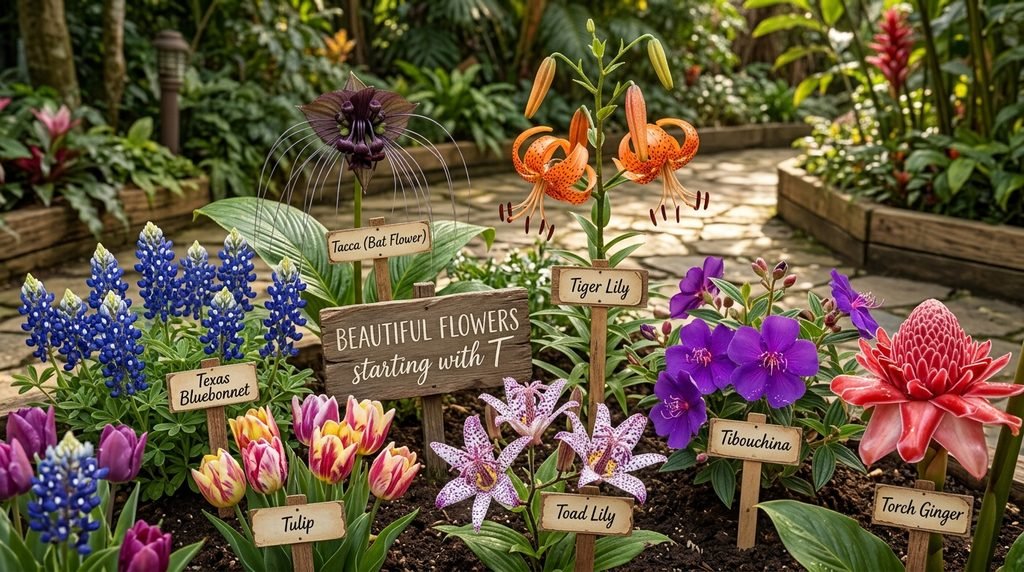
- Tabebuia (Trumpet Tree)
- Tabernaemontana (Crape Jasmine)
- Tacca (Bat Flower)
- Tagetes (Marigold)
- Tailflower (Anthurium)
- Taiwan Cherry
- Talinum (Fameflower)
- Tamarisk
- Tanacetum (Painted Daisy)
- Tansy
- Tapeinochilos (Indonesian Wax Ginger)
- Tasmanian Flax Lily
- Tassel Flower
- Tatarian Aster
- Tatarian Honeysuckle
- Tawny Daylily
- Tea Olive
- Tea Rose
- Tea Tree (Leptospermum)
- Teasel
- Tecoma (Yellow Bells)
- Tecoma capensis (Cape Honeysuckle)
- Tecophilaea (Chilean Blue Crocus)
- Telekia
- Telopea (Waratah)
- Tellima (Fringecups)
- Temple Bells
- Temple Tree
- Tennessee Coneflower
- Tetradenia (Ginger Bush)
- Tetraneuris
- Tetranema (Mexican Foxglove)
- Tetratheca
- Texas Bluebell
- Texas Bluebonnet
- Texas Mountain Laurel
- Texas Sage
- Texas Star Hibiscus
- Thalia
- Thalictrum (Meadow Rue)
- Thelesperma (Greenthread)
- Thermopsis (False Lupine)
- Thimbleweed
- Thistle
- Thorn Apple (Datura)
- Thrift
- Threadleaf Coreopsis
- Three-Cornered Leek
- Three-Lobed Coneflower
- Thryallis
- Thryptomene
- Thunbergia (Black-Eyed Susan Vine)
- Thunia (Bamboo Orchid)
- Thymophylla (Dahlberg Daisy)
- Thymus (Creeping Thyme)
- Thysanotus (Fringe Lily)
- Tiare (Tahitian Gardenia)
- Tiarella (Foamflower)
- Tibouchina (Princess Flower)
- Tickseed (Coreopsis)
- Tidy Tips
- Tiger Flower
- Tiger Lily
- Tiger Orchid
- Tillandsia (Pink Quill)
- Tithonia (Mexican Sunflower)
- Titan Arum
- Toad Lily
- Toadflax
- Toadshade
- Tobacco Plant
- Tolumnia (Dancing Lady Orchid)
- Torch Cactus
- Torch Ginger
- Torch Lily
- Torenia (Wishbone Flower)
- Touch-Me-Not
- Tower of Jewels
- Townsendia (Easter Daisy)
- Trachelium (Throatwort)
- Trachelospermum (Star Jasmine)
- Trachymene (Blue Lace Flower)
- Tradescantia (Spiderwort)
- Trailing Arbutus
- Trailing Lobelia
- Transvaal Daisy
- Traveler’s Joy
- Treasure Flower
- Tree Anemone
- Tree Dahlia
- Tree Gardenia
- Tree Heath
- Tree Lupin
- Tree Mallow
- Tree Marigold
- Tree Peony
- Tree Poppy
- Tree Tobacco
- Trichocentrum (Mule-Ear Orchid)
- Trichostema (Blue Curls)
- Tricolor Chrysanthemum
- Trientalis (Starflower)
- Trifolium (Crimson Clover)
- Trigger Plant
- Trillium
- Tristaniopsis (Water Gum)
- Triteleia
- Tritonia
- Triumph Tulip
- Trollius (Globeflower)
- Tropaeolum (Nasturtium)
- Tropical Hibiscus
- Tropical Milkweed
- Tropical Sage
- Tropical Water Lily
- Trout Lily
- Trumpet Creeper
- Trumpet Honeysuckle
- Trumpet Lily
- Trumpet Narcissus
- Tuberose
- Tuberous Begonia
- Tufted Evening Primrose
- Tufted Pansy
- Tulbaghia (Society Garlic)
- Tulip
- Tulip Poplar
- Tulipa batalinii
- Tulipa clusiana (Lady Tulip)
- Tulipa fosteriana
- Tulipa greigii
- Tulipa humilis
- Tulipa kaufmanniana (Waterlily Tulip)
- Tulipa linifolia
- Tulipa praestans
- Tulipa saxatilis
- Tulipa sprengeri
- Tulipa sylvestris (Wild Tulip)
- Tulipa tarda (Late Tulip)
- Tulipa turkestanica
- Turban Buttercup
- Turk’s Cap (Malvaviscus)
- Turk’s Cap Lily
- Turnera (Yellow Alder)
- Turquoise Puya
- Turtlehead
- Tutsan
- Twayblade
- Tweedia
- Twinberry
- Twinflower
- Twinleaf
- Twinspur (Diascia)
Some names cause mix-ups. Tea Rose, Tea Olive, and Tea Tree are unrelated plants that only share a word. Touch-Me-Not can mean Impatiens or the Sensitive Plant, Mimosa pudica. Turk’s Cap points to two very different plants, a tropical Malvaviscus and a woodland Lily. Species tulips appear under their botanical names, since collectors search for them that way.
Comparison Table: Region, Bloom Time, Zones, and Safety
The table below compares 14 popular flowers side by side. Columns cover native region, bloom season, hardiness zones, and toxicity. Hardiness zones show where a plant survives winter outdoors, so check your own zone before buying.
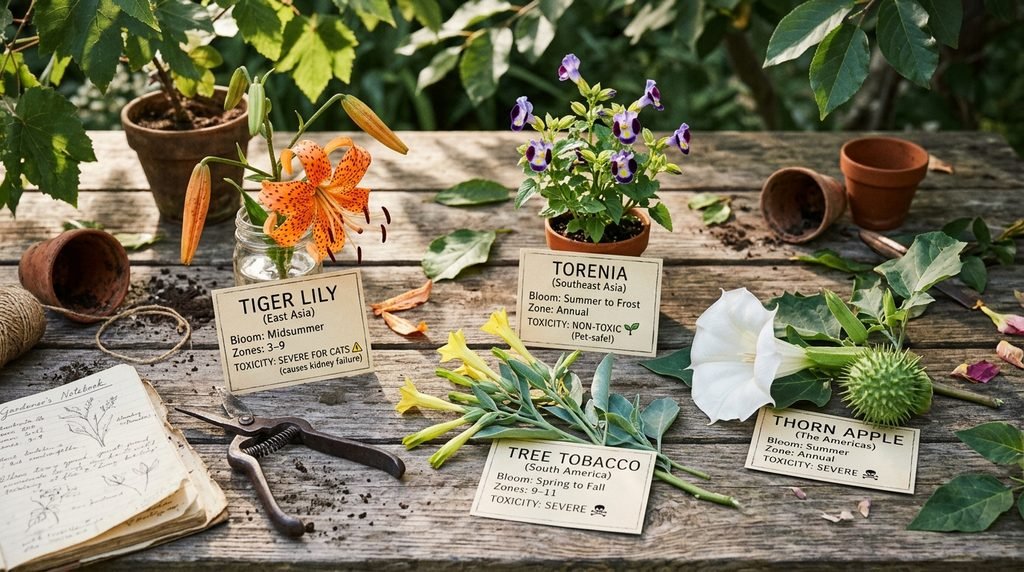
| Flower | Native Region | Bloom Season | Hardiness Zones | Toxicity |
| Tulip | Central Asia and Turkey | Spring | 3–8 | Mild to moderate; bulbs |
| Tiger Lily | East Asia | Midsummer | 3–9 | Severe for cats |
| Tickseed | North America | Summer | 3–9, varies by type | Minimal |
| Torenia | Southeast Asia | Summer to frost | Annual | Non-toxic |
| Trumpet Creeper | Eastern North America | Summer | 4–9 | Mild; sap irritates skin |
| Tithonia | Mexico and Central America | Summer to fall | Annual | Minimal reported |
| Toad Lily | East Asia | Late summer to fall | 4–9 | Minimal |
| Turtlehead | Eastern North America | Late summer to fall | 3–8 | Minimal |
| Tuberose | Mexico | Late summer to fall | 7–10 | Minimal reported |
| Tree Peony | China | Late spring | 4–8 | Mild |
| Texas Bluebonnet | Texas | Spring | Annual | Mild; seeds |
| Tansy | Europe and Asia | Summer | 3–8 | Moderate |
| Tree Tobacco | South America | Spring to fall | 9–11 | Severe |
| Thorn Apple | The Americas, now worldwide | Summer | Annual | Severe |
Three rows deserve a second look. Tiger Lily looks harmless, yet it can cause kidney failure in cats. Tree Tobacco and Thorn Apple both carry severe toxicity, and both grow wild in many places. Torenia sits at the safe end, which makes it a good pick for homes with curious pets.
Explore More Flower Guides: 100+ Beautiful Flowers That Start With M (With Pictures & Names)
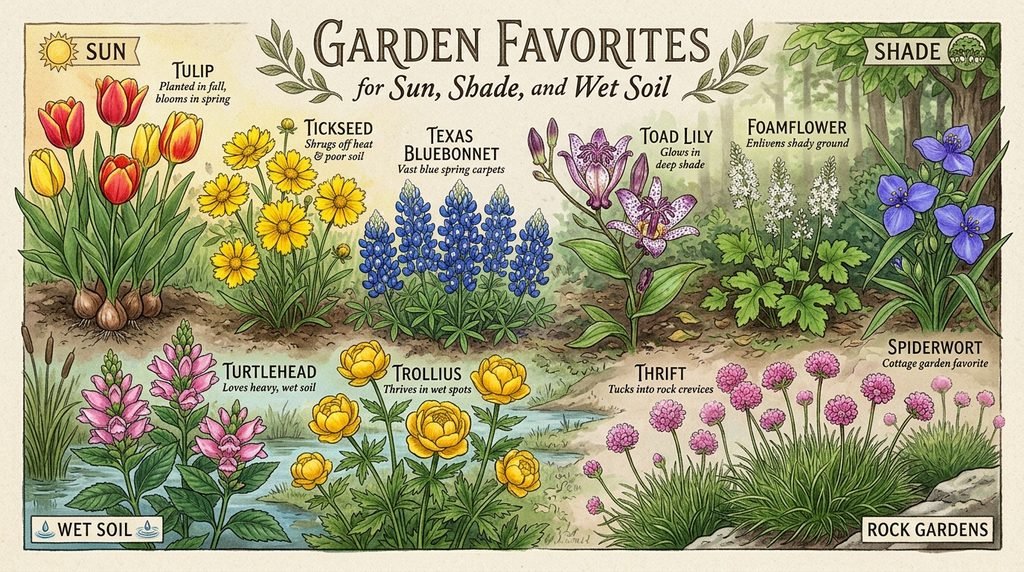
Garden Favorites for Sun, Shade, and Wet Soil
Gardeners who want easy wins among flowers that start with T should begin with Tulip, Tickseed, and Texas Bluebonnet. Tulip bulbs go in the ground in fall and bloom in spring. Tickseed shrugs off heat and poor soil. Texas Bluebonnet turns open sunny ground into a blue carpet each spring. Turtlehead and Trollius suit wet, heavy soil, while Toad Lily and Foamflower glow in shade. Thrift tucks neatly into rock gardens, and Spiderwort fills cottage beds with three-petaled blooms.
Blue Texas bluebonnet wildflowers covering an open field in spring
Best Indoor Plants and Houseplants
Fewer T plants live well indoors, but a few shine. Tailflower, the common name for Anthurium, offers glossy red or pink blooms that last for months in bright, indirect light. Tillandsia cyanea, called Pink Quill, sends up a flat, flame-like bract with small purple flowers. Mexican Foxglove, or Tetranema, stays compact and blooms for much of the year. Temple Bells has velvety leaves and spikes of bell-shaped flowers, though it rests in winter. Tuberous Begonia thrives in bright, cool rooms and patio pots. Orchid lovers can try Tolumnia, a small Dancing Lady Orchid.
Cut Flowers That Florists Love
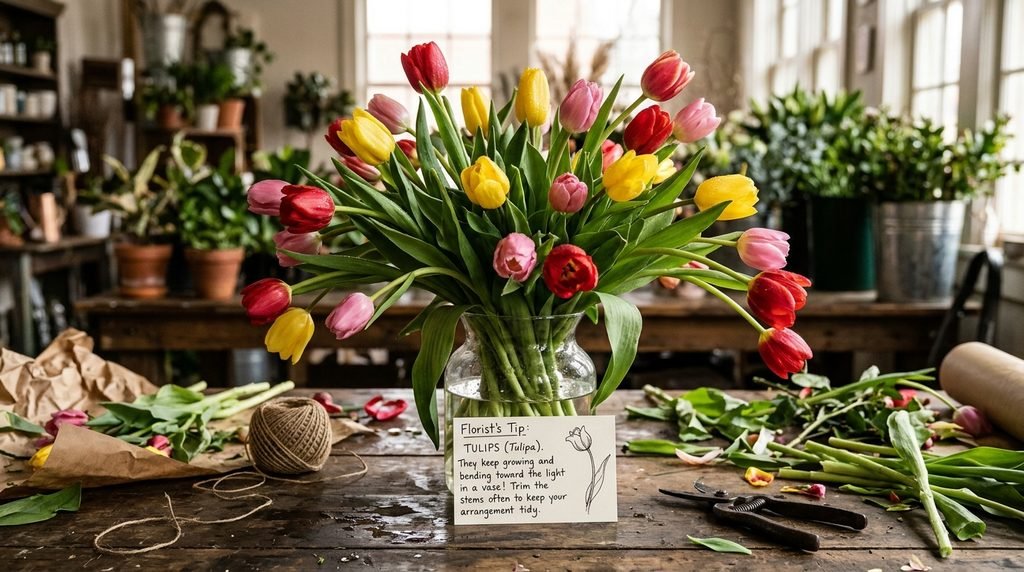
Tulips keep growing after cutting, so stems stretch and bend toward the light in a vase. Many florists trim them often to keep arrangements tidy. Tuberose is prized for a deep, sweet scent and often appears in wedding bouquets.
Trachelium, or Throatwort, adds airy purple domes. Blue Lace Flower brings a soft, lacy look, and Tweedia offers pale blue stars on slender stems. Texas Bluebell, sold as Lisianthus, is a long-lasting florist staple. Each one suits a different style, from formal to relaxed.
You May Also Like: 150+ Beautiful Flowers That Start With S: Names & Meanings
Rare and Unusual Finds
Some T flowers are hard to find, and each has its own story. The Titan Arum comes from the rainforests of Sumatra. Its flower spike can reach about ten feet and smells like rotting meat. It blooms only rarely, so each event draws crowds.
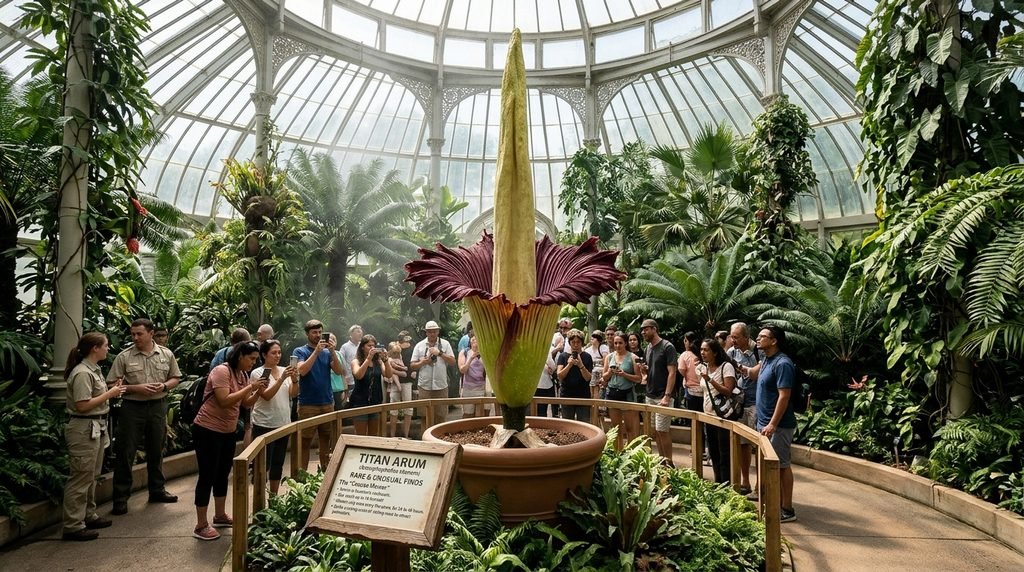
The Chilean Blue Crocus, Tecophilaea, has an electric blue color and is critically endangered in the wild. Bat Flower, or Tacca, bears black bracts with long whisker-like threads and needs warm, humid shade. Trailing Arbutus has fragrant pink spring flowers and resents transplanting, which makes it rare in gardens. Specialty nurseries and botanical gardens are the best places to see them.
Giant titan arum flower spike towering in a botanical garden greenhouse
Toxic Flowers and Safety Notes
Several T plants can cause real harm. Thorn Apple contains tropane alkaloids that cause hallucinations and can be fatal. Tree Tobacco holds anabasine, a strong toxin related to nicotine. Texas Mountain Laurel looks charming, with grape-scented purple flowers, but its red seeds are very poisonous. Tiger Lily and other true lilies can cause kidney failure in cats, even from a small nibble.
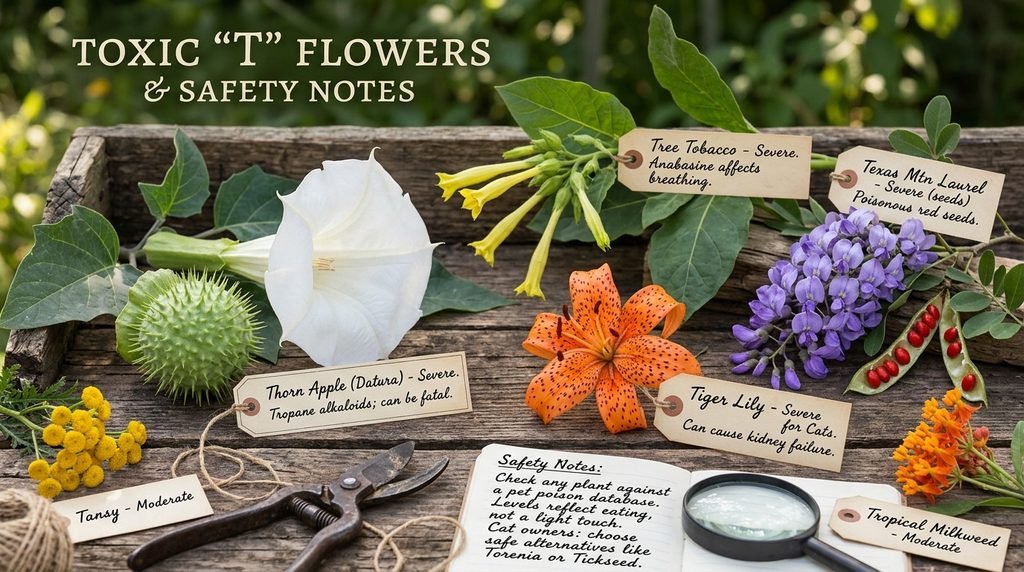
The table below ranks the main risks on this list. Levels reflect the effect of eating a meaningful amount, not a light touch. Check any plant against a pet poison database before planting it near animals.
| Flower | Toxicity Level | Main Concern |
| Thorn Apple | Severe | Tropane alkaloids; hallucinations; can be fatal |
| Tree Tobacco | Severe | Anabasine affects nerves and breathing |
| Texas Mountain Laurel | Severe (seeds) | Red seeds contain toxic alkaloids |
| Tiger Lily | Severe for cats | Can cause kidney failure in cats |
| Tropical Milkweed | Moderate | Cardiac glycosides; may harm monarchs in mild climates |
| Tansy | Moderate | Thujone can cause seizures in large amounts |
| Tulip | Mild to moderate | Bulbs upset the stomach; handling can irritate skin |
| Tuberous Begonia | Mild to moderate | Tubers contain oxalates |
| Trumpet Creeper | Mild | Sap can irritate skin |
| Torenia | Non-toxic | Considered safe for pets |
Thorn Apple and Tree Tobacco deserve the most care. Both grow wild and can look harmless to children. Tiger Lily is the sneakiest, since it is sold everywhere. Cat owners should skip true lilies altogether and choose Torenia or Tickseed instead.
White trumpet-shaped Thorn Apple Datura flower with spiny seed pod
Color Groups: Blue, Pink, White, Yellow, and Unusual
Color often drives the choice of flowers that start with T. This section groups the plants by shade and shows where each group works best.
Blue and purple shades are well covered. Torenia, Spiderwort, Throatwort, Tweedia, Texas Bluebonnet, Society Garlic, and Princess Flower all bring rich tones. Pair them with yellow Tickseed for strong contrast. Pink and red shades come from Tulip, Tree Peony, Torch Ginger, Waratah, and Tiger Flower. They suit warm borders and showy bouquets.
White flowers glow at dusk. Tuberose, Tea Olive, Trillium, Tahitian Gardenia, and Tree Anemone all fit here. They work well beside patios and in wedding designs. Yellow and orange flowers add sunny energy. Tickseed, Tithonia, Tiger Lily, Tidy Tips, and Globeflower thrive in full sun and keep borders bright into fall. Unusual shapes round out the list. Titan Arum, Bat Flower, and Trigger Plant look like nothing else in the garden.
Life Cycle Guide: Annuals, Perennials, Bulbs, and Shrubs
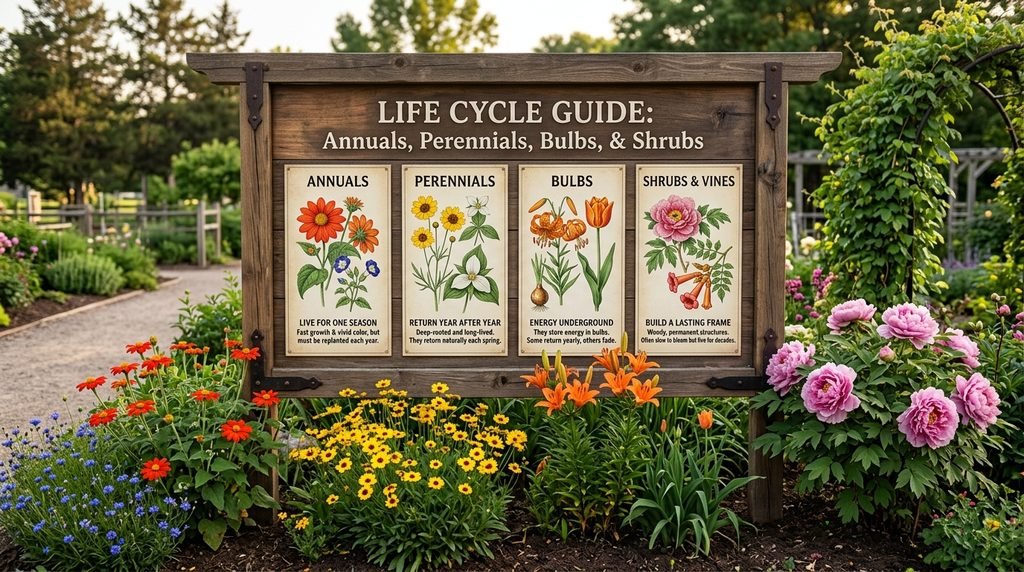
Life cycle tells a gardener how much work a plant needs. Annuals bloom for one season and end. Perennials return each year. Bulbs store energy underground, while shrubs and vines build a lasting frame. Matching the life cycle to your plan saves money, time, and replanting.
| Flower | Life Cycle | What to Expect |
| Torenia | Annual | One season; blooms until frost |
| Tithonia | Annual | Fast growth; self-seeds |
| Texas Bluebonnet | Annual | Sow in fall for spring bloom |
| Tidy Tips | Annual | Cool-season wildflower |
| Thorn Apple | Annual | Self-seeds freely; toxic |
| Tickseed | Perennial | Long-lived; divide every few years |
| Turtlehead | Perennial | Long-lived; likes moist soil |
| Toad Lily | Perennial | Slowly forms large clumps |
| Trollius | Perennial | Needs steady moisture |
| Trillium | Perennial | Very slow to grow; resents moving |
| Tulip | Bulb | Best in the first year; many fade |
| Tiger Lily | Bulb | Returns yearly; makes bulbils |
| Tuberose | Tender bulb | Lifts in cold zones |
| Tree Peony | Shrub | Slow to bloom; lives for decades |
| Trumpet Creeper | Woody vine | Fast, vigorous, and spreading |
Annuals give the fastest color but need replanting. Perennials, bulbs, and shrubs cost more at first and pay off over time. Trillium and Tree Peony are the slow ones, so they suit gardeners willing to wait several years.
Botanical Name Crosswalk
Botanical names matter when you buy plants or search online. Common names change by region and can point to several plants. Touch-Me-Not, for example, can mean Impatiens or the Sensitive Plant. A botanical name gives one clear answer, which prevents mix-ups at the nursery.
| Common Name | Botanical Name | Family |
| Tulip | Tulipa gesneriana hybrids | Liliaceae |
| Tiger Lily | Lilium lancifolium | Liliaceae |
| Tickseed | Coreopsis grandiflora | Asteraceae |
| Torenia | Torenia fournieri | Linderniaceae |
| Trumpet Creeper | Campsis radicans | Bignoniaceae |
| Tithonia | Tithonia rotundifolia | Asteraceae |
| Toad Lily | Tricyrtis hirta | Liliaceae |
| Turtlehead | Chelone glabra | Plantaginaceae |
| Tuberose | Agave amica | Asparagaceae |
| Tree Peony | Paeonia suffruticosa | Paeoniaceae |
| Texas Bluebonnet | Lupinus texensis | Fabaceae |
| Thorn Apple | Datura stramonium | Solanaceae |
| Tree Tobacco | Nicotiana glauca | Solanaceae |
| Texas Bluebell | Eustoma exaltatum | Gentianaceae |
| Titan Arum | Amorphophallus titanum | Araceae |
| Tea Olive | Osmanthus fragrans | Oleaceae |
Two surprises show up here. Tuberose is now filed under Agave, though older tags use Polianthes. Thorn Apple and Tree Tobacco both belong to the nightshade family, a group known for strong alkaloids. Tulip, Tiger Lily, and Toad Lily share a family, but only the Lily shows serious risk to cats.
Meanings and Symbolism
Flowers that start with T carry deep stories, and many have shaped how people give and read flowers. Tulip is the star. Red tulips mean perfect love in Victorian flower language, and yellow tulips once meant cheerful thoughts. The flower also fueled Tulip Mania in the 1630s, when single bulbs sold for the price of houses. Many link its name to a Persian word for turban.
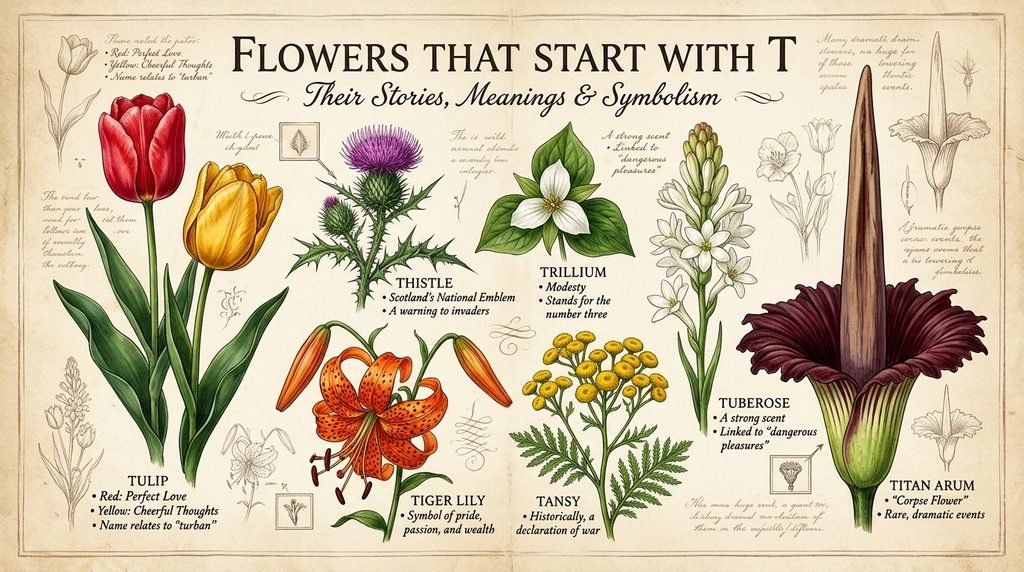
Thistle is the national emblem of Scotland. Legend says Norse invaders stepped barefoot on thistles and cried out, which warned the sleeping Scots. Trillium has three petals, three leaves, and three sepals, so it often stands for modesty and the number three. Tuberose carries a heavier message. Victorian writers linked it to dangerous pleasures, perhaps because its scent is so strong.
Tiger Lily suggests pride, passion, and wealth. Tansy had a harsh message, since the language of flowers read it as a declaration of war. Titan Arum, the corpse flower, has become a symbol of rare, dramatic events. Every bloom draws crowds who wait years to see it open. Taken together, these meanings give gardeners and gift givers a rich set of choices beyond color and shape.
Decision Guide: Match the Flower to Your Space
Use the table below to narrow your choices fast. Start with the row that matches your main need, such as shade, wet soil, or pet safety. Then compare the suggested plants and pick the one that suits your climate. Anyone sorting flowers that start with T will find this the quickest route from a long list to a final choice.
| If You Need | Try These |
| Spring bulbs | Tulip, Trout Lily, Triteleia |
| Shade and steady color | Torenia, Toad Lily, Foamflower |
| Wet or heavy soil | Turtlehead, Trollius |
| Hot, dry sun | Texas Sage, Tickseed |
| Pet-safe options | Torenia, Tickseed, Tufted Pansy |
| Cut flowers | Tulip, Tuberose, Throatwort |
| Hummingbirds | Trumpet Creeper, Texas Star Hibiscus |
| Fragrance | Tuberose, Tea Olive, Tiare |
| Wildflower meadow | Texas Bluebonnet, Tidy Tips |
| Containers | Torenia, Tuberous Begonia |
No single plant fits every need. Torenia and Tickseed work for homes with curious pets, while Turtlehead handles soggy ground that kills most flowers. If safety is a concern, skip the severely toxic plants from the earlier table and choose from the pet-safe row first.
Final Thoughts on Flowers That Start With T
Flowers that start with T offer something for nearly every garden, windowsill, and vase. They range from easy beginners such as Tickseed and Torenia to rare treasures such as the Titan Arum. A few, like Thorn Apple and Tiger Lily, call for real caution around pets and children. Use the tables and guides above to match each plant to your light, space, and household. With so many choices, there is room to experiment.
Frequently Asked Questions
What are the easiest flowers that start with T to grow?
Tickseed, Torenia, Tithonia, and Tulip are all beginner-friendly. They tolerate average soil and need little fuss. Tickseed and Tithonia also bloom for months.
Which T flowers are poisonous?
Thorn Apple, Tree Tobacco, and Texas Mountain Laurel are the most dangerous. Tiger Lily is toxic to cats, and Tansy is moderately toxic. Keep all of them away from children and pets.
Is Tiger Lily really dangerous to cats?
Yes. All parts of Tiger Lily, including pollen, can cause kidney failure in cats. Cat owners should avoid true lilies and call a vet right away after any exposure.
Do tulips come back every year?
Species tulips and some Darwin hybrids return reliably. Many showy hybrids bloom well once and fade. Plant bulbs deep and in well-drained soil to improve their odds.
When should I plant Tulip bulbs?
Plant bulbs in fall, a few weeks before the ground freezes. They need winter cold to bloom in spring. September to November works in most climates.
Can Texas Bluebonnet grow outside Texas?
Yes, if it gets full sun and well-drained soil. Sow seeds in fall and scratch the hard seed coat first. It struggles in wet, heavy ground.
How often does the Titan Arum bloom?
It blooms only every several years, often seven to ten years in cultivation. The bloom lasts about a day or two. Botanical gardens announce each event.
Is Trumpet Creeper invasive?
It can spread aggressively by suckers and seeds. Plant it where it can be contained, and prune it often. It can also damage weak fences and siding.
What is the best T flower for shade?
Toad Lily, Torenia, and Foamflower all handle shade well. Trillium suits deep woodland shade. The toad lily adds late-season color when most shade plants are done.

1 thought on “150+ Flowers That Start With T: Popular, Rare & Unique Blooms”